Een verblijfskatheter wanneer het moet, maar niet langer dan nodig
Na een beroerte kon een patiënt plots niet meer plassen. In eerste instantie werd de blaas eenmalig geleegd met een urinekatheter. Omdat het probleem echter aanhield, werd een verblijfskatheter geplaatst. Deze bleef uiteindelijk maar liefst 23 dagen zitten. Je zou denken dat zo’n katheter een eenvoudige oplossing is, maar was hij al die tijd wel echt nodig? Een verblijfskatheter verhoogt namelijk het risico op urineweginfecties aanzienlijk. In mijn bachelorproef onderzocht ik daarom hoe we urineweginfecties kunnen voorkomen bij patiënten die na een beroerte een verblijfskatheter krijgen.
Om dit te onderzoeken, bestudeerde ik eerst wetenschappelijke artikels. Daarnaast observeerde ik tijdens mijn stage hoe verblijfskatheters werden gebruikt en verzorgd. Ik sprak ook met de beroertecoach en een verpleegkundig specialist in de urologie over hun ervaringen en expertise. Zo kon ik de wetenschappelijke aanbevelingen vergelijken met de dagelijkse praktijk.
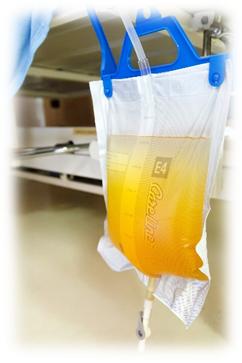
‘Bron: Petr Kratochvil, Urine Bag, Public Domain Pictures.’
Waarom verhoogt een beroerte het risico op urineweginfecties?
Een beroerte, ook wel een cerebrovasculair accident (CVA) genoemd, ontstaat als de bloedtoevoer naar een deel van de hersenen wordt onderbroken. Hierdoor kan bewegen en spreken moeilijk worden, maar ook de werking van de blaasspier kan veranderen. Soms trekt deze spier plots onwillekeurig samen, waardoor urineverlies ontstaat. Bij andere patiënten trekt de blaasspier net te weinig samen, waardoor zij niet meer zelfstandig kunnen plassen. Om de urine toch af te voeren, wordt er vaak een verblijfskatheter geplaatst: een dun buisje dat via de urinebuis tot in de blaas wordt gebracht en daar blijft zitten.
Daarnaast werkt het afweersysteem vlak na een beroerte ook vaak minder goed. De beschadiging in de hersenen veroorzaakt een ontstekingsreactie die ons algehele lichaamsafweer verzwakt. Hierdoor zijn patiënten net na een beroerte vatbaarder voor infecties, waaronder urineweginfecties.
Is een verblijfskatheter altijd de beste keuze?
Een verblijfskatheter moet zo kort mogelijk gebruikt worden. Het is daarom essentieel om eerst na te gaan of er een veiliger alternatief is. Wanneer een patiënt niet zelfstandig kan plassen, is intermitterend katheteriseren het voorkeursalternatief. Hierbij wordt de blaas geledigd met een urinekatheter die onmiddellijk weer wordt verwijderd. Zo blijft er geen vreemd voorwerp aanwezig in de urinebuis en de blaas.
Een suprapubische katheter kan een geschikt alternatief zijn wanneer urine gedurende langere tijd via een katheter moet worden afgevoerd. Deze wordt via een kleine opening in de onderbuik rechtstreeks in de blaas gebracht. Daarnaast helpt het als patiënten na een beroerte zo snel mogelijk terug in beweging komen. Fysieke activiteit bevordert namelijk het herstel van de blaasspier. Geef patiënten bovendien voldoende privacy en de juiste hulpmiddelen. Dat stimuleert hen om weer zelfstandig te plassen.
Hoe kan je een urineweginfectie voorkomen?
Wanneer een verblijfskatheter toch onvermijdelijk is, bepaalt de dagelijkse verzorging het risico op een urineweginfectie. Een goede, dagelijkse intieme hygiëne is de eerste stap. Daarnaast moet de katheter correct worden vastgemaakt om beschadiging aan de urinebuis te voorkomen. Bij vrouwen wordt de verblijfskatheter aan de binnenzijde van het bovenbeen bevestigd en bij mannen op de onderbuik.
De katheter en de urinecollector moeten een perfect gesloten systeem vormen. Zodra dat systeem geopend wordt, kunnen bacteriën uit de omgeving de urinewegen binnendringen. De collector dient bovendien altijd lager dan de blaas te hangen, zodat de urine vlot wegstroomt en niet terugloopt. Zet de collector ook nooit zomaar op de grond, want dat verhoogt het risico op een besmetting. Tot slot is het belangrijk dat we elke dag nagaan of de verblijfskatheter nog nodig is. Hoe korter een verblijfskatheter aanwezig blijft, hoe kleiner de kans op een infectie.
Wat betekent dit voor de zorg?
Een verblijfskatheter is dus niet altijd de eerste of beste oplossing. Als zorgverleners moeten we onszelf elke dag drie eenvoudige vragen stellen:
- Is de katheter nog nodig?
- Kunnen we een alternatief gebruiken?
- Wordt de katheter correct verzorgd?
Mijn bachelorproef laat zien dat juist deze kleine aandachtspunten in de dagelijkse zorg een groot verschil kunnen maken. Door het gebruik van verblijfskatheters bewust te beperken, kan het risico op urineweginfecties worden verminderd. De kernboodschap is dus simpel: een verblijfskatheter wanneer het moet, maar geen dag langer dan nodig.
Bibliografie
Abdallah, H. M. M., Abdelhamid Hamad Abou Ghanem, M. H., Mohamed Ahmed, N. T., & Elsaman, S. E. A. (2023). Barriers to implementation of a urinary catheter care bundle for critically ill patients with cerebrovascular stroke. Alexandria Scientific Nursing Journal, 25(2), 74–84. https://asalexu.journals.ekb.eg/article_318220.html
Agapiou, E., Pyrgelis, E.-S., Mavridis, I. N., Meliou, M., & Wimalachandra, W. S. B. (2024). Bladder dysfunction following stroke: An updated review on diagnosis and management. Bladder, 11(1), e21200005. https://doi.org/10.14440/bladder.2024.0012
Agapiou, E., Pyrgelis, E.-S., Mavridis, I. N., Meliou, M., & Wimalachandra, W. S. B. (2024). Lower urinary tract dysfunction following stroke: From molecular mechanisms to clinical anatomy. Journal of Biological Methods, 11(4), e99010024. https://doi.org/10.14440/jbm.2024.0022
Andary, C. M., Shah, M., Patel, R., Nguyen, T., & Lopez, A. (2025). Quality improvement initiative to reduce inappropriate urinary catheterisation on a clinical teaching unit. BMJ Open Quality, 14(1), e003272. https://doi.org/10.1136/bmjoq-2024-003272
Aurangzeb, Abrar, M., Wattoo, N. A., Anwar, M., Ashraf, F., Liaqat, K., Idrees, R., Mahnoor, A., & Muneeb, M. (2024). Comparison of latex and silicon indwelling catheter in terms of rate of bacterial colonization in males with acute urinary retention at 5th day of catheterization. Journal of Ayub Medical College Abbottabad, 36(3), 548–550. https://pubmed.ncbi.nlm.nih.gov/39623832/
AZ Delta. (z.d.). Alle beroertepatiënten: verpleegkundige, dag 2 [Intern protocol]. Geraadpleegd op 10 maart 2026.
AZ Delta. (z.d.). Blaaskatheterisatie [Intern protocol]. Geraadpleegd op 2 maart 2026.
AZ Delta. (z.d.). Blaaskatheterisatie: éénmalig [Intern protocol]. Geraadpleegd op 2 maart 2026.
AZ Delta. (z.d.). Niet-trombolyseprotocol verpleegkundige, dag 1 [Intern protocol]. Geraadpleegd op 10 maart 2026.
AZ Delta. (z.d.). Trombolyseprotocol verpleegkundige, dag 1 [Intern protocol]. Geraadpleegd op 10 maart 2026.
Bond, V. E., Doeltgen, S., Kleinig, T., & Murray, J. (2023). Dysphagia-related acute stroke complications: A retrospective observational cohort study. Journal of Stroke and Cerebrovascular Diseases, 32(6), 107123. https://doi.org/10.1016/j.jstrokecerebrovasdis.2023.107123
Brown, C., Terrell, K., Goodwin, R., & Nathaniel, T. (2022). Hypertension and stroke severity: Associations with clinical outcomes in acute ischemic stroke patients. Journal of Cardiovascular Development and Disease, 9(10), 345. https://doi.org/10.3390/jcdd9100345
Chiu, T.-H., Chen, Y.-C., Wu, M.-N., Juan, Y.-S., Lin, Y.-H., & Chen, H.-W. (2024). Risk factors for urinary retention requiring catheterization after ischemic middle cerebral artery stroke. Urological Science, 35, e000025. https://doi.org/10.1097/US9.0000000000000025
Deforce Medical. (z.d.). latex katheter. Geraadpleegd op 30 april 2026, van https://deforcemedical.be/nl/zoeken?q=latex%20katheter
Departement Zorg. (z.d.). Preventie van urineweginfecties bij personen met een urinaire katheter. Geraadpleegd 16 november 2025, van https://www.departementzorg.be/nl/preventie-van-urineweginfecties-bij-personen-met-een-urinaire-katheter
Dikbaş, Ş. K., & Kalyoncu Aslan, I. (2024). Factors affecting length of stay in a stroke unit after intravenous thrombolytic therapy: A retrospective study. Bosphorus Medical Journal, 11(1), 15–22. https://pdf.journalagent.com/bmj/pdfs/BMJ_11_1_15_22.pdf
Faura, J., Bustamante, A., Miró‑Mur, F., & Montaner, J. (2021). Stroke‑induced immunosuppression: Implications for the prevention and prediction of post‑stroke infections. Journal of Neuroinflammation, 18(1), 127. https://pubmed.ncbi.nlm.nih.gov/34092245/
Firoozeh, N., Agah, E., Bauer, Z. A., Olusanya, A., & Seifi, A. (2022). Catheter-associated urinary tract infection in neurological intensive care units: A narrative review. Neurohospitalist, 12(3), 484–497. https://doi.org/10.1177/19418744221075888
Fletke, K. J., Jeong, D. H., & Herrera, A. V. (2024). Urinary catheter management. American Family Physician, 110(3), 251–258. https://pubmed.ncbi.nlm.nih.gov/39283848/
Fluck, D., Fry, C. H., Robin, J., Affley, B., Kakar, P., Sharma, P., & Han, T. S. (2024). Impact of healthcare-associated infections within 7-days of acute stroke on health outcomes and risk of care-dependency: A multi-centre registry-based cohort study. Internal and Emergency Medicine, 19, 919–929. https://doi.org/10.1007/s11739-024-03543-5
Geng, V., Lurvink, H., Pearce, I., Vahr Lauridsen, S., Schwennesen, T., Farrell, J., Cobussen-Boekhorst, H., Vandewinkel, C., & Gea-Sánchez, M. (2024). Indwelling catheterisation in adults: Urethral and suprapubic. European Association of Urology Nurses (EAUN). https://d56bochluxqnz.cloudfront.net/documents/full-guideline/EAUN_Guideline-indwelling-catheterisation_2024-v10-final.pdf
Hersenstichting. (z.d.). Beroerte. Geraadpleegd 25 november 2025, van https://www.hersenstichting.nl/hersenaandoeningen/beroerte/
Ikeda-Sakai, Y., Kubo, K., Wada, M., Seki, R., Hijikata, Y., Yoshioka, T., Takahashi, Y., & Nakayama, T. (2022). Effectiveness and safety of a program for appropriate urinary catheter use in stroke care: A multicenter prospective study. Journal of Evaluation in Clinical Practice, 28(4), 542–549. https://doi.org/10.1111/jep.13626
Janković, V. S., Miletic Drakulic, S. D., Janković, S. M., Lazarević, S. R., Radević, S. M., & Jovović, I. P. (2025). Risk factors for urinary tract infection and asymptomatic bacteriuria after stroke. Journal of Infection in Developing Countries, 19(2), 267–272. https://www.jidc.org/index.php/journal/article/view/40063753
Jansen, R., & Berends, N. (2025). 19 vragen over de MEC: Oftewel: de condoomkatheter. Verpleging, 31, 22–26. https://link.springer.com/article/10.1007/s41193-025-1363-8
Jitpratoom, P., & Boonyasiri, A. (2023). Determinants of urinary tract infection in hospitalized patients with acute ischemic stroke. BMC Neurology, 23, 251. https://doi.org/10.1186/s12883-023-03296-2
Köhler, G., Eichner, M., Abrahamian, H., Sturm, W., & Menzel, A. (2023). Diabetes mellitus and infections: Epidemiology, mechanisms and clinical implications. Diabetology & Metabolic Syndrome, 15, 1–12. https://link-springer-com.vives.e-bronnen.be/article/10.1007/s00508-023…
Laan, B., & Geerlings, S. (2020). Terugdringen onterecht gebruik van urinekatheters en infusen. TVZ – Verpleegkunde in praktijk en wetenschap, 130, 36–39. https://doi.org/10.1007/s41184-020-0832-4
Li, J., Miao, X., Chen, Y., Gu, J., Zeng, Y., Zhu, Q., & Yao, H. (2025). Incidence and risk factors of urinary retention in acute ischemic stroke patients: A retrospective study. The Neurologist, 30(4), 222–225. https://doi.org/10.1097/NRL.0000000000000619
Li, Q., & Yan, P. (2025). Analysis of risk factors for urinary catheter-associated urinary tract infection in patients with ischaemic stroke based on a single-centre nursing experience. Archivos Españoles de Urología, 78(7), 859–865. https://doi.org/10.56434/j.arch.esp.urol.20257807.114
Li, Y., Xu, J., & Zhao, Y. (2020). Predictors of urinary tract infection in acute stroke patients: A cohort study. Medicine (Baltimore), 99(27), e20952. https://pubmed.ncbi.nlm.nih.gov/40922438/
Lozano-Estevan, M. D. C., Bermejo, L. M., Cervera-Muñoz, A., Martínez-García, R. M., & Cuadrado-Soto, E. (2024). The importance of hydration in people with swallowing disorders and its consequences. Nutrientes Hospitalaria, 41(Suppl 3), 41–44. https://pubmed.ncbi.nlm.nih.gov/39279738/
Medical Monks. (z.d.). Dover 100% 2-way silicone silver hydrogel coated Foley catheter. Geraadpleegd op 30 april 2026, van https://medicalmonks.com/product/dover-100-2-way-silicone-silver-hydrogel-coated-foley-catheter/
Mercado, F. S., Jr., Kop, M. M., Danko, A., Zimmerman, H., & Watase, C. (2025). Male external catheters and urinary tract infections: A systematic review and meta-analysis of current evidence and the need for standardized reporting. Cureus, 17(8), e90264. https://doi.org/10.7759/cureus.90264
Mercatum. (z.d.). Verblijfsonde met hydrogel gecoat 12CH-10ml Bard Biocath BX 226512. Geraadpleegd op 30 april 2026, van https://www.mercatum.be/nl/2-webshop/detail/262852-verblijfsonde-met-hydrogel-gecoat-12ch-10ml-bard-biocath-bx-226512
Muscat, D. C., Sciortino, M., & Tartari, E. (2025). Knowledge, attitudes, and practices of healthcare professionals regarding prevention of catheter-associated urinary tract infections: A cross-sectional study in a rehabilitation facility. Infection Prevention in Practice, 7(1), 100438. https://pmc.ncbi.nlm.nih.gov/articles/PMC11833610/
Naar een gezond België. (2025, 9 juli). Beroertezorg. Geraadpleegd 16 november 2025, van https://www.gezondbelgie.be/nl/blikvanger-gezondheidszorg/algemene-ziek…
Neumeier, V., Stangl, F. P., Borer, J., Anderson, C. E., Birkhäuser, V., Chemych, O., Gross, O., Koschorke, M., Marschall, J., McCallin, S., Mehnert, U., Sadri, H., Stächele, L., Kessler, T. M., & Leitner, L. (2023). Indwelling catheter vs intermittent catheterization: Is there a difference in UTI susceptibility? BMC Infectious Diseases, 23, 507. https://doi.org/10.1186/s12879-023-08475-7
Pak, I.-H., Han, S.-R., Sin, C.-H., Kim, H.-S., & Rim, U.-R. (2024). The development of simple scoring system to predict urinary tract infection (UTI) in patients with stroke. International Journal of Endocrinology, 2512824. https://doi.org/10.1155/2024/2512824
Panicker, J. N., Fanciulli, A., Skoric, M. K., Kaplan, T., Aleksovska, K., Adamec, I., Averbeck, M. A., Campese, N., Guaraldi, P., Leys, F., Moreno‑Palacios, J., Simeoni, S., Stankovic, I., Wright, S., Batla, A., Blok, B., Hentzen, C., Hilz, M. J., Kessler, T. M., ... Habek, M. (2025). European Academy of Neurology (EAN)/European Federation of Autonomic Societies (EFAS)/International Neuro-Urology Society (INUS) guidelines for practising neurologists on the assessment and treatment of neurogenic urinary and sexual symptoms (NEUROGED guidelines). European Journal of Neurology, 32(4), e70119. https://doi.org/10.1111/ene.70119
Pari, B., Gallucci, M., Ghigo, A., & Brizzi, M. F. (2023). Insight into infections in diabetic settings: Mechanisms and clinical implications. Frontiers in Clinical Diabetes and Healthcare, 4, 10046483. https://pmc.ncbi.nlm.nih.gov/articles/PMC10046483/
Prabhakaran, S., Gonzalez, N. R., Zachrison, K. S., Adeoye, O., Alexandrov, A. W., Ansari, S. A., Chapman, S., Czap, A. L., Dumitrascu, O. M., Ishida, K., Jadhav, A. P., Johnson, B., Johnston, K. C., Khatri, P., Kimberly, W. T., Lee, V. H., Leslie-Mazwi, T. M., Mac Grory, B., Madsen, T. E., … Yaghi, S. (2026). 2026 guideline for the early management of patients with acute ischemic stroke: A guideline from the American Heart Association/American Stroke Association. Stroke. Advance online publication. https://doi.org/10.1161/STR.0000000000000513
Perrin, K., Vats, A., Qureshi, A., Hester, J., Larson, A., Felipe, A., Sleiman, A., Baron-Lee, J., & Busl, K. (2021). Catheter-associated urinary tract infection (CAUTI) in the neuroICU: Identification of risk factors and time-to-CAUTI using a case-control design. Neurocritical Care, 34(1), 271–278. https://doi.org/10.1007/s12028-020-01020-3
Rosenblum, D., Duracek, S., Pernigotti, D., Bykowski, E., Raynor, C., Belcourt, S., Rotman, A., Kalafus, L., & Hrdlicka, H. (2024). Reducing CAUTIs: Quality improvement journey on the reduction and prevention of catheter-associated urinary tract infections. Archives of Physical Medicine and Rehabilitation, 105(4), e94–e95. https://www.sciencedirect.com/science/article/abs/pii/S0003999324003605
Rosenthal, V. D., Memish, Z. A., Nicastri, E., Leone, S., & Bearman, G. (2025). Preventing catheter-associated urinary tract infections: A position paper of the International Society for Infectious Diseases. International Journal of Infectious Diseases, 151, 107304. https://doi.org/10.1016/j.ijid.2024.107304
Rubi, H., Mudey, G., & Kunjalwar, R. (2022). Catheter-associated urinary tract infection (CAUTI). Cureus, 14(10), e30385. https://doi.org/10.7759/cureus.30385
Setya, A., Mathew, G., & Cagir, B. (2023). Fecal impaction. In StatPearls. StatPearls Publishing. https://pubmed.ncbi.nlm.nih.gov/28846345/
Sharma, S., Chauhan, A., Ranjan, A., Mathkor, D. M., Haque, S., Ramniwas, S., Tuli, H. S., Jindal, T., & Yadav, V. (2024). Emerging challenges in antimicrobial resistance: Implications for pathogenic microorganisms, novel antibiotics, and their impact on sustainability. Frontiers in Microbiology, 15, 1403168. https://doi.org/10.3389/fmicb.2024.1403168
Smith, C. E., & Schneider, M. A. (2020). Assessing postvoid residual to identify risk for urinary complications post stroke. Journal of Neuroscience Nursing, 52(5), 219–223. https://doi.org/10.1097/JNN.0000000000000536
Sun, Y., Lin, Y., Wang, J., Bao, W., Chen, Z., & Yang, X. (2022). Risk factors for constipation in patients with acute and subacute ischemic stroke: A retrospective cohort study. Journal of Clinical Neuroscience, 106, 91–95. https://www-sciencedirect-com.vives.e-bronnen.be/science/article/pii/S0…
Van den Broeck, S. (2024, 8 december). De menselijke factor vormt het grootste struikelblok. Zorgnet-Icuro.https://www.zorgneticuro.be/artikel/de-menselijke-factor-vormt-het-grootste-struikelblok
Venkataraman, R., & Yadav, U. (2023). Catheter‑associated urinary tract infection: An overview. Journal of Basic and Clinical Physiology and Pharmacology, 34(1), 5–10. https://pubmed.ncbi.nlm.nih.gov/36036578/
Vahr Lauridsen, S., Chagani, S., Daniels, A., Kelly, T., Lurvink, H., Pearce, I., Popiński, M., Thoft Jensen, B., Villa, G., Wildeman, S., & Geng, V. (2024). EAUN guideline: Urethral intermittent catheterisation in adults (Including urethral intermittent dilatation). https://d56bochluxqnz.cloudfront.net/documents/full-guideline/EAUN-Guid…
Westendorp, W. F., Dames, C., Nederkoorn, P. J., Meisel, C., et al. (2022). Immunodepression, infections, and functional outcome in ischemic stroke. Stroke, 53(5), 1438–1448. https://www.ahajournals.org/doi/pdf/10.1161/STROKEAHA.122.038867
Yamashita, K., Kudo, M., Ando, M., Ashida, H., Shiseki, T., Kubota, S., Sakamoto, T., & Inui, M. (2024). An evaluation of the postvoid residual urine volume in acute stroke patients. Research and Reports in Urology, 16, 265–271. https://doi.org/10.2147/RRU.S480444
Yeh, F.-S., Wu, C.-W., Huang, M.-H., Chen, K.-C., Lee, Y.-J., & Chen, H.-C. (2025). Influence of prophylactic antibiotics on incidence of urinary tract infections in acute-to-subacute patients with stroke and asymptomatic bacteriuria. Scientific Reports, 15, 32787. https://pmc.ncbi.nlm.nih.gov/articles/PMC12464254/
Zhao, Q., Feng, P., Zhu, J., Wang, Y., Zhou, X., Xia, Z., Wang, D., He, Y., Wang, P., & Li, X. (2024). A novel score for early prediction of urinary tract infection risk in patients with acute ischemic stroke: A nomogram-based retrospective cohort study. Scientific Reports, 14, 10707. https://pubmed.ncbi.nlm.nih.gov/38730021/