Rouw zonder geloof: "We zijn allemaal aan het gissen"
Rouw zonder geloof: "We zijn allemaal aan het gissen"
Jongeren die niet geloven, staan vaak alleen als ze iemand verliezen. Geen rituelen, geen gemeenschap, geen taal om de dood te begrijpen. Dat maakt rouw eenzamer, blijkt uit de masterproef van Mahdia Bourouina aan de VUB.
Een moslima van 30 verloor haar vader. Haar familie woont in Algerije. In België had ze niemand die haar kon vertellen wat te doen. Waar moest ze de dood aangeven? Wie moest ze bellen? Wat gebeurt er met het lichaam?
"Ik wist het ergens wel," zegt ze. "Maar het is anders als het dan opeens een ouder wordt."
Het is een verhaal dat vaker terugkomt bij jongeren die niet geloven of wier geloofsgemeenschap ver weg is. Zij missen de taal, de rituelen en de mensen die je normaal door een rouwproces loodsen.
In haar masterproef : "Death Literacy vanuit het hedendaags jongerenperspectief" onderzocht Mahdia Bourouina (VUB, Agogische Wetenschappen) hoe jongvolwassenen tussen 18 en 30 jaar in Vlaanderen en Brussel omgaan met de dood. Ze interviewde tien jongeren met uiteenlopende achtergronden: praktiserende moslims, een katholiek, een boeddhist, niet-praktiserende moslims, atheïsten en agnosten. De centrale vraag: welke rol spelen religieuze of levensbeschouwelijke overtuigingen, of de afwezigheid daarvan, in hun omgang met sterfelijkheid?
Wat blijkt: wie gelooft, heeft vaak een kant-en-klaar kader. Wie niet gelooft, moet het zelf uitzoeken.
Een anker in moeilijke tijden
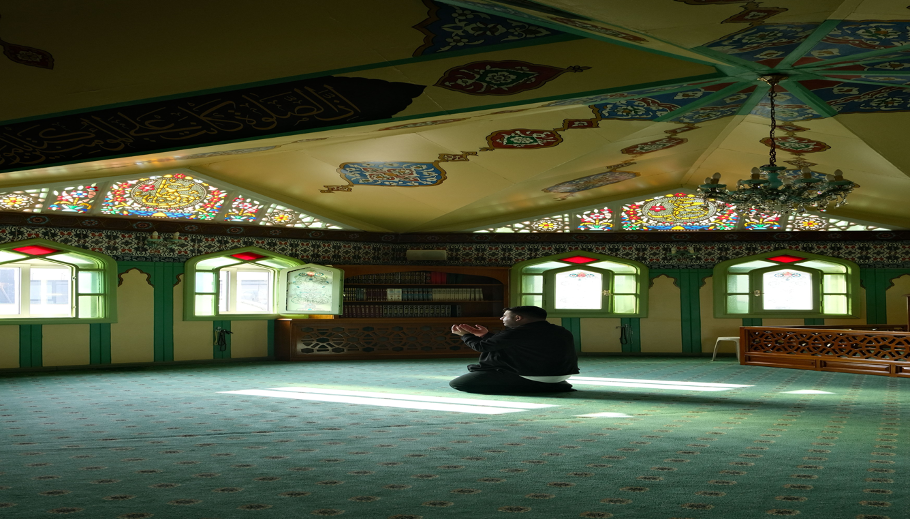
Voor gelovige jongeren is religie vaak een houvast. De islam, het katholicisme en het boeddhisme geven antwoorden op de vraag wat er na de dood gebeurt. Dat geeft rust, vertellen ze.
"Wat er na de dood gebeurt, daar heeft mijn religie antwoorden op," zegt een praktiserende moslima. "Je weet dat het niet voorbij is."
Ook rituelen helpen. Een gebed, een kaarsje, een meditatie. Het zijn kleine momenten die structuur brengen in een periode die vaak chaotisch is.
Maar geloof is niet alleen troost. Een andere moslima geeft toe dat ze bang is. Bang dat ze niet goed genoeg leeft volgens de regels van haar geloof.
"Ik ben tegelijk angstig," zegt ze. "Want als ik nu dood moet gaan, ben ik niet content met mijn leven op religieus vlak."
Alleen met je vragen
Voor wie niet gelooft, is het anders. Je hebt geen kant-en-klaar antwoord. Je moet het zelf uitzoeken. Sommigen vinden dat bevrijdend.
"De vrijheid die ik nu ervaar, maakt mij minder angstig voor een eventueel hiernamaals," zegt een agnoste.
Maar anderen voelen een leegte. "Ik geloof niet in een hiernamaals," vertelt een respondent. "Maar ik vind het wel een moeilijke gedachte dat het gewoon ophoudt."
Niet-gelovige jongeren praten vaak met vrienden over de dood. Maar die weten het ook niet. "We zijn allemaal aan het gissen," zegt iemand.
De gemeenschap maakt het verschil
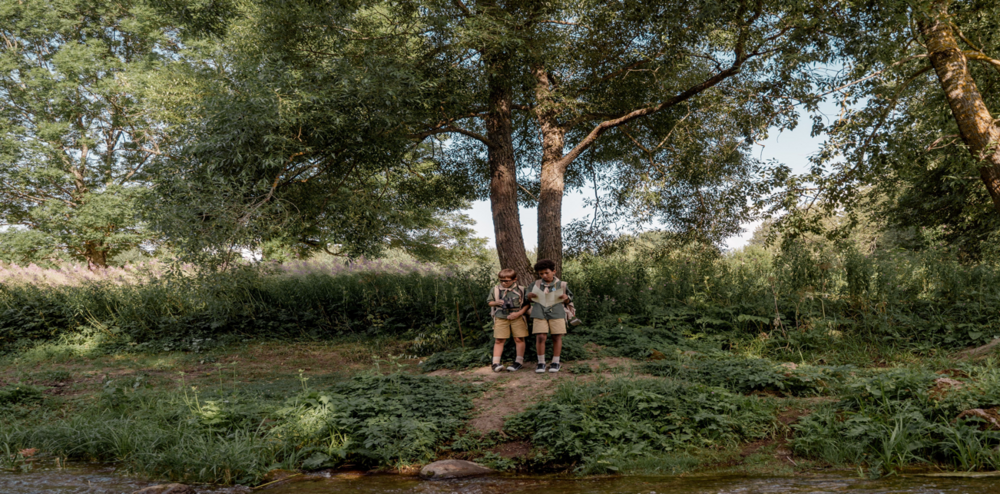
Een van de sterkste bevindingen uit het onderzoek is de rol van de gemeenschap. Gelovige jongeren kunnen vaak leunen op hun geloofsgemeenschap.
"De vrouwen van de moskee kwamen helpen met het wassen van het lichaam," vertelt een praktiserende moslima. "Ik wist niet eens dat dat moest, maar zij wisten het. Zij namen alles uit handen."
Maar niet iedereen heeft die gemeenschap in de buurt. De moslima wier familie in Algerije woont, moest alles zelf uitzoeken. Dat maakte haar rouw eenzamer en zwaarder.

Wat betekent dit voor hulpverleners?
Voor leerkrachten, sociaal werkers en hulpverleners is de boodschap duidelijk: rouw is niet voor iedereen hetzelfde. Wie gelooft, heeft vaak een gemeenschap en rituelen om op terug te vallen. Wie niet gelooft, moet het vaak alleen doen.
Bourouina pleit voor een aanpak die oog heeft voor wat iemand nodig heeft. Niet oordelen. Gewoon vragen: wat helpt jou? En wat mis je?
Het gesprek begint pas
Wat Bourouina vooral raakte, was hoe weinig jongeren écht praten over de dood. Uit ongemak. Uit angst om te kwetsen. Terwijl stilte rond de dood niet beschermt, maar eenzaam maakt.
"Het is gewoon hoe hun generatie is," zegt een respondent over haar ouders. "Wij praten er helemaal anders over."
Het gesprek over de dood begint vaak pas als het te laat is. Bourouina hoopt dat haar onderzoek daar verandering in brengt. Haar boodschap is simpel: praat over de dood. Gewoon vragen: hoe is het voor jou om iemand te verliezen?
OVER DE ONDERZOEKSTER
Mahdia Bourouina studeerde Agogische Wetenschappen aan de Vrije Universiteit Brussel. Ze werkte twee jaar in het asielcentrum Fedasil met niet-begeleide minderjarige asielzoekers. Ze liep stage in Zuid-Afrika bij ACVV Khayalethu. Ze spreekt vier talen. Haar masterproef over Death Literacy werd met onderscheiding goedgekeurd.
AI-VERKLARING
Ik heb bij het schrijven van dit artikel geen gebruikgemaakt van generatieve AI. De inhoud, de interviews en de bevindingen zijn volledig mijn eigen werk.
Bibliografie
Geciteerde werken
- Aoun, S. M., Breen, L. J., White, I., Rumbold, B., & Kellehear, A. (2018). What sources of bereavement support do bereaved people perceive to be helpful and why? Empirical evidence for the compassionate communities approach. Palliative Medicine, 32(8), 1378-1388. https://doi.org/10.1177/0269216318774995
- Arnett, J. J. (2000). Emerging adulthood: A theory of development from the late teens through the twenties. American Psychologist, 55(5), 469-480.
https://doi.org/10.1037/0003-066X.55.5.469
- Arrowood, R. B., Coleman, T. J., Swanson, S. B., Hood, R. W., & Cox, C. R. (2018). Death, quest, and self-esteem: Re-examining the role of self-esteem and religion following mortality salience. Religion, Brain & Behavior, 8(1), 69-76.
https://doi.org/10.1080/2153599X.2016.1238844
- Baarda, D. B., Bakker, E., Fischer, T., Julsing, M., Peters, V., van der Velden, T., & de Goede, M. (2013). Basisboek kwalitatief onderzoek: Handleiding voor het opzetten en uitvoeren van kwalitatief onderzoek (3e ed.). Noordhoff Uitgevers.
- Braun, V., & Clarke, V. (2019). Reflecting on reflexive thematic analysis. Qualitative Research in Sport, Exercise and Health, 11(4), 589-597.
https://doi.org/10.1080/2159676X.2019.1628806
- Breen, L. J., Kawashima, D., Joy, K., Cadell, S., Roth, D., Chow, A., & Macdonald, M. E. (2020). Grief literacy: A call to action for compassionate communities. Death Studies, 46(2), 425-433. https://doi.org/10.1080/07481187.2020.1739780
- Brinkmann, S., & Kvale, S. (2018). Doing interviews (2nd ed.). SAGE Publications. https://doi.org/10.4135/9781529716665
- Bulut, M. B. (2023). Relationship between attachment and fear of death: The mediating role of religious coping. OMEGA - Journal of Death and Dying. Advance online publication. https://doi.org/10.1177/00302228231165123
- Chidester, D. (1990). Patterns of transcendence: Religion, death, and dying. Wadsworth.
- Corr, C. A. (2015). The death system according to Robert Kastenbaum. OMEGA - Journal of Death and Dying, 70(1), 13-25.
https://doi.org/10.2190/OM.70.1.b
- Crenshaw, K. (1989). Demarginalizing the intersection of race and sex: A Black feminist critique of antidiscrimination doctrine, feminist theory and antiracist politics. University of Chicago Legal Forum, 1989(1), 139-167.
https://doi.org/10.4324/9780429500480-5
- Creswell, J. W. (2013). Qualitative inquiry and research design: Choosing among five approaches (3rd ed.). SAGE Publications.
- Crouch, M., & McKenzie, H. (2006). The logic of small samples in interview-based qualitative research. Social Science Information, 45(4), 483-499.
https://doi.org/10.1177/0539018406069584
- D'Eer, L., Quintiens, B., Van Den Block, L., Dury, S., Deliens, L., Chambaere, K., Smets, T., & - Cohen, J. (2022). Civic engagement in serious illness, death, and loss: A systematic mixed-methods review. Palliative Medicine, 36(4), 625-651. https://doi.org/10.1177/02692163221077850
- Edwards, M., Wood, F., Davies, M., & Edwards, A. (2015). 'Distributed health literacy': A qualitative study of the role of social networks in health literacy. Health Expectations, 18(5), 1461-1472. https://doi.org/10.1111/hex.12154
- Exline, J. J. (2013). Religious and spiritual struggles. In K. I. Pargament, J. J. Exline, & J. W. Jones (Eds.), APA handbook of psychology, religion, and spirituality: Vol. 1. Context, theory, and research (pp. 459-475). American Psychological Association.
https://doi.org/10.1037/14045-025
- Fowler, J. W. (1981). Stages of faith: The psychology of human development and the quest for meaning. Harper & Row.
- Gijsberts, M.-J. H. E., Echteld, M. A., van der Steen, J. T., Muller, M. T., Otten, R. H. J., Ribbe, M. W., & Deliens, L. (2011). Spirituality at the end of life: Conceptualization of measurable aspects—A systematic review. Journal of Palliative Medicine, 14(7), 852-863. https://doi.org/10.1089/jpm.2010.0384
- Guest, G., Bunce, A., & Johnson, L. (2006). How many interviews are enough? An experiment with data saturation and variability. Field Methods, 18(1), 59-82. https://doi.org/10.1177/1525822X05279903
- Hofstede, G. (2001). Culture's consequences: Comparing values, behaviors, institutions, and organizations across nations (2nd ed.). Sage Publications.
https://doi.org/10.1016/S0007-6813(05)80786-8
- Hutchins, E. (1995). Cognition in the wild. MIT Press.
- Illouz, E. (2007). Cold intimacies: The making of emotional capitalism. Polity Press.
Johansson, T., Bujacz, A., Kowalski, L., Tishelman, C., Nierop-van Baalen, C. A., Eriksson, L. E., & Cohen, J. (2025). Measurement invariance of the Death Literacy Index across Flemish Belgium, The Netherlands, and Sweden. Death Studies, 50(5), 815-823. https://doi.org/10.1080/07481187.2025.2468162
- Kastenbaum, R. (1972). On the future of death: Some images and options. OMEGA - Journal of Death and Dying, 3, 307-318.
https://doi.org/10.2190/OM.3.4.c
- Kellehear, A. (2005). Compassionate cities: Public health and end of life care. Routledge.
- Koenig, H. G., King, D. E., & Carson, V. B. (2012). Handbook of religion and health (2nd ed.). Oxford University Press.
https://doi.org/10.1093/acprof:oso/9780195118667.001.0001
- Kolb, D. A. (1984). Experiential learning: Experience as the source of learning and development. Prentice-Hall.
- Laranjeira, C., Dixe, M. A., Querido, A., & Stritch, J. M. (2022). Death cafes as a strategy to foster compassionate communities: Contributions for death and grief literacy. Frontiers in Psychology, 13, Article 986031. https://doi.org/10.3389/fpsyg.2022.986031
- Leonard, R., Noonan, K., Horsfall, D., Kelly, M., Rosenberg, J. P., Grindrod, A., Rumbold, B., & Rahn, A. (2021). Developing a death literacy index. Death Studies, 46(9), 2110-2122. https://doi.org/10.1080/07481187.2021.1894268
- Li, X., Che, S. L., Zhu, M., & Ng, W. I. (2024). What we learnt from parents' death experience: A cross-sectional study of death literacy and parent's death quality among adult children in China. Palliative and Supportive Care, 22(5), 1217-1225.
https://doi.org/10.1017/S1478951523001912
- Mahamid, F., Chou, P., & Mansour, A. (2023). The correlation between religiosity and death anxiety during the COVID-19 pandemic in Palestine. Journal of Muslim Mental Health, 17(1). https://doi.org/10.3998/jmmh.3704
- Markus, H. R., & Kitayama, S. (1991). Culture and the self: Implications for cognition, emotion, and motivation. Psychological Review, 98(2), 224-253.
https://doi.org/10.1037/0033-295X.98.2.224
-Noonan, K., Grindrod, A., Shrestha, S., Lee, S., Leonard, R., & Johansson, T. (2024). Progressing the Death Literacy Index: The development of a revised version (DLI-R) and a short format (DLI-9). Palliative Care and Social Practice, 18, 26323524241274806. https://doi.org/10.1177/26323524241274806
-Noonan, K., Horsfall, D., Leonard, R., & Rosenberg, J. (2016). Developing death literacy. Progress in Palliative Care, 24(1), 31-35.
https://doi.org/10.1080/09699260.2015.1103498
-Pagis, M., & Ariad, O. (2018). Alternative death rituals in Switzerland: Building a community of shared emotions and practices. Journal of Contemporary Religion, 33(1), 107-123. https://doi.org/10.1080/13537903.2018.1408261
-Pargament, K. I. (2011). Spiritually integrated psychotherapy: Understanding and addressing the sacred. Guilford Press.
-Pentaris, P., & Tripathi, K. (2020). Religious/spiritual referrals in hospice and palliative care. Religions, 11(10), 496.
https://doi.org/10.3390/rel11100496
-Richards, N., Koksvik, G., Gerson, S., & Clark, D. (2020). The global spread of death café: A cultural intervention relevant to policy? Social Policy and Society, 19(4), 553-572. https://doi.org/10.1017/S1474746420000081
-Sheikh, A. (1998). Death and dying:A Muslim perspective. Journal of the Royal Society of Medicine, 91(3), 138-140.
https://doi.org/10.1177/014107689809100309
-Spitzenstätter, D., & Schnell, T. (2022). Effects of mortality awareness on attitudes toward dying and death and meaning in life—A randomized controlled trial. Death Studies, 46(5), 1219-1233. https://doi.org/10.1080/07481187.2020.1815100
-Stephenson, P. S., & Berry, D. M. (2015). Describing spirituality at the end of life. Western Journal of Nursing Research, 37(9), 1229-1247.
https://doi.org/10.1177/0193945914550854
-Streib, H., Hood, R. W., & Klein, C. (2009). The religious development of young adults. In H. Streib (Ed.), Xenosophia: Religious and philosophical development of young adults (pp. 1-38). Springer.
-Tadros, E., Salman, M., Ramadan, A., & Daifallah, N. (2022). Community sadness: Clinical recommendations for working with grieving Arab American families. International Journal of Social Psychiatry, 69(3), 602-612.
https://doi.org/10.1177/00207640221138419
-Tajfel, H., & Turner, J. C. (1979). An integrative theory of intergroup conflict. In W. G. Austin & S. Worchel (Eds.), The social psychology of intergroup relations (pp. 33-47). Brooks/Cole.
Vail, K. E., & Soenke, M. (2018). The impact of mortality awareness on meaning in life among Christians and atheists. Religion, Brain & Behavior, 8(1), 44-56. https://doi.org/10.1080/2153599X.2016.1238847
-Vivekananda, K., Parratt, C., Tucker, M., & Leonard, R. (2020). The impact of online death literacy education on psychology students to have better end-of-life conversations. Australian Psychologist, 55(4), 410-422. https://doi.org/10.1111/ap.12452
-Walter, T. (1994). The revival of death. Routledge.
-Walter, T. (2017). What death means now: Thinking critically about death and dying. Policy Press.
-Wortmann, J. H., & Park, C. L. (2008). Religion and spirituality in adjustment to bereavement: A comprehensive review. Death Studies, 32(7), 577-612. https://doi.org/10.1080/07481180802228580