De link tussen vissen-DNA en de gezondheid van koraalriffen
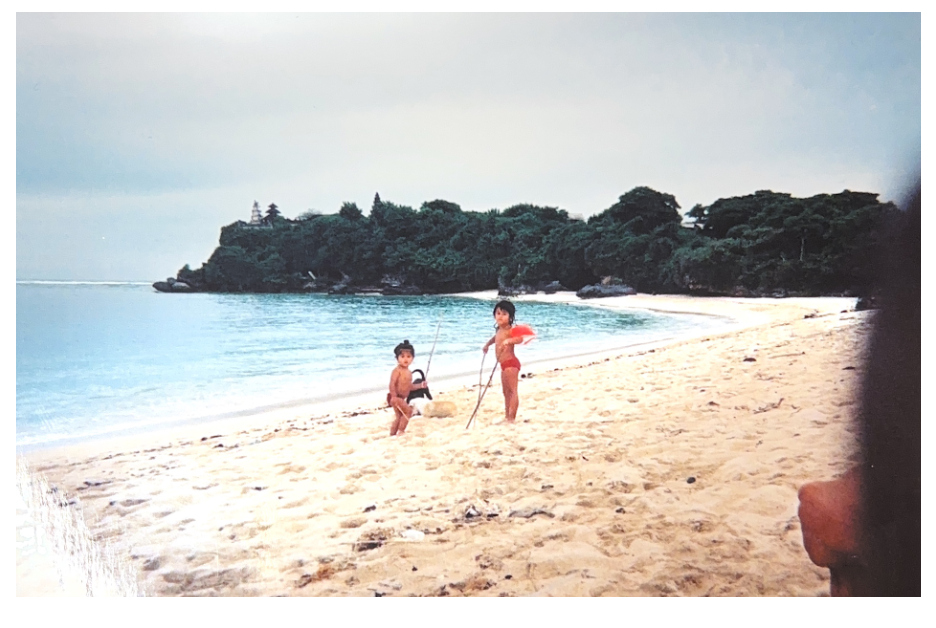
Een van mijn meest levendige herinneringen uit mijn kindertijd is hoe ik met mijn snorkel en mijn flippers als een onhandige pinguïn over het strand liep. De reden: de bijzondere wereld onder het water ontdekken. Die fascinatie groeide door de jaren heen, mede dankzij de natuurdocumentaires van David Attenborough en avonturenfilms zoals Pirates of the Caribbean. Twintig jaar later heb ik die kinderdroom kunnen realiseren en studeerde ik af als een mariene bioloog, gespecialiseerd in vissen van koraalriffen.
Mariene biodiversiteit in tijden van klimaatopwarming
Koraalriffen behoren tot een van de meest diverse ecosystemen op aarde en ondersteunen ongeveer een kwart van al het mariene leven. Vooral in de Indo-Pacifische regio zijn ze van uiterst belang. De Afrikaanse westkust is bijvoorbeeld een belangrijke hotspot voor biodiversiteit waar meer dan 2.000 vissoorten voorkomen. Naast hun ecologische waarde ondersteunen ze miljoenen mensen die in kustgebieden wonen als bron van voedsel en inkomen. Bovendien bieden ze een natuurlijke bescherming tegen zware stormen.
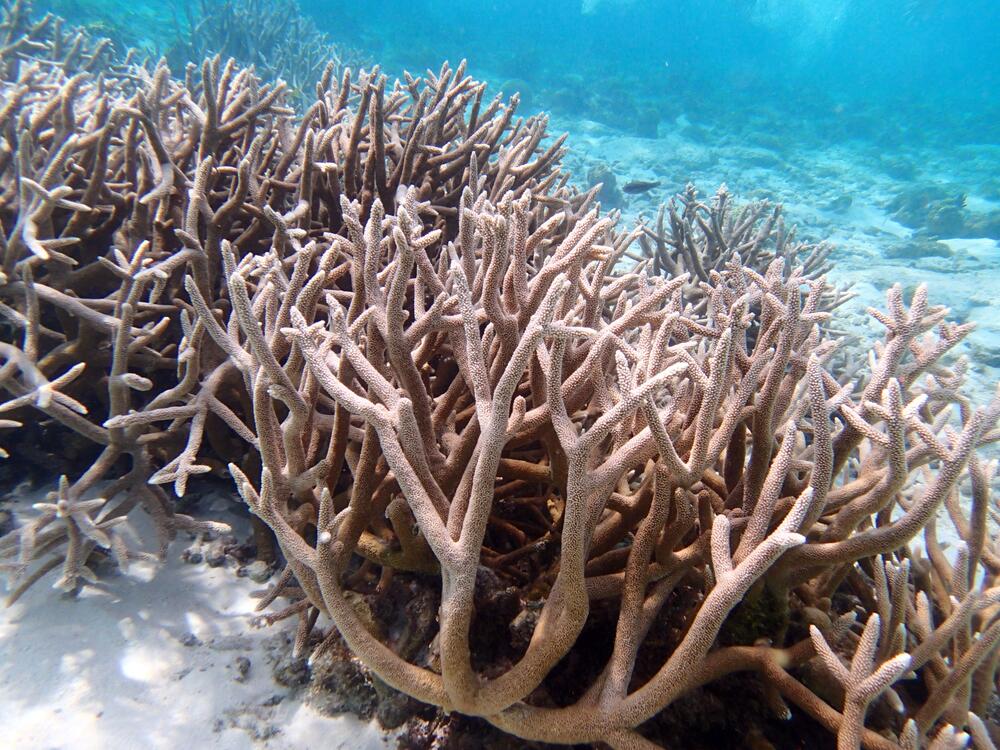 Helaas worden deze ecosystemen steeds meer bedreigd door de gevolgen van klimaatopwarming. Eén van de meest zichtbare problemen is massale koraalverbleking, ook wel coral bleaching genoemd. Hierbij verliezen koralen hun symbiotische algen die hen van voedsel voorzien en kunnen hierdoor afsterven. Daarnaast zorgen menselijke activiteiten zoals massatoerisme en overbevissing voor bijkomende stress. De combinatie van al deze factoren vermindert het vermogen van koraalriffen om het mariene leven te ondersteunen en verhoogt het risico op een mogelijk onomkeerbare instorting van dit unieke ecosysteem.
Biodiversiteit en de toestand van koralen
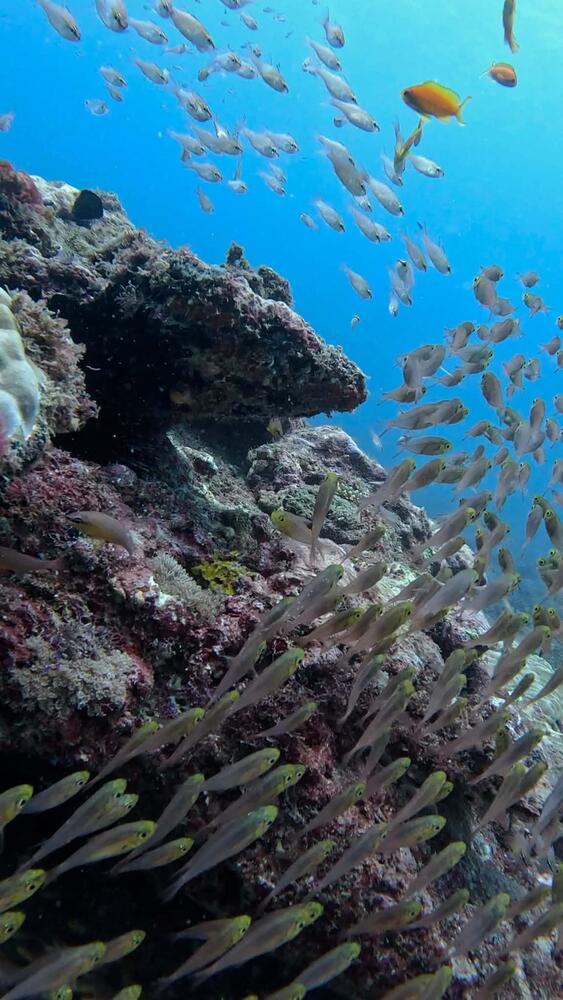 Een gezond koraalrif wordt gekenmerkt door een grote diversiteit aan soorten, zoals kleurrijke vissen, schildpadden, kreeften, anemonen en nog veel meer. Binnen deze biodiversiteit spelen bepaalde visgroepen een belangrijke rol als ecologische indicatoren. Sommige soorten zijn typisch voor gezonde koraalriffen, terwijl anderen juist vaker voorkomen in verstoorde ecosystemen. Door deze samenstelling te bestuderen kunnen onderzoekers belangrijke informatie verzamelen over de gezondheid van het rif.
Traditioneel worden visgemeenschappen onderzocht aan de hand van visuele tellingen door snorkelaars of duikers. Ze registreren de aanwezige vissoorten, vaak met behulp van onderwatercamera’s. Een grote beperking van deze aanpak is dat sommige soorten erg schuw zijn. Ze verstoppen zich wanneer duikers in de buurt komen en blijven daarom tijdens visuele inventarisaties onopgemerkt. Daarnaast kunnen vissen met netten worden gevangen om de samenstelling te analyseren, maar deze aanpak is redelijk invasief en kunnen het ecosysteem verstoren.
Een interessant alternatief is het gebruik van milieu-DNA, ofwel environmental DNA (eDNA). Door een staal zeewater te filteren kun je het DNA verzamelen dat organismen in hun omgeving hebben achtergelaten. Door dit DNA vervolgens te analyseren is het mogelijk om vast te stellen welke soorten aanwezig zijn zonder de dieren te vangen of observeren.
Expeditie Kenia
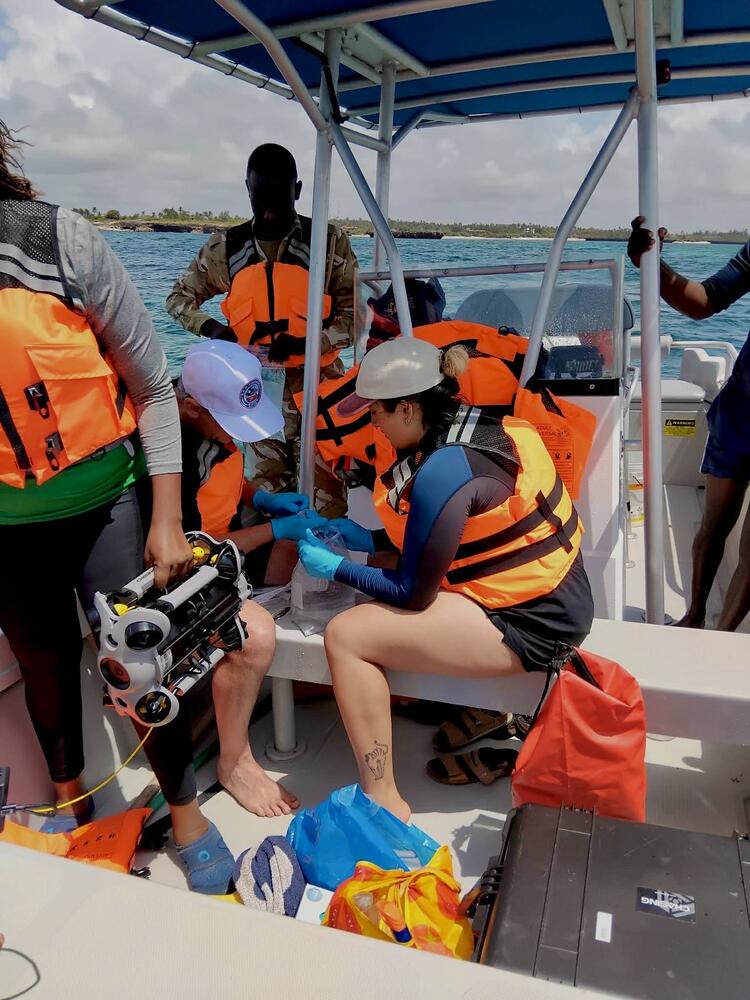
Voor dit onderzoek verzamelde ik eDNA-stalen uit koraalriffen in Kenia, die ik vervolgens in België heb geanalyseerd. Door stalen binnen en buiten beschermde gebieden te verzamelen onderzocht ik in welke mate ze bijdragen aan het herstel en behoud van de biodiversiteit. Tijdens het verzamelen van eDNA-stalen werden er visuele inventarisaties genomen voor verdere vergelijkingen en extra analyses.
De initiële resultaten toonden aan dat eDNA meer visfamilies detecteerde dan de visuele tellingen. Zo werden onder andere soorten geïdentificeerd die tunnels in het zand graven en zich daarin verstoppen. Hoewel deze vissen zelf verborgen blijven, blijft hun DNA in het zeewater achter en kon ik ze met eDNA-technieken wel opsporen.
Helaas vonden de resultaten geen duidelijk verschil in biodiversiteit tussen beschermde en niet-beschermde zones. Beschermende riffen zijn normaal geassocieerd met een hogere soortenrijkom vanwege het visserijverbod. De geografische locatie van de riffen bleek daarentegen wel een belangrijke rol te spelen in de samenstelling van visgemeenschappen. Dit sluit aan bij eerder onderzoek dat suggereerde dat de hoeveelheid levend koraal een grotere invloed kan hebben op de samenstelling dan visserij-activiteiten alleen. Daarnaast wezen de resultaten erop dat sommige van de onderzochte riffen langzaam lijken te veranderen naar een toestand waarin algen domineren. Deze zorgwekkende overgang wordt vaak geassocieerd met sterk gedegradeerde koraalriffen en kan ernstige tot permanente gevolgen hebben voor het mariene leven. Wanneer de structuur en ecologische functie van een ecosysteem op deze manier veranderen, wordt natuurlijk herstel steeds moeilijker.
Om deze bevindingen verder te onderbouwen en met meer zekerheid te bevestigen, voer ik momenteel uitgebreidere analyses uit.
De situatie in 2050
De toekomst van koraalriffen is onzeker. Door de toenemende druk van klimaatverandering en menselijke activiteiten dreigen veel van de riffen die wij vandaag kennen tegen 2050 fundamenteel te kunnen veranderen of zelfs uitsterven. Wetenschappers wereldwijd werken daarom aan oplossingen om deze kwetsbare ecosystemen weerbaarder te maken en hun achteruitgang zoveel mogelijk tegen te gaan.
Voor mij gaat het ook om meer dan het behouden van een ecosysteem. Mijn grootste droom is dat een kind in de toekomst nog met een snorkel en flippers over een strand kan lopen, het water in kan springen en de prachtige onderwaterwereld kan ontdekken, net als ik. Misschien kan die eerste duik uitgroeien tot een levenslange fascinatie en passie voor het beschermen van onze natuur.
Bibliografie
Acevedo Ramírez, P. (2026). Comparing Reef Fish Community Structure Across Protected and Non-Protected Areas of Coastal Kenya Using ROV-Based Video Surveys [Unpublished master’s thesis]. Vrije Universiteit Brussel.
Alidina, H. M. (2005). Local level fisheries management in Diani-Chale, Kenya: Current status and future directions. Coastal Management, 33(4), 459–470. https://doi.org/10.1080/08920750500217997
Allen Coral Atlas (2020). Imagery, maps and monitoring of the world's tropical coral reefs.
https://doi.org/10.5281/zenodo.3833242
Andruszkiewicz Allan, E., Shaffer, M. R., Kelly, R. P., & Parsons, K. (2025). Optimizing target-to-total DNA ratio in eDNA studies: effects of sampling, preservation, and extraction methods on single-species detection. PeerJ, 13, e20127. https://doi.org/10.7717/peerj.20127
Anthony, K. R., Marshall, P. A., Abdulla, A., Beeden, R., Bergh, C., Black, R., Eakin, C. M., Game, E. T., Gooch, M., Graham, N. A., Green, A., Heron, S. F., Van Hooidonk, R., Knowland, C., Mangubhai, S., Marshall, N., Maynard, J. A., McGinnity, P., McLeod, E., . . . Wear, S. (2014). Operationalizing resilience for adaptive coral reef management under global environmental change. Global Change Biology, 21(1), 48–61. https://doi.org/10.1111/gcb.12700
Ateweberhan, M., McClanahan, T. R., Graham, N. a. J., & Sheppard, C. R. C. (2011). Episodic heterogeneous decline and recovery of coral cover in the Indian Ocean. Coral Reefs, 30(3). https://doi.org/10.1007/s00338-011-0775-x
Ayers, A. L., & Kittinger, J. N. (2014). Emergence of co-management governance for Hawai‘i coral reef fisheries. Global Environmental Change, 28, 251–262. https://doi.org/10.1016/j.gloenvcha.2014.07.006
Balasingham, K. D., Walter, R. P., Mandrak, N. E., & Heath, D. D. (2017). Environmental DNA detection of rare and invasive fish species in two Great Lakes tributaries. Molecular Ecology, 27(1), 112–127. https://doi.org/10.1111/mec.14395
Barber, P. H., & Meyer, C. P. (2015). Pluralism explains diversity in the Coral Triangle. In C. Mora (Ed.), Ecology of fishes on coral reefs (pp. 258-263). Cambridge University Press
Barnes-Mauthe, M., Oleson, K. L., & Zafindrasilivonona, B. (2013). The total economic value of small-scale fisheries with a characterization of post-landing trends: An application in Madagascar with global relevance. Fisheries Research, 147, 175–185. https://doi.org/10.1016/j.fishres.2013.05.011
Beckman Coulter, Inc. (2026). SPRIselect Bead Interactive Protocol for Size Selection. https://www.beckman.fr/reagents/genomic/cleanup-and-size-selection/size-selection/spriselect-protocol
Beng, K. C., & Corlett, R. T. (2020). Applications of environmental DNA (eDNA) in ecology and conservation: opportunities, challenges and prospects. Biodiversity and Conservation, 29(7), 2089–2121. https://doi.org/10.1007/s10531-020-01980-0
Benson, D. A., Cavanaugh, M., Clark, K., Karsch-Mizrachi, I., Lipman, D. J., Ostell, J., & Sayers, E. W. (2016). GenBank. Nucleic Acids Research, 45(D1), D37–D42. https://doi.org/10.1093/nar/gkw1070
Bhargava, M., & Sharma, A. (2013). DNA barcoding in plants: Evolution and applications of in silico approaches and resources. Molecular Phylogenetics and Evolution, 67(3), 631–641. https://doi.org/10.1016/j.ympev.2013.03.002
Bozec, Y., Kulbicki, M., Laloë, F., Mou-Tham, G., & Gascuel, D. (2011). Factors affecting the detection distances of reef fish: implications for visual counts. Marine Biology, 158(5), 969–981. https://doi.org/10.1007/s00227-011-1623-9
Briggs, J. C., & Bowen, B. W. (2011). A realignment of marine biogeographic provinces with particular reference to fish distributions. Journal of Biogeography, 39(1), 12–30. https://doi.org/10.1111/j.1365-2699.2011.02613.x
Buddemeier, R. W., Kleypas, J. A., & Aronson, R. B. (2004). Coral reefs & global climate change: potential contributions of climate change to stresses on coral reef ecosystems. Pew Center on Global Climate Change.
Burt, J. A., Paparella, F., Al-Mansoori, N., Al-Mansoori, A., & Al-Jailani, H. (2019). Causes and consequences of the 2017 coral bleaching event in the southern Persian/Arabian Gulf. Coral Reefs, 38(4), 567–589. https://doi.org/10.1007/s00338-019-01767-y
Bylemans, J., Gleeson, D. M., Hardy, C. M., & Furlan, E. (2018). Toward an ecoregion scale evaluation of eDNA metabarcoding primers: A case study for the freshwater fish biodiversity of the Murray–Darling Basin (Australia). Ecology and Evolution, 8(17), 8697–8712. https://doi.org/10.1002/ece3.4387
Carpenter, K. E., & Springer, V. G. (2005). The center of the center of marine shore fish biodiversity: the Philippine Islands. Environmental Biology of Fishes, 72(4), 467–480. https://doi.org/10.1007/s10641-004-3154-4
Chong-Seng, K. M., Nash, K. L., Bellwood, D. R., & Graham, N. a. J. (2014). Macroalgal herbivory on recovering versus degrading coral reefs. Coral Reefs, 33(2), 409–419. https://doi.org/10.1007/s00338-014-1134-5
Chorlton, S. D. (2024). Ten common issues with reference sequence databases and how to mitigate them. Frontiers in Bioinformatics, 4, 1278228. https://doi.org/10.3389/fbinf.2024.1278228
Clements, C. S., & Hay, M. E. (2023). Disentangling the impacts of macroalgae on corals via effects on their microbiomes. Frontiers in Ecology and Evolution, 11. https://doi.org/10.3389/fevo.2023.1083341
Coble, A. A., Flinders, C. A., Homyack, J. A., Penaluna, B. E., Cronn, R. C., & Weitemier, K. (2019). eDNA as a tool for identifying freshwater species in sustainable forestry: A critical review and potential future applications. The Science of the Total Environment, 649, 1157–1170. https://doi.org/10.1016/j.scitotenv.2018.08.370
Collard, O., Tawfeeq, M. M., Ducret, H., & Flot, J. (2025). A rapid and inexpensive universal PCR protocol for DNA (meta)barcoding using a one-tube, 2-step PCR. bioRxiv 2025.05.16.654411. https://doi.org/10.1101/2025.05.16.654411
Collins, R. A., Bakker, J., Wangensteen, O. S., Soto, A. Z., Corrigan, L., Sims, D. W., Genner, M. J., & Mariani, S. (2019). Non‐specific amplification compromises environmental DNA metabarcoding with COI. Methods in Ecology and Evolution, 10(11), 1985–2001. https://doi.org/10.1111/2041-210x.13276
Costanza, R., De Groot, R., Sutton, P., Van Der Ploeg, S., Anderson, S. J., Kubiszewski, I., Farber, S., & Turner, R. K. (2014). Changes in the global value of ecosystem services. Global Environmental Change, 26, 152–158. https://doi.org/10.1016/j.gloenvcha.2014.04.002
Cowburn, B., Musembi, P., Sindorf, V., Kohlmeier, D., Raker, C., Nussbaumer, A., Hereward, H., Van Baelenberghe, B., Goebbels, D., Kamire, J., Horions, M., Sluka, R., Taylor, M., & Rogers, A. (2018). The Habitats and biodiversity of Watamu Marine National Park: Evaluating our knowledge of one of East Africa’s oldest marine protected areas. Atoll Research Bulletin, 618, 1–45. https://doi.org/10.5479/si.0077-5630.618
Danecek, P., Bonfield, J. K., Liddle, J., Marshall, J., Ohan, V., Pollard, M. O., Whitwham, A., Keane, T., McCarthy, S. A., Davies, R. M., & Li, H. (2021). Twelve years of SAMtools and BCFtools. GigaScience, 10(2). https://doi.org/10.1093/gigascience/giab008
De Coster, W., & Rademakers, R. (2023). NanoPack2: population-scale evaluation of long-read sequencing data. Bioinformatics, 39(5). https://doi.org/10.1093/bioinformatics/btad311
De Coster, W., D’Hert, S., Schultz, D. T., Cruts, M., & Van Broeckhoven, C. (2018). NanoPack: visualizing and processing long-read sequencing data. Bioinformatics, 34(15), 2666–2669. https://doi.org/10.1093/bioinformatics/bty149
DiBattista, J. D., Coker, D. J., Sinclair-Taylor, T. H., Stat, M., Berumen, M. L., & Bunce, M. (2017). Assessing the utility of eDNA as a tool to survey reef-fish communities in the Red Sea. Coral Reefs, 36(4), 1245–1252. https://doi.org/10.1007/s00338-017-1618-1
Eakin, C. M., Heron, S. F., Connolly, S. R., Devotta, D. A., Liu, G., Geiger, E. F., De La Cour, J. L., Gomez, A. M., Skirving, W. J., Baird, A. H., Cantin, N. E., Couch, C. S., Donner, S. D., Gilmour, J., Gonzalez-Rivero, M., Gudka, M., Harrison, H. B., Hodgson, G., Hoegh-Guldberg, O., . . . Manzello, D. P. (2026). Severe and widespread coral reef damage during the 2014-2017 Global Coral Bleaching Event. Nature Communications, 17(1), 1318. https://doi.org/10.1038/s41467-025-67506-w
Eakin, C. M., Liu, G., Gomez, A. M., De La Cour, J. L., Heron, S. F., Skirving, W. J., Geiger, E. F., Marsh, B. L., Tirak, K. V., & Strong, A. E. (2017). Ding, dong, the witch is dead (?)—three years of global coral bleaching 2014–2017. Reef Encounter, 32(45), 33-38.
Eakin, C. M., Lough, J. M., & Heron, S. F. (2009). Climate Variability and Change: Monitoring data and evidence for increased coral bleaching stress. In M. Oppen & J. Lough (Eds.), Coral Bleaching (vol 205, pp. 41–67). Springer, Berlin, Heidelberg. https://doi.org/10.1007/978-3-540-69775-6_4
Eakin, C. M., Lough, J. M., Heron, S. F., & Liu, G. (2018a). Climate Variability and Change: Monitoring data and evidence for increased coral bleaching stress. In M. Oppen & J. Lough (Eds.), Coral Bleaching (vol 233, pp. 51–84). Springer, Cham. https://doi.org/10.1007/978-3-319-75393-5_4
Eakin, C. M., Morgan, J. A., Heron, S. F., Smith, T. B., Liu, G., Alvarez-Filip, L., Baca, B., Bartels, E., Bastidas, C., Bouchon, C., Brandt, M., Bruckner, A. W., Bunkley-Williams, L., Cameron, A., Causey, B. D., Chiappone, M., Christensen, T. R. L., Crabbe, M. J. C., Day, O., . . . Yusuf, Y. (2010). Caribbean corals in crisis: Record thermal stress, bleaching, and mortality in 2005. PLoS ONE, 5(11), e13969. https://doi.org/10.1371/journal.pone.0013969
Eakin, C.M., Liu, G., Gomez, A.M., De la Couri, J.L., Heron, S.F., Skirving, W.J., Geiger, E.F., Marsh, B.L., Tirak, K.V., & Strong, A.E. (2018b). Unprecedented three years of global coral bleaching 2014–17. Sidebar 3.1. [in State of the Climate in 2017]. Bulletin of the American Meteorological Society, 99(8), S74–S75.
Egeter, B., Veríssimo, J., Lopes‐Lima, M., Chaves, C., Pinto, J., Riccardi, N., Beja, P., & Fonseca, N. A. (2022). Speeding up the detection of invasive bivalve species using environmental DNA: A Nanopore and Illumina sequencing comparison. Molecular Ecology Resources, 22(6), 2232–2247. https://doi.org/10.1111/1755-0998.13610
Evans, N. T., Li, Y., Renshaw, M. A., Olds, B. P., Deiner, K., Turner, C. R., Jerde, C. L., Lodge, D. M., Lamberti, G. A., & Pfrender, M. E. (2017). Fish community assessment with eDNA metabarcoding: effects of sampling design and bioinformatic filtering. Canadian Journal of Fisheries and Aquatic Sciences, 74(9), 1362–1374. https://doi.org/10.1139/cjfas-2016-0306
Evans, N. T., Olds, B. P., Renshaw, M. A., Turner, C. R., Li, Y., Jerde, C. L., Mahon, A. R., Pfrender, M. E., Lamberti, G. A., & Lodge, D. M. (2015). Quantification of mesocosm fish and amphibian species diversity via environmental DNA metabarcoding. Molecular Ecology Resources, 16(1), 29–41. https://doi.org/10.1111/1755-0998.12433
Farina, S., Ceccherelli, G., Piazzi, L., Grech, D., Panzalis, P., Navone, A. G., & Guala, I. (2022). Protection effectiveness and sea urchin predation risk: The role of roving predators beyond the boundaries of a marine protected area in the Western Mediterranean Sea. Aquatic Conservation Marine and Freshwater Ecosystems, 32(7), 1101–1114. https://doi.org/10.1002/aqc.3819
Ferrario, F., Beck, M. W., Storlazzi, C. D., Micheli, F., Shepard, C. C., & Airoldi, L. (2014). The effectiveness of coral reefs for coastal hazard risk reduction and adaptation. Nature Communications, 5(1), 3794. https://doi.org/10.1038/ncomms4794
Ficetola, G. F., Miaud, C., Pompanon, F., & Taberlet, P. (2008). Species detection using environmental DNA from water samples. Biology Letters, 4(4), 423–425. https://doi.org/10.1098/rsbl.2008.0118
Freeland, J. R. (2016). The importance of molecular markers and primer design when characterizing biodiversity from environmental DNA. Genome, 60(4), 358–374. https://doi.org/10.1139/gen-2016-0100
Froese, R. & Pauly, D. (Eds.). (2026). FishBase (v02/2026). Retrieved August 4, 2026, from www.fishbase.org
Frontani, H. G. (2006). Conflicts in marine protected area management. Focus on Geography, 48(4), 17–24. https://doi.org/10.1111/j.1949-8535.2006.tb00154.x
Frøslev, T. G., Kjøller, R., Bruun, H. H., Ejrnæs, R., Brunbjerg, A. K., Pietroni, C., & Hansen, A. J. (2017). Algorithm for post-clustering curation of DNA amplicon data yields reliable biodiversity estimates. Nature Communications, 8(1), 1188. https://doi.org/10.1038/s41467-017-01312-x
García-Charton, J., Pérez-Ruzafa, A., Marcos, C., Claudet, J., Badalamenti, F., Benedetti-Cecchi, L., Falcón, J., Milazzo, M., Schembri, P., Stobart, B., Vandeperre, F., Brito, A., Chemello, R., Dimech, M., Domenici, P., Guala, I., Diréach, L. L., Maggi, E., & Planes, S. (2008). Effectiveness of European Atlanto-Mediterranean MPAs: Do they accomplish the expected effects on populations, communities and ecosystems? Journal for Nature Conservation, 16(4), 193–221. https://doi.org/10.1016/j.jnc.2008.09.007
Gattuso, J. P., Hoegh-Guldberg, O., & Pörtner, H. O. (2014). Cross-chapter box on coral reefs. In C. B. Field, V. R. Barros, D. J. Dokken, K. J. Mach, M. D. Mastrandrea, T. E. Bilir, M. Chatterjee, K. L. Ebi, Y. O. Estrada, R. C. Genova, B. Girma, E. S. Kissel, A. N. Levy, S. MacCracken, P. R. Mastrandrea, & L. L. White (Eds.), Climate Change 2014: Impacts, Adaptation, and Vulnerability Part A: Global and Sectoral Aspects Contribution of Working Group II to the Fifth Assessment Report of the Intergovernmental Panel of Climate Change (pp. 97-100). Cambridge University Press.
Global Ocean Observing System (2025). Essential Ocean Variable Specification Sheet: Fish abundance and distribution. GOOS Reference No; DOI: [to be assigned]. https://goosocean.org/document/17510
Glynn, P. W. (1993). Coral reef bleaching: ecological perspectives. Coral Reefs, 12(1), 1–17. https://doi.org/10.1007/bf00303779
Gold, Z., Curd, E. E., Goodwin, K. D., Choi, E. S., Frable, B. W., Thompson, A. R., Walker, H. J., Burton, R. S., Kacev, D., Martz, L. D., & Barber, P. H. (2021). Improving metabarcoding taxonomic assignment: A case study of fishes in a large marine ecosystem. Molecular Ecology Resources, 21(7), 2546–2564. https://doi.org/10.1111/1755-0998.13450
Graham, N., Evans, R., & Russ, G. (2003). The effects of marine reserve protection on the trophic relationships of reef fishes on the Great Barrier Reef. Environmental Conservation, 30(2), 200–208. https://doi.org/10.1017/s0376892903000195
Grüss, A., Kaplan, D. M., Guénette, S., Roberts, C. M., & Botsford, L. W. (2011). Consequences of adult and juvenile movement for marine protected areas. Biological Conservation, 144(2), 692–702. https://doi.org/10.1016/j.biocon.2010.12.015
Handelsman, J., Rondon, M. R., Brady, S. F., Clardy, J., & Goodman, R. M. (1998). Molecular biological access to the chemistry of unknown soil microbes: a new frontier for natural products. Chemistry & Biology, 5(10), R245–R249. https://doi.org/10.1016/s1074-5521(98)90108-9
Harborne, A. R., Mumby, P. J., Kappel, C. V., Dahlgren, C. P., Micheli, F., Holmes, K. E., Sanchirico, J. N., Broad, K., Elliott, I. A., & Brumbaugh, D. R. (2008). Reserve effects and natural variation in coral reef communities. Journal of Applied Ecology, 45(4), 1010–1018. https://doi.org/10.1111/j.1365-2664.2008.01490.x
Hargreaves-Allen, V., Mourato, S., & Milner-Gulland, E. J. (2011). A Global Evaluation of coral reef management performance: Are MPAs producing conservation and Socio-Economic improvements? Environmental Management, 47(4), 684–700. https://doi.org/10.1007/s00267-011-9616-5
Heemstra, P. C., Heemstra, E., Ebert, D. A., Holleman, W., & Randall, J. E. (2022). Coastal fishes of the Western Indian Ocean. South African Institute for Aquatic Biodiversity, Private Bag 1015, Makhanda, 6140, South Africa.
Heenan, A., & Williams, I. D. (2013). Monitoring herbivorous fishes as indicators of coral reef resilience in American Samoa. PLoS ONE, 8(11), e79604. https://doi.org/10.1371/journal.pone.0079604
Heron, S. F., Maynard, J. A., Van Hooidonk, R., & Eakin, C. M. (2016). Warming trends and bleaching stress of the world’s coral reefs 1985–2012. Scientific Reports, 6(1), 38402. https://doi.org/10.1038/srep38402
Hoegh-Guldberg, O., Beal, D., Chaudhry, T., Elhaj, H., Adbullat, A., Etessy, P., & Smits, M. (2015). Reviving the Ocean Economy: the case for action - 2015. WWF International.
Hoegh-Guldberg, O., Poloczanska, E. S., Skirving, W., & Dove, S. (2017). Coral Reef Ecosystems under Climate Change and Ocean Acidification. Frontiers in Marine Science, 4. https://doi.org/10.3389/fmars.2017.00158
Hourigan, T. F., Timothy, C. T., & Reese, E. S. (1988). Coral Reef Fishes as Indicators of Environmental Stress in Coral Reefs. In D.F. Soule & G.S. Kleppel (Eds.), Marine Organisms as Indicators (pp. 107-135). Springer, New York, NY. https://doi.org/10.1007/978-1-4612-3752-5_6
Hughes, T. P., Anderson, K. D., Connolly, S. R., Heron, S. F., Kerry, J. T., Lough, J. M., Baird, A. H., Baum, J. K., Berumen, M. L., Bridge, T. C., Claar, D. C., Eakin, C. M., Gilmour, J. P., Graham, N. a. J., Harrison, H., Hobbs, J. A., Hoey, A. S., Hoogenboom, M., Lowe, R. J., . . . Wilson, S. K. (2018). Spatial and temporal patterns of mass bleaching of corals in the Anthropocene. Science, 359(6371), 80–83. https://doi.org/10.1126/science.aan8048
Hughes, T. P., Kerry, J. T., Álvarez-Noriega, M., Álvarez-Romero, J. G., Anderson, K. D., Baird, A. H., Babcock, R. C., Beger, M., Bellwood, D. R., Berkelmans, R., Bridge, T. C., Butler, I. R., Byrne, M., Cantin, N. E., Comeau, S., Connolly, S. R., Cumming, G. S., Dalton, S. J., Diaz-Pulido, G., . . . Wilson, S. K. (2017). Global warming and recurrent mass bleaching of corals. Nature, 543(7645), 373–377. https://doi.org/10.1038/nature21707
Hussey, N. E., MacNeil, M. A., McMeans, B. C., Olin, J. A., Dudley, S. F., Cliff, G., Wintner, S. P., Fennessy, S. T., & Fisk, A. T. (2014). Rescaling the trophic structure of marine food webs. Ecology Letters, 17(2), 239–250. https://doi.org/10.1111/ele.12226
Jacquet, J., Fox, H., Motta, H., Ngusaru, A., & Zeller, D. (2010). Few data but many fish: marine small-scale fisheries catches for Mozambique and Tanzania. African Journal of Marine Science, 32(2), 197–206. https://doi.org/10.2989/1814232x.2010.501559
Jennings, S., & Polunin, N. V. C. (1997). Impacts of predator depletion by fishing on the biomass and diversity of non-target reef fish communities. Coral Reefs, 16(2), 71–82. https://doi.org/10.1007/s003380050061
Kelleher, G. (1998). A Global Representative System of Marine Protected Areas. The George Wright Forum, 15(3), 17–24. http://www.jstor.org/stable/43597591
Ledlie, M. H., Graham, N. a. J., Bythell, J. C., Wilson, S. K., Jennings, S., Polunin, N. V. C., & Hardcastle, J. (2007). Phase shifts and the role of herbivory in the resilience of coral reefs. Coral Reefs, 26(3), 641–653. https://doi.org/10.1007/s00338-007-0230-1
Lee, J. Y., Kong, M., Oh, J., Lim, J., Chung, S. H., Kim, J., Kim, J., Kim, K., Yoo, J., & Kwak, W. (2021). Comparative evaluation of Nanopore polishing tools for microbial genome assembly and polishing strategies for downstream analysis. Scientific Reports, 11(1), 20740. https://doi.org/10.1038/s41598-021-00178-w
Lee, W., Conroy, J., Howell, W., & Kocher, T. (1995). Structure and evolution of teleost mitochondrial control regions. Journal of Molecular Evolution, 41(1), 54–66. https://doi.org/10.1007/bf00174041
Lester, S., Halpern, B., Grorud-Colvert, K., Lubchenco, J., Ruttenberg, B., Gaines, S., Airamé, S., & Warner, R. (2009). Biological effects within no-take marine reserves: a global synthesis. Marine Ecology Progress Series, 384, 33–46. https://doi.org/10.3354/meps08029
Li, H. (2018). Minimap2: pairwise alignment for nucleotide sequences. Bioinformatics, 34(18), 3094–3100. https://doi.org/10.1093/bioinformatics/bty191
Little, C. M., Liu, G., De La Cour, J. L., Eakin, C. M., Manzello, D., & Heron, S. F. (2022). Global coral bleaching event detection from satellite monitoring of extreme heat stress. Frontiers in Marine Science, 9, 883271. https://doi.org/10.3389/fmars.2022.883271
Lockwood, M. (2009). Good governance for terrestrial protected areas: A framework, principles and performance outcomes. Journal of Environmental Management, 91(3), 754–766. https://doi.org/10.1016/j.jenvman.2009.10.005
Loya, Y., Sakai, K., Yamazato, K., Nakano, Y., Sambali, H., & Van Woesik, R. (2001). Coral bleaching: the winners and the losers. Ecology Letters, 4(2), 122–131. https://doi.org/10.1046/j.1461-0248.2001.00203.x
MacNeil, M., Tyler, E., Fonnesbeck, C., Rushton, S., Polunin, N., & Conroy, M. (2008). Accounting for detectability in reef-fish biodiversity estimates. Marine Ecology Progress Series, 367, 249–260. https://doi.org/10.3354/meps07580
Marshell, A., & Mumby, P. J. (2012). Revisiting the functional roles of the surgeonfish Acanthurus nigrofuscus and Ctenochaetus striatus. Coral Reefs, 31(4), 1093–1101. https://doi.org/10.1007/s00338-012-0931-y
McClanahan, T. (2019). Coral reef fish communities, diversity, and their fisheries and biodiversity status in East Africa. Marine Ecology Progress Series, 632, 175–191. https://doi.org/10.3354/meps13153
McClanahan, T., Friedlander, A., Chabanet, P., Bruggemann, J., Wickel, J., & Azali, M. (2024). Modeling the spatial distribution of numbers of coral reef fish species and community types in the Western Indian Ocean faunal province. Marine Ecology Progress Series, 730, 59–78. https://doi.org/10.3354/meps14538
McClanahan, T., Muthiga, N., & Mangi, S. (2001). Coral and algal changes after the 1998 coral bleaching: interaction with reef management and herbivores on Kenyan reefs. Coral Reefs, 19(4), 380–391. https://doi.org/10.1007/s003380000133
McClanahan, T., Mwaguni, S., & Muthiga, N. (2005). Management of the Kenyan coast. Ocean & Coastal Management, 48(11–12), 901–931. https://doi.org/10.1016/j.ocecoaman.2005.03.005
McElroy, M. E., Dressler, T. L., Titcomb, G. C., Wilson, E. A., Deiner, K., Dudley, T. L., Eliason, E. J., Evans, N. T., Gaines, S. D., Lafferty, K. D., Lamberti, G. A., Li, Y., Lodge, D. M., Love, M. S., Mahon, A. R., Pfrender, M. E., Renshaw, M. A., Selkoe, K. A., & Jerde, C. L. (2020). Calibrating environmental DNA metabarcoding to conventional surveys for measuring fish species richness. Frontiers in Ecology and Evolution, 8. https://doi.org/10.3389/fevo.2020.00276
Mendoza, M. L. Z., Sicheritz-Pontén, T., & Gilbert, M. T. P. (2015). Environmental genes and genomes: understanding the differences and challenges in the approaches and software for their analyses. Briefings in Bioinformatics, 16(5), 745–758. https://doi.org/10.1093/bib/bbv001
Miloslavich, P., Bax, N. J., Simmons, S. E., Klein, E., Appeltans, W., Aburto‐Oropeza, O., Garcia, M. A., Batten, S. D., Benedetti‐Cecchi, L., Checkley, D. M., Chiba, S., Duffy, J. E., Dunn, D. C., Fischer, A., Gunn, J., Kudela, R., Marsac, F., Muller‐Karger, F. E., Obura, D., & Shin, Y. (2018). Essential ocean variables for global sustained observations of biodiversity and ecosystem changes. Global Change Biology, 24(6), 2416–2433. https://doi.org/10.1111/gcb.14108
Miya, M., Gotoh, R. O., & Sado, T. (2020). MiFish metabarcoding: a high-throughput approach for simultaneous detection of multiple fish species from environmental DNA and other samples. Fisheries Science, 86(6), 939–970. https://doi.org/10.1007/s12562-020-01461-x
Miya, M., Sato, Y., Fukunaga, T., Sado, T., Poulsen, J. Y., Sato, K., Minamoto, T., Yamamoto, S., Yamanaka, H., Araki, H., Kondoh, M., & Iwasaki, W. (2015). MiFish, a set of universal PCR primers for metabarcoding environmental DNA from fishes: detection of more than 230 subtropical marine species. Royal Society Open Science, 2(7), 150088. https://doi.org/10.1098/rsos.150088
Moberg, F., & Folke, C. (1999). Ecological goods and services of coral reef ecosystems. Ecological Economics, 29(2), 215–233. https://doi.org/10.1016/s0921-8009(99)00009-9
Mora, C., Andrèfouët, S., Costello, M. J., Kranenburg, C., Rollo, A., Veron, J., Gaston, K. J., & Myers, R. A. (2006). Coral reefs and the Global Network of Marine Protected Areas. Science, 312(5781), 1750–1751. https://doi.org/10.1126/science.1125295
Munday, P. L., Jones, G. P., Pratchett, M. S., & Williams, A. J. (2008). Climate change and the future for coral reef fishes. Fish and Fisheries, 9(3), 261–285. https://doi.org/10.1111/j.1467-2979.2008.00281.x
Muthiga, N. (2009). Evaluating the effectiveness of management of the Malindi–Watamu marine protected area complex in Kenya. Ocean & Coastal Management, 52(8), 417–423. https://doi.org/10.1016/j.ocecoaman.2009.06.001
Nash, K. L., & Graham, N. a. J. (2016). Ecological indicators for coral reef fisheries management. Fish and Fisheries, 17(4), 1029–1054. https://doi.org/10.1111/faf.12157
O’Leary, J. K., Goodman, M., Tuda, A., Machumu, M., & West, L. (2020). Opportunities and challenges in achieving co-management in marine protected areas in East Africa: a comparative case study. Journal of the Indian Ocean Region, 16(3), 317–347. https://doi.org/10.1080/19480881.2020.1825201
Obura, D. O. (2015). An Indian Ocean centre of origin revisited: Palaeogene and Neogene influences defining a biogeographic realm. Journal of Biogeography, 43(2), 229–242. https://doi.org/10.1111/jbi.12656
Obura, D. O., Aeby, G., Amornthammarong, N., Appeltans, W., Bax, N., Bishop, J., Brainard, R. E., Chan, S., Fletcher, P., Gordon, T. a. C., Gramer, L., Gudka, M., Halas, J., Hendee, J., Hodgson, G., Huang, D., Jankulak, M., Jones, A., Kimura, T., . . . Wongbusarakum, S. (2019). Coral reef monitoring, reef assessment technologies, and Ecosystem-Based management. Frontiers in Marine Science, 6. https://doi.org/10.3389/fmars.2019.00580
Obura, D., Church, J., Gabrié, C., & Samoilys, M. (2017). Reviving the Western Indian Ocean economy: Actions for a sustainable future. WWF International.
Obura, D., Gudka, M., Samoilys, M., Osuka, K., Mbugua, J., Keith, D. A., Porter, S., Roche, R., Van Hooidonk, R., Ahamada, S., Araman, A., Karisa, J., Komakoma, J., Madi, M., Ravinia, I., Razafindrainibe, H., Yahya, S., & Zivane, F. (2021). Vulnerability to collapse of coral reef ecosystems in the Western Indian Ocean. Nature Sustainability, 5(2), 104–113. https://doi.org/10.1038/s41893-021-00817-0
Ogram, A., Sayler, G. S., & Barkay, T. (1987). The extraction and purification of microbial DNA from sediments. Journal of Microbiological Methods, 7(2–3), 57–66. https://doi.org/10.1016/0167-7012(87)90025-x
Oka, S., Doi, H., Miyamoto, K., Hanahara, N., Sado, T., & Miya, M. (2020). Environmental DNA metabarcoding for biodiversity monitoring of a highly diverse tropical fish community in a coral reef lagoon: Estimation of species richness and detection of habitat segregation. Environmental DNA, 3(1), 55–69. https://doi.org/10.1002/edn3.132
Oksanen, J., Simpson, G., Blanchet, F., Kindt, R., Legendre, P., Minchin, P., O’Hara, R., Solymos, P., Stevens, M., Szoecs, E., Wagner, H., Barbour, M., Bedward, M., Bolker, B., Borcard, D., Carvalho, G., Chirico, M., De Caceres, M., Durand, S., . . . Weedon, J. (2024). vegan: Community Ecology Package (v2.6-8) [R package]. https://doi.org/10.32614/cran.package.vegan
Okuku, E. O., Ohowa, B., Mwangi, S., Munga, D., Kiteresi, L. I., Wanjeri, V., Okumu, S., & Kilonzo, J. (2011). Sewage pollution in the Coastal waters of Mombasa City, Kenya: A norm Rather than an Exception. International Journal of Environmental Research, 5(4), 865–874. https://doi.org/10.22059/ijer.2011.444
Oliver, E. C. J., Donat, M. G., Burrows, M. T., Moore, P. J., Smale, D. A., Alexander, L. V., Benthuysen, J. A., Feng, M., Gupta, A. S., Hobday, A. J., Holbrook, N. J., Perkins-Kirkpatrick, S. E., Scannell, H. A., Straub, S. C., & Wernberg, T. (2018). Longer and more frequent marine heatwaves over the past century. Nature Communications, 9(1), 1324. https://doi.org/10.1038/s41467-018-03732-9
Oxford Nanopore Technologies (2026a). Ligration sequencing amplicons V14 (SQK-LSK114). https://nanoporetech.com/document/ligation-sequencing-amplicons-sqk-lsk114
Oxford Nanopore Technologies (2026b). MinKNOW: V MKE_1013_revDM_29Oct2025. https://nanoporetech.com/document/experiment-companion-minknow#starting-a-sequencing-run-on-minion
Parravicini, V., Kulbicki, M., Bellwood, D. R., Friedlander, A. M., Arias‐Gonzalez, J. E., Chabanet, P., Floeter, S. R., Myers, R., Vigliola, L., D’Agata, S., & Mouillot, D. (2013). Global patterns and predictors of tropical reef fish species richness. Ecography, 36(12), 1254–1262. https://doi.org/10.1111/j.1600-0587.2013.00291.x
Plummer, R., & Armitage, D. (2010). Integrating perspectives on adaptive capacity and environmental governance. In D. Armitage & R. Plummer (Eds.), Adaptive Capacity and Environmental Governance (pp. 1–19). Springer, Berlin, Heidelberg. https://doi.org/10.1007/978-3-642-12194-4_1
Popova, E., Vousden, D., Sauer, W. H., Mohammed, E. Y., Allain, V., Downey-Breedt, N., Fletcher, R., Gjerde, K. M., Halpin, P. N., Kelly, S., Obura, D., Pecl, G., Roberts, M., Raitsos, D. E., Rogers, A., Samoilys, M., Sumaila, U. R., Tracey, S., & Yool, A. (2019). Ecological connectivity between the areas beyond national jurisdiction and coastal waters: Safeguarding interests of coastal communities in developing countries. Marine Policy, 104, 90–102. https://doi.org/10.1016/j.marpol.2019.02.050
Power, H., Takahashi, M., Jarman, S., & Berry, O. (2023). What is environmental DNA? Environmental DNA, 5(6), 1743–1758. https://doi.org/10.1002/edn3.497
Pratchett, M. S., Wilson, S. K., & Baird, A. H. (2006). Declines in the abundance of Chaetodon butterflyfishes following extensive coral depletion. Journal of Fish Biology, 69(5), 1269–1280. https://doi.org/10.1111/j.1095-8649.2006.01161.x
R Core Team (2024). R: A Language and Environment for Statistical Computing (v4.4.1) [Computer software]. R Foundation for Statistical Computing, Vienna, Austria. https://www.R-project.org/
Raymundo, L. J., Burdick, D., Hoot, W. C., Miller, R. M., Brown, V., Reynolds, T., Gault, J., Idechong, J., Fifer, J., & Williams, A. (2019). Successive bleaching events cause mass coral mortality in Guam, Micronesia. Coral Reefs, 38(4), 677–700. https://doi.org/10.1007/s00338-019-01836-2
Rees, H. C., Maddison, B. C., Middleditch, D. J., Patmore, J. R., & Gough, K. C. (2014). REVIEW: The detection of aquatic animal species using environmental DNA – a review of eDNA as a survey tool in ecology. Journal of Applied Ecology, 51(5), 1450–1459. https://doi.org/10.1111/1365-2664.12306
Rehren, J., Samoilys, M., Reuter, H., Jiddawi, N., & Wolff, M. (2020). Integrating resource perception, ecological surveys, and fisheries Statistics: A review of the fisheries in Zanzibar. Reviews in Fisheries Science & Aquaculture, 30(1), 1–18. https://doi.org/10.1080/23308249.2020.1802404
Reimer, J. D., Peixoto, R. S., Davies, S. W., Traylor-Knowles, N., Short, M. L., Cabral-Tena, R. A., Burt, J. A., Pessoa, I., Banaszak, A. T., Winters, R. S., Moore, T., Schoepf, V., Kaullysing, D., Calderon-Aguilera, L. E., Wörheide, G., Harding, S., Munbodhe, V., Mayfield, A., Ainsworth, T., . . . Voolstra, C. R. (2024). The Fourth Global Coral Bleaching Event: Where do we go from here? Coral Reefs, 43(4), 1121–1125. https://doi.org/10.1007/s00338-024-02504-w
Riaz, T., Shehzad, W., Viari, A., Pompanon, F., Taberlet, P., & Coissac, E. (2011). ecoPrimers: inference of new DNA barcode markers from whole genome sequence analysis. Nucleic Acids Research, 39(21), e145. https://doi.org/10.1093/nar/gkr732
Roberts, C. M., McClean, C. J., Veron, J. E. N., Hawkins, J. P., Allen, G. R., McAllister, D. E., Mittermeier, C. G., Schueler, F. W., Spalding, M., Wells, F., Vynne, C., & Werner, T. B. (2002). Marine biodiversity hotspots and conservation priorities for tropical reefs. Science, 295(5558), 1280–1284. https://doi.org/10.1126/science.1067728
Rognes, T., Flouri, T., Nichols, B., Quince, C., & Mahé, F. (2016). VSEARCH: a versatile open source tool for metagenomics. PeerJ, 4, e2584. https://doi.org/10.7717/peerj.2584
Russ, G. R., & Leahy, S. M. (2017). Rapid decline and decadal-scale recovery of corals and Chaetodon butterflyfish on Philippine coral reefs. Marine Biology, 164(1). https://doi.org/10.1007/s00227-016-3056-y
Russ, G. R., Rizzari, J. R., Abesamis, R. A., & Alcala, A. C. (2020). Coral cover a stronger driver of reef fish trophic biomass than fishing. Ecological Applications, 31(1), e02224. https://doi.org/10.1002/eap.2224
Samoilys, M. A., Osuka, K., Maina, G. W., & Obura, D. O. (2017). Artisanal fisheries on Kenya’s coral reefs: Decadal trends reveal management needs. Fisheries Research, 186, 177–191. https://doi.org/10.1016/j.fishres.2016.07.025
Samoilys, M., Alvarez-Filip, L., Myers, R., & Chabanet, P. (2022). Diversity of coral reef fishes in the Western Indian Ocean: Implications for conservation. Diversity, 14(2), 102. https://doi.org/10.3390/d14020102
Samoilys, M., Osuka, K. E., Roche, R., Koldewey, H., & Chabanet, P. (2025a). Effects of protection on large‐bodied reef fishes in the western Indian Ocean. Conservation Biology, 39(4), e14430. https://doi.org/10.1111/cobi.14430
Samoilys, M., Roche, R., Gudka, M., Thouless, C., Obura, D., Rowlands, S., Mbugua, J., & Osuka, K. (2025b). Fish as indicators of coral reef ecosystem status. Ecological Indicators, 179, 114137. https://doi.org/10.1016/j.ecolind.2025.114137
Sato, Y., Miya, M., Fukunaga, T., Sado, T., & Iwasaki, W. (2018). MitoFish and MiFish Pipeline: A Mitochondrial Genome Database of Fish with an Analysis Pipeline for Environmental DNA Metabarcoding. Molecular Biology and Evolution, 35(6), 1553–1555. https://doi.org/10.1093/molbev/msy074
Shen, W., Sipos, B., & Zhao, L. (2024). SeqKit2: A Swiss army knife for sequence and alignment processing. iMeta, 3(3), e191. https://doi.org/10.1002/imt2.191
Shu, L., Ludwig, A., & Peng, Z. (2020). Standards for methods utilizing environmental DNA for detection of fish species. Genes, 11(3), 296. https://doi.org/10.3390/genes11030296
Skirving, W. J., Heron, S. F., Marsh, B. L., Liu, G., De La Cour, J. L., Geiger, E. F., & Eakin, C. M. (2019). The relentless march of mass coral bleaching: a global perspective of changing heat stress. Coral Reefs, 38(4), 547–557. https://doi.org/10.1007/s00338-019-01799-4
Soykan, C. U., & Lewison, R. L. (2015). Using community-level metrics to monitor the effects of marine protected areas on biodiversity. Conservation Biology, 29(3), 775–783. https://doi.org/10.1111/cobi.12445
Spalding, M. D., Fox, H. E., Allen, G. R., Davidson, N., Ferdaña, Z. A., Finlayson, M., Halpern, B. S., Jorge, M. A., Lombana, A., Lourie, S. A., Martin, K. D., McManus, E., Molnar, J., Recchia, C. A., & Robertson, J. (2007). Marine Ecoregions of the World: A bioregionalization of coastal and shelf areas. BioScience, 57(7), 573–583. https://doi.org/10.1641/b570707
Spalding, M.D., Ravilious, C., & Green, E.P. (2001). World Atlas of Coral Reefs. University of California Press.
Stuart-Smith, R. D., Brown, C. J., Ceccarelli, D. M., & Edgar, G. J. (2018). Ecosystem restructuring along the Great Barrier Reef following mass coral bleaching. Nature, 560(7716), 92–96. https://doi.org/10.1038/s41586-018-0359-9
Sully, S., Burkepile, D. E., Donovan, M. K., Hodgson, G., & Van Woesik, R. (2019). A global analysis of coral bleaching over the past two decades. Nature Communications, 10(1), 1264. https://doi.org/10.1038/s41467-019-09238-2
Taberlet, P., Bonin, A., Zinger, L., & Coissac, E. (2018). Environmental DNA: for biodiversity research and monitoring (1st edition). Oxford University Press.
Taberlet, P., Coissac, E., Pompanon, F., Brochmann, C., & Willerslev, E. (2012). Towards next‐generation biodiversity assessment using DNA metabarcoding. Molecular Ecology, 21(8), 2045–2050. https://doi.org/10.1111/j.1365-294x.2012.05470.x
Thalinger, B., Wolf, E., Traugott, M., & Wanzenböck, J. (2019). Monitoring spawning migrations of potamodromous fish species via eDNA. Scientific Reports, 9(1), 15388. https://doi.org/10.1038/s41598-019-51398-0
Thermo Scientific (2012). T123 – TECHNICAL BULLETIN NanoDrop Lite: Interpretation of Nucleic Acid 260/280 Ratios. https://documents.thermofisher.com/TFS-Assets/CAD/Product-Bulletins/T123-NanoDrop-Lite-Interpretation-of-Nucleic-Acid-260-280-Ratios.pdf
Thomsen, P. F., Kielgast, J., Iversen, L. L., Møller, P. R., Rasmussen, M., & Willerslev, E. (2012). Detection of a Diverse Marine Fish Fauna Using Environmental DNA from Seawater Samples. PLoS ONE, 7(8), e41732. https://doi.org/10.1371/journal.pone.0041732
Tsuji, S., Takahara, T., Doi, H., Shibata, N., & Yamanaka, H. (2019). The detection of aquatic macroorganisms using environmental DNA analysis—A review of methods for collection, extraction, and detection. Environmental DNA, 1(2), 99–108. https://doi.org/10.1002/edn3.21
Tuda, A. and Omar, M. (2012). Protection of Marine Areas in Kenya. The George Wright Forum, 29(1), 43–50. http://www.georgewright.org/291tuda.pdf
Tuda, A. O., Stevens, T. F., & Rodwell, L. D. (2014). Resolving coastal conflicts using marine spatial planning. Journal of Environmental Management, 133, 59–68. https://doi.org/10.1016/j.jenvman.2013.10.029
UNEP-WCMC and IUCN (2026). Protected Planet: The World Database on Protected Areas (WDPA) and World Database on Other Effective Area-based Conservation Measures (WD-OECM). www.protectedplanet.net.
Valdivia‐Carrillo, T., Rocha‐Olivares, A., Reyes‐Bonilla, H., Domínguez‐Contreras, J. F., & Munguia‐Vega, A. (2021). Integrating eDNA metabarcoding and simultaneous underwater visual surveys to describe complex fish communities in a marine biodiversity hotspot. Molecular Ecology Resources, 21(5), 1558–1574. https://doi.org/10.1111/1755-0998.13375
Van Der Loos, L. M., & Nijland, R. (2020). Biases in bulk: DNA metabarcoding of marine communities and the methodology involved. Molecular Ecology, 30(13), 3270–3288. https://doi.org/10.1111/mec.15592
Vaser, R., Sović, I., Nagarajan, N., & Šikić, M. (2017). Fast and accurate de novo genome assembly from long uncorrected reads. Genome Research, 27(5), 737–746. https://doi.org/10.1101/gr.214270.116
Virtanen, P., Gommers, R., Oliphant, T. E., Haberland, M., Reddy, T., Cournapeau, D., Burovski, E., Peterson, P., Weckesser, W., Bright, J., Van Der Walt, S. J., Brett, M., Wilson, J., Millman, K. J., Mayorov, N., Nelson, A. R. J., Jones, E., Kern, R., Larson, E., . . . Vázquez-Baeza, Y. (2020). SciPy 1.0: fundamental algorithms for scientific computing in Python. Nature Methods, 17(3), 261–272. https://doi.org/10.1038/s41592-019-0686-2
Warmuth, L. M., Kelly, S., Samoilys, M. A., Popova, E., Head, C. E. I., & Bonsall, M. B. (2024). Environmental change and connectivity drive coral reef fish abundance in the Western Indian Ocean. ICES Journal of Marine Science, 81(9), 1785–1795. https://doi.org/10.1093/icesjms/fsae125
West, K. M., Stat, M., Harvey, E. S., Skepper, C. L., DiBattista, J. D., Richards, Z. T., Travers, M. J., Newman, S. J., & Bunce, M. (2020). eDNA metabarcoding survey reveals fine‐scale coral reef community variation across a remote, tropical island ecosystem. Molecular Ecology, 29(6), 1069–1086. https://doi.org/10.1111/mec.15382
Westgaard, J., Præbel, K., Arneberg, P., Ulaski, B. P., Ingvaldsen, R., Wangensteen, O. S., & Johansen, T. (2024). Towards eDNA informed biodiversity studies – Comparing water derived molecular taxa with traditional survey methods. Progress in Oceanography, 222, 103230. https://doi.org/10.1016/j.pocean.2024.103230
Wickham, H., Averick, M., Bryan, J., Chang, W., McGowan, L., François, R., Grolemund, G., Hayes, A., Henry, L., Hester, J., Kuhn, M., Pedersen, T., Miller, E., Bache, S., Müller, K., Ooms, J., Robinson, D., Seidel, D., Spinu, V., . . . Yutani, H. (2019). Welcome to the Tidyverse (v2.0.0) [R package]. The Journal of Open Source Software, 4(43), 1686. https://doi.org/10.21105/joss.01686
Willerslev, E., Hansen, A. J., Binladen, J., Brand, T. B., Gilbert, M. T. P., Shapiro, B., Bunce, M., Wiuf, C., Gilichinsky, D. A., & Cooper, A. (2003). Diverse Plant and Animal Genetic Records from Holocene and Pleistocene Sediments. Science, 300(5620), 791–795. https://doi.org/10.1126/science.1084114
Xiong, F., Shu, L., Zeng, H., Gan, X., He, S., & Peng, Z. (2022). Methodology for fish biodiversity monitoring with environmental DNA metabarcoding: The primers, databases and bioinformatic pipelines. Water Biology and Security, 1(1), 100007. https://doi.org/10.1016/j.watbs.2022.100007
Xiong, W., MacIsaac, H. J., & Zhan, A. (2024). An overlooked source of false positives in eDNA-based biodiversity assessment and management. Journal of Environmental Management, 358, 120949. https://doi.org/10.1016/j.jenvman.2024.120949
Yan L. (2025). ggvenn: Draw Venn Diagram by 'ggplot2' (v0.1.19) [R package]. https://yanlinlin82.github.io/ggvenn/
Zhan, A. (2025). Overlooked eDNA contamination in human-influenced ecosystems: a call to manage large-scale false positives in biodiversity assessments. Water Biology and Security, 4(4), 100374. https://doi.org/10.1016/j.watbs.2025.100374
Zhang, S., Zhao, J., & Yao, M. (2020). A comprehensive and comparative evaluation of primers for metabarcoding eDNA from fish. Methods in Ecology and Evolution, 11(12), 1609–1625. https://doi.org/10.1111/2041-210x.13485
Zhu, T., Sato, Y., Sado, T., Miya, M., & Iwasaki, W. (2023). MiToFish, MitoAnnotator, and MiFISH Pipeline: Updates in 10 years. Molecular Biology and Evolution, 40(3). https://doi.org/10.1093/molbev/msad035