De authentieke popster hoeft niet langer 'echt' te zijn
Een popster die zorgvuldig aan haar imago sleutelt, sociale media strategisch inzet en haar album met een miljoenenmachine verkoopt: echt authentiek klinkt dat niet. Toch blijkt die tegenstelling voor jonge muziekluisteraars steeds minder op te gaan. Onderzoek naar Brat van Charli xcx toont dat een zichtbare performance geloofwaardigheid niet noodzakelijk ondermijnt. Opvallender nog: mannelijke en vrouwelijke luisteraars blijken 'authenticiteit' anders te beoordelen.
"Het is gemaakt, altijd”. Met die woorden vat een jonge muziekluisteraar misschien wel de grootste paradox van hedendaagse popmuziek samen. Hij heeft het over Charli xcx, de Britse popster die in 2024 met Brat een van de meest besproken albums van het jaar uitbracht. Een album dat niet alleen muziek opleverde, maar ook een zorgvuldig opgebouwde wereld van gifgroen, memes, sociale media en marketing.
De luisteraar weet dat die wereld geconstrueerd is. Toch vindt hij Charli xcx authentiek. Hij is daarin niet alleen. Uit interviews met jonge muziekluisteraars blijkt dat de perceptiegrens tussen ‘echt’ en ‘gemaakt’ in popmuziek veel minder scherp is dan vaak wordt aangenomen. De deelnemers verschilden in gender, seksuele oriëntatie en betrokkenheid bij popmuziek, maar deelden opvallend vaak hetzelfde bewustzijn: achter een popster zit een industrie. Dat hoeft hun geloofwaardigheid anno 2026 niet in de weg te staan.
Liever zichtbaar gemaakt dan stiekem geconstrueerd
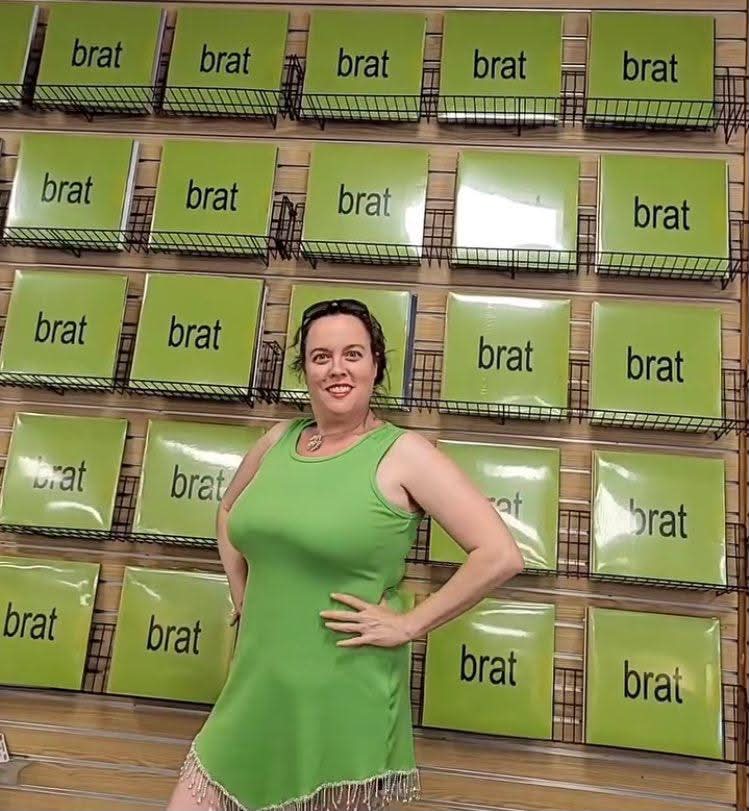
Het succes van Brat vormt daarvan een opvallend voorbeeld. De campagne rond het album was moeilijk subtiel te noemen. De herkenbare groene albumhoes groeide uit tot een visuele code die online eindeloos werd gekopieerd. Respondenten wezen zelf op de brat wall, advertenties en de manier waarop vrijwel ieder groen voorwerp plots ‘brat’ kon worden genoemd.
Toch werd die commercialisering zelden automatisch als problematisch gezien. Een respondent noemt de marketing zelfs essentieel voor het succes: zonder die campagne "zou het totaal niet zo'n impact hebben gehad". Een andere merkt op dat de beweging door de marketing werd "gecultiveerd". In plaats van buiten het artistieke project te staan, werd de promotie er onderdeel van. Dat zet een klassiek idee over muzikale authenticiteit op losse schroeven. Een artiest hoeft blijkbaar niet langer te bewijzen dat hij of zij boven commercie en zelfpromotie staat. Luisteraars lijken vooral gevoelig voor de manier waarop daarmee wordt omgegaan.
Charli xcx probeert haar status als geconstrueerde popster niet volledig te verbergen. Net dat zelfbewustzijn werd door verschillende respondenten als geloofwaardig ervaren. De ironie en hypergestileerde esthetiek van Brat werden niet automatisch geïnterpreteerd als onecht, maar wezen juist op artistieke controle.
De spontane TikTok
Ook op sociale media blijkt die dubbelheid. Artiesten gebruiken TikTok en Instagram om dichter bij hun publiek te komen. Achter-de-schermenbeelden en ogenschijnlijk banale filmpjes bieden een blik op de persoon achter de popster. Alleen gelooft het publiek niet zomaar alles wat het ziet.
"Je leert die een beetje kennen door die TikTok-video's", vertelt een vrouwelijke respondent. Tegelijk beseft ze dat bij mainstreamartiesten een heel team achter de schermen kan zitten, zelfs wanneer een artiest gewoon een spontaan filmpje plaatst. Opvallend is dat dat wantrouwen de band met een artiest niet noodzakelijk verbreekt. Luisteraars kunnen tegelijkertijd beseffen dat intimiteit wordt geproduceerd én zich verbonden voelen met de artiest. Authenticiteit wordt daardoor geen zoektocht naar het moment waarop de marketing eindelijk ophoudt. Het wordt een onderhandeling: welke performance vinden we nog geloofwaardig?
Voor vrouwen gelden andere regels
Maar die beoordeling verloopt niet voor iedereen hetzelfde. In de interviews kwamen opvallende verschillen naar voren tussen respondentgroepen. Heteroseksuele mannen verbonden authenticiteit vaker met ernst, muzikaliteit en afstand tot commerciële pop. Vrouwelijke respondenten benadrukten vaker emotionele herkenning en identificatie met de artiest.
Sommige mannen bleken bovendien moeite te hebben met de culturele status van popmuziek. Een respondent noemt de cultuur rond popmuziek ‘cringe’. Een andere beschrijft hoe moeilijk het kan zijn om tegenover andere heteromannen te zeggen dat hij naast Metallica ook Sabrina Carpenter of Charli xcx beluistert.
Daarachter schuilt een oudere culturele tegenstelling. Het beeld van de authentieke muzikant is lang verbonden geweest aan autonomie, ernst en afstand van commercie. Popmuziek wordt daarentegen sneller geassocieerd met performance, commercie en vrouwelijkheid. "Authentiek wordt vaak omschreven met een gitaar of akoestisch", merkt een respondent op. "Ik denk dat pop meer gelinkt wordt met vrouwen, en die negatieve stigma's van pop worden dus ook weer gelinkt aan vrouwen."
Voor vrouwelijke popsterren levert dat een moeilijke positie op. Ze mogen een persona construeren, maar moeten tegelijkertijd herkenbaar blijven. Ze mogen hun privéleven beschermen, maar worden ook geacht emotionele toegang te bieden. Ook kwetsbaarheid kan hun geloofwaardigheid vergroten, totdat die kwetsbaarheid als strategisch wordt ervaren. "Bij vrouwen wordt er altijd verwacht dat ze authentiek zijn in zichzelf, maar ze worden ook bestraft als ze dat echt zijn", zegt een respondent.
Wie bepaalt wat echt is?
De vijftien interviews zijn te beperkt om uitspraken te doen over een volledige generatie muziekluisteraars. Ze maken wel zichtbaar hoe ingewikkeld het begrip authenticiteit in de huidige popcultuur is. Luisteraars zijn zich bewust van marketing, algoritmes en geconstrueerde imago's. Toch blijven ze artiesten beoordelen op ‘echtheid’. Alleen lijkt de betekenis daarvan te verschuiven.
Dat maakt Brat een interessante testcase. Het album werd niet geloofwaardig omdat Charli xcx alle mechanismen van de popindustrie wist te verbergen. Respondenten waardeerden juist dat performance, commercie en constructie zichtbaar aanwezig bleven. Tegelijk toont hun reactie dat niet iedere artiest volgens dezelfde criteria wordt beoordeeld: gender en de culturele status van popmuziek spelen mee in wie het label ‘authentiek’ krijgt.
De belangrijkste conclusie is dan ook niet dat authenticiteit er niet meer toe doet. Integendeel. We verwachten nog altijd dat popsterren authentiek zijn, maar ‘authentiek’ betekent steeds minder ongefilterd of ongekunsteld. In de hedendaagse popmuziek kan net het openlijk erkennen van de performance geloofwaardig worden. Brat toont zo dat een popster niet minder authentiek hoeft te zijn omdat haar imago geconstrueerd is. Het onderzoek concludeert dat de constructie juist deel kan worden van wat we als authentiek ervaren.
Bibliografie
Abidin, C. (2018). Internet celebrity: Understanding fame online. Emerald Publishing Limited.
Anttonen, S. (2017). A feel for the real: discourses of authenticity in popular music cultures through three case studies. (Doctoral dissertation, University of Helsinki).
Askin, N., & Mauskapf, M. (2017). What makes popular culture popular? Product features and optimal differentiation in music. American Sociological Review, 82(5), 910-944.
Banet-Weiser, S. (2013). Authentic: The politics of ambivalence in a brand culture. Canadian Journal of Communication, 38, 443-454.
Baym, N. K. (2018). Playing to the crowd: Musicians, audiences, and the intimate work of connection. New York University Press.
Beer, D. (2019). The social power of algorithms. In The social power of algorithms (pp. 1-13). Routledge.
Beck, U., Giddens, A., & Lash, S. (1994). Reflexive Modernization: Politics, Tradition and Aesthetics in the Modern Social Order. Polity Press.
Blackburn, A. (2020). Voices That Matter: Authenticity, Identity, and Voice in the Musical Career of Lana Del Rey. Nota Bene: Canadian Undergraduate Journal of Musicology, 13(1), 84-114.
Bourdieu, P. (1986/2018). The forms of capital. In J. Richardson (Ed.), Handbook of theory and research for the sociology of education (pp. 241-258). Routledge.
Bourdieu, P. (1990). Structures, habitus, practices. In R. Nice (Trans.), The logic of practice (pp. 52-79). Stanford University Press.
Bourdieu, P. (1991). Social space and symbolic space [1994]. Contemporary sociological theory.
Brett, P., Wood, E., & Thomas, G. C. (Eds.). (2013). Queering the pitch. Routledge.
Bucher, T. (2018). If... then: Algorithmic power and politics. Oxford University Press.
Butler, J. (1990). Gender trouble: Feminism and the Subversion of Identity. Routledge.
Clarke, V., & Braun, V. (2017). Thematic analysis. The journal of Positive Psychology, 12(3), 297-298.
Cole, S. (2025). A song for each moment: Identifying listening modes as reflexive practices in music streaming. Big Data & Society, 12(2), 20539517251338742.
Conner, T., & Jones, S. (2014). Art to commerce: The trajectory of popular music criticism. IASPM Journal, 4(2), 7-23.
Coulter, B. (2017). “Singing from the Heart”: Notions of gendered authenticity in pop music. In The Routledge Research Companion to Popular Music and Gender (pp. 267-280). Routledge.
Edlom, J. (2020). Authenticity and Digital Popular Music Brands. In Popular music, technology, and the changing media ecosystem: from cassettes to stream (pp. 129-145). Cham: Springer International Publishing.
Fetterley, L. M. (2007). " Give me real, don't give me fake": Authenticity, value, and popular music.
Frith, S. (1996). Music and identity. Questions of cultural identity, 1(1), 108-128.
Garvey, M. (2024, 7 juni). Charli xcx: BRAT. Pitchfork. https://pitchfork.com/reviews/albums/charli-xcx-brat/
Genz, S. (2015). My job is me: Postfeminist celebrity culture and the gendering of authenticity. Feminist media studies, 15(4), 545-561.
Gill, R. (2007). Gender and the Media. Polity.
Gilmore, J. H., & Pine, B. J. (2007). Authenticity: What consumers really want. Harvard Business Press.
Hochschild, A. R. (1979). Emotion work, feeling rules, and social structure. American Journal of Sociology, 85(3), 551-575.
Hubbs, N. (2014). Rednecks, queers, and country music. Univ of California Press.
Hutcheon, L. (2003). The politics of postmodernism. Routledge.
Illouz, E. (2023). Consuming the romantic utopia: Love and the cultural contradictions of capitalism. Univ of California Press.
Jones, S. (Ed.). (2002). Pop music and the press. Temple University Press.
Kim, D. O. (2025). Meta-authenticity and fake but real virtual influencers: A framework for artificial sociality analysis and ethics. New Media & Society, 27(10), 5568-5591.
Lindberg, U. (2005). Rock criticism from the beginning: Amusers, bruisers, and cool-headed cruisers (Vol. 5). Peter Lang.
Martin, F. (2024, 8 augustus). How authenticity became the hottest currency in music. Dazed. https://www.dazeddigital.com/music/article/64322/1/how-authenticity-bec…
Meyer, M. (2005). The politics and poetics of camp. Routledge.
Mitchell, T. (1989). Performance and the Postmodern in Pop Music. Theatre Journal, 41(3), 273-293.
Moore, A. (2002). Authenticity as authentication. Popular music, 21(2), 209-223.
Morris, J. W., & Powers, D. (2015). Control, curation and musical experience in streaming music services. Creative Industries Journal, 8(2), 106-122.
Nelligan, K. (2018). The Question of Authenticity in Pop Music: ‘Brand Lady Gaga’. (Doctoral dissertation, The University of Melbourne). http://hdl. handle. net/11343/213980.
Ngai, S. (2010). Our aesthetic categories. PMLA, 125(4), 948-958.
Owens, J. (2019). Post-authenticity and the ironic truths of meme culture. Post memes: Seizing the memes of production, 77-113.
Parahoo, R. (2020). Exploring being queer and performing queerness in popular music (Master's thesis, The University of Western Ontario).
Pratishtha, M. (2025). Feminism in 'Pop Culture': Empowerment or Commercialization. Mahila Pratishtha.
Salih, S. (2007). On Judith butler and performativity. Sexualities and communication in everyday life (pp. 55-68).
Shoemaker, P. J., Vos, T. P., & Reese, S. D. (2009). Journalists as gatekeepers. In The handbook of journalism studies (pp. 93-107). Routledge.
Skeggs, B. (1997). Formations of class & gender: Becoming respectable. Sage.
Snapes, L. (2024, 6 juni). Charli xcx: Brat review – insecurity-obliterating anthems by pop’s most human superstar. The Guardian. https://www.theguardian.com/music/article/2024/jun/06/charli-xcx-brat-r…
Sontag, S. (2018). Notes on Camp. Penguin Classics.
Stevens, P. (2023). Qualitative Data Analysis: Key approaches. Sage Publications.
Thompson, W. F., Bullot, N. J., & Margulis, E. H. (2023). The psychological basis of music appreciation: Structure, self, source. Psychological Review, 130(1), 260.
Thurnell-Read, T., Skey, M., & Heřmanová, M. (2022). Introduction: Cultures of authenticity. In Cultures of authenticity (pp. 1-17). Emerald Publishing Limited.
Trilling, L. (2009). Sincerity and authenticity. Harvard University Press.
Van Dijck, J. (2013). ‘You have one identity’: Performing the self on Facebook and LinkedIn. Media, culture & society, 35(2), 199-215.
Van Leeuwen, T. (2001). What is authenticity?. Discourse studies, 3(4), 392-397.
Vannini, P., & Williams, J. P. (2016). Authenticity in culture, self, and society. In Authenticity in culture, self, and society (pp. 17-34). Routledge.
Von Appen, R. (2007). On the aesthetics of popular music. Music Therapy Today, 8(1), 11.
Williams, Z. (2025, 2 april). Brat summer: is the long era of clean living finally over? The Guardian. https://www.theguardian.com/lifeandstyle/article/2024/jul/16/brat-summe…
Zhao, S. (2025). Intrapersonal Interactions on Social Media: Self‐Curatorship within the Museum of Self. Symbolic Interaction.