Stop het stikstoflek: de weg naar een groene landbouw
Wat als een deel van de oplossing voor de stikstofcrisis zich onder onze voeten bevindt?
Wanneer landbouwers meststoffen toedienen aan hun gewassen, is dat met één doel: planten voorzien van voldoende voedingsstoffen om te groeien. Eén van de belangrijkste voedingsstoffen is stikstof, maar een aanzienlijk deel van die voedingsstof bereikt nooit het gewas waarvoor ze bedoeld is.
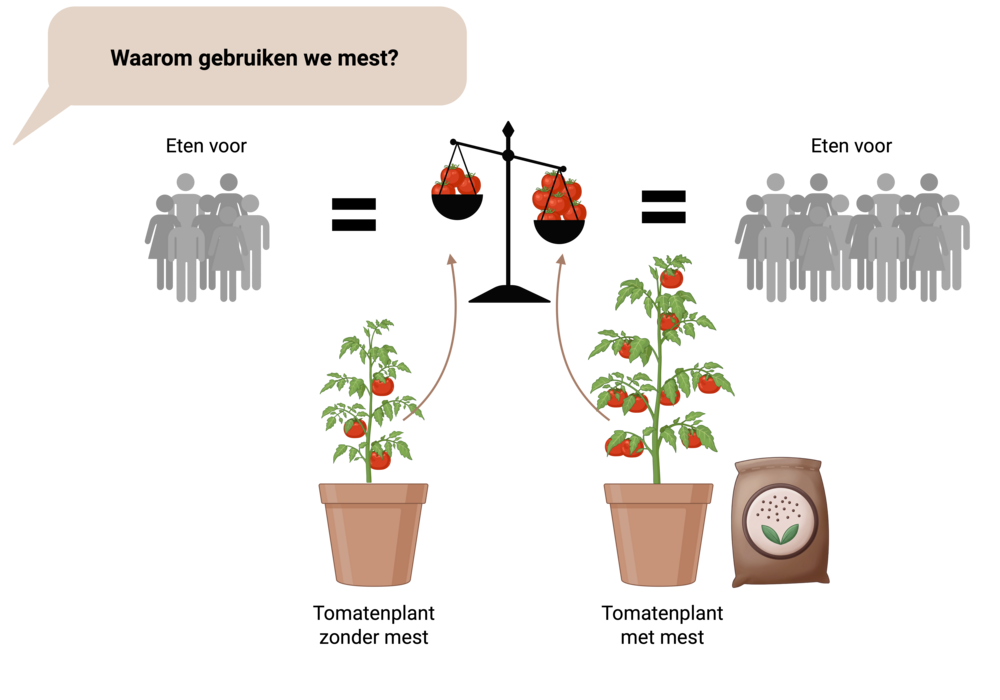
Ontworpen met BioRender.com
De reden daarvoor ligt verborgen in de bodem. Onder elke landbouwakker leeft een enorme gemeenschap van bacteriën en andere micro-organismen. Zij vervullen onmisbare functies voor een gezonde bodem, maar sommige bacteriën gebruiken ook een deel van de beschikbare stikstof. Daarbij zetten ze die om in stoffen die verloren gaan naar het milieu.
Dat heeft belangrijke gevolgen. Een deel van de stikstof wordt omgezet in lachgas, een krachtig broeikasgas dat bijdraagt aan klimaatverandering. Een ander deel komt terecht in grond- en oppervlaktewater, waar het de natuurlijke balans kan verstoren. Zo kan een overaanbod aan voedingsstoffen leiden tot algenbloei en zuurstoftekort, met negatieve gevolgen voor vissen en andere waterorganismen. Ook op het land kan een teveel aan stikstof de biodiversiteit aantasten, een belangrijk aspect van de huidige stikstofcrisis.
De uitdaging is daarom duidelijk: hoe zorgen we ervoor dat meer stikstof beschikbaar blijft voor planten, zonder de voedselproductie in gevaar te brengen?
Bacteriën tijdelijk op de rem zetten
Een veelbelovende oplossing bestaat uit zogenaamde nitrificatie-inhibitoren (hierna ‘stikstofremmers’).
Deze stoffen vertragen tijdelijk de activiteit van specifieke bodembacteriën die stikstof omzetten in minder bruikbare vormen. Daardoor blijft stikstof langer beschikbaar voor het gewas en gaan er minder voedingsstoffen verloren naar het milieu.
Hoewel deze producten vandaag al worden gebruikt in de landbouw, blijkt hun effect sterk te variëren. Een stikstofremmer die op het ene perceel uitstekend werkt, kan elders veel minder efficiënt zijn. Tot nu toe was onvoldoende duidelijk welke rol de eigenschappen van de bodem daarin spelen.
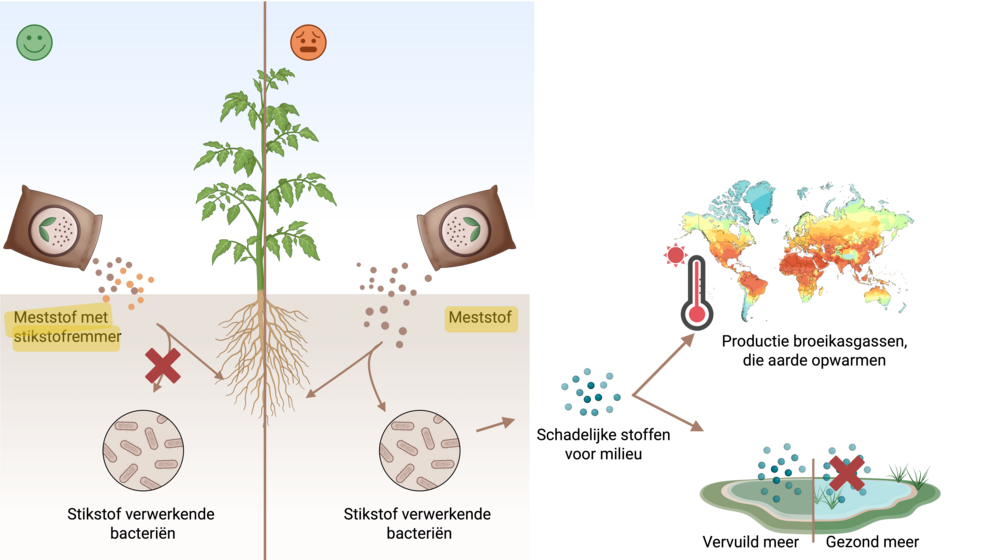
Ontworpen met BioRender.com
Waarom dezelfde oplossing niet overal werkt
Landbouwgronden verschillen sterk van elkaar. Sommige bodems zijn zuur, andere eerder neutraal. Sommige bevatten veel klei, andere bestaan vooral uit zand. Die verschillen bepalen niet alleen welke gewassen goed groeien, maar beïnvloeden ook de effectiviteit van stikstofremmers.
In mijn onderzoek analyseerde ik een grote verzameling landbouwbodems uit de Benelux. Hierdoor kon ik op een veel grotere schaal dan in eerdere studies onderzoeken hoe bodemkenmerken de werking van twee veelgebruikte stikstofremmers beïnvloeden.
Daarnaast onderzocht ik niet alleen verschillende bodems, maar ook verschillende dosissen van deze producten. Dat maakte het mogelijk om na te gaan onder welke omstandigheden stikstof het langst beschikbaar blijft voor planten.
De resultaten tonen aan dat bodemeigenschappen een belangrijke invloed hebben op de effectiviteit van stikstofremmers. Deze bevindingen openen de deur naar een meer gepersonaliseerde aanpak, waarbij landbouwers advies kunnen krijgen dat afgestemd is op de specifieke kenmerken van hun perceel.
Minder verliezen, dezelfde opbrengst
Die kennis kan een belangrijke bijdrage leveren aan een duurzamere landbouw.
Wanneer stikstof langer beschikbaar blijft voor gewassen, kan een groter deel van de toegediende meststof effectief worden benut en zijn vaak minder meststof applicaties nodig. Dat betekent dat landbouwers minder stikstof verliezen aan het milieu en tegelijk efficiënter omgaan met hun meststoffen.
Zo ontstaat een win-win. De landbouwproductie hoeft niet af te nemen, terwijl de uitstoot van broeikasgassen en de belasting van waterlopen kunnen worden verminderd.
Een gezonde bodem blijft essentieel
Duurzame landbouw draait echter niet alleen om efficiëntie. Een maatregel is pas echt duurzaam wanneer ze ook veilig is voor het ecosysteem waarin ze wordt toegepast.
Daarom onderzocht ik in een tweede deel van mijn thesis enkele nieuwe kandidaat-stikstofremmers. Daarbij keek ik naar hun invloed op het bredere bodemleven.
De bodem is een complex ecosysteem waarin duizenden soorten bacteriën, schimmels en andere organismen samen zorgen voor vruchtbaarheid, nutriëntencycli en weerbaarheid tegen stressfactoren zoals droogte.
Door de impact van nieuwe stikstofremmers op die biologische balans in kaart te brengen, levert dit onderzoek kennis die essentieel is voor de ontwikkeling van toekomstige producten. Een effectieve stikstofremmer moet immers niet alleen werken, maar ook de gezondheid van de bodem behouden.
Naar een toekomstbestendige landbouw
De uitdagingen rond stikstofvervuiling beperken zich niet tot Vlaanderen. Over heel de wereld zoeken landbouwers, onderzoekers en beleidsmakers naar manieren om voedselproductie te combineren met een lagere milieubelasting.
Mijn onderzoek draagt bij aan die zoektocht door beter te verklaren waarom stikstofremmers niet overal hetzelfde effect hebben en hoe hun toepassing kan worden geoptimaliseerd.
De inzichten kunnen relatief snel worden toegepast, omdat stikstofremmers vandaag al wereldwijd worden gebruikt. Daardoor heeft dit onderzoek het potentieel om onmiddellijk bij te dragen aan efficiënter stikstofbeheer, een betere waterkwaliteit en een lagere uitstoot van broeikasgassen.
Soms worden landbouw en natuur voorgesteld als tegenstrijdige belangen. Dit onderzoek toont echter dat beide elkaar kunnen versterken. Door de processen in de bodem beter te begrijpen en af te stemmen op lokale omstandigheden, kunnen we werken aan een landbouw die productief blijft én tegelijk haar impact op het milieu verkleint.
Bibliografie
Alawi M, Lipski A, Sanders T, Eva-Maria-Pfeiffer & Spieck E (2007) Cultivation of a novel cold-adapted nitrite oxidizing betaproteobacterium from the Siberian Arctic. ISME J 1: 256–264
Arp DJ, Sayavedra-Soto LA & Hommes NG (2002) Molecular biology and biochemistry of ammonia oxidation by Nitrosomonas europaea. Arch Microbiol 178: 250–255
Arp DJ & Stein LY (2003) Metabolism of Inorganic N Compounds by Ammonia-Oxidizing Bacteria. Crit Rev Biochem Mol Biol 38: 471–495
Avnimelech Y & Laher M (1977) Ammonia Volatilization From Soils: Equilibrium Considerations. Soil Sci Soc Am J 41: 1080–1084
Bachtsevani E, Papazlatani C V., Rousidou C, Lampronikou E, Menkissoglu-Spiroudi U, Nicol GW, Karpouzas DG & Papadopoulou ES (2021) Effects of the nitrification inhibitor 3,4-dimethylpyrazole phosphate (DMPP) on the activity and diversity of the soil microbial community under contrasting soil pH. Biol Fertil Soils 57: 1117–1135
Balasubramanian R, Smith SM, Rawat S, Yatsunyk LA, Stemmler TL & Rosenzweig AC (2010) Oxidation of methane by a biological dicopper centre. Nature 465: 115–119
Banning NC, Maccarone LD, Fisk LM & Murphy D V. (2015) Ammonia-oxidising bacteria not archaea dominate nitrification activity in semi-arid agricultural soil. Sci Rep 5: 11146
Barth G, von Tucher S & Schmidhalter U (2008) Effectiveness of 3,4-Dimethylpyrazole Phosphate as Nitriflcation Inhibitor in Soil as Influenced by Inhibitor Concentration, Application Form, and Soil Matric Potential. Pedosphere 18: 378–385
Bartossek R, Spang A, Weidler G, Lanzen A & Schleper C (2012) Metagenomic analysis of ammonia-oxidizing archaea affiliated with the soil group. Front Microbiol 3: 24170
Bates D, Mächler M, Bolker B & Walker S (2015) Fitting Linear Mixed-Effects Models Using lme4. J Stat Softw 67: 1-48
Beeckman F, Annetta L, Corrochano-Monsalve M, Beeckman T & Motte H (2024) Enhancing agroecosystem nitrogen management: microbial insights for improved nitrification inhibition. Trends Microbiol 32: 590–601
Beeckman F, Drozdzecki A, De Knijf A, Corrochano-Monsalve M, Bodé S, Blom P, Goeminne G, González-Murua C, Lücker S, Boeckx P, et al (2023) Drug discovery-based approach identifies new nitrification inhibitors. J Environ Manage 346: 118996
Beeckman F, Motte H & Beeckman T (2018) Nitrification in agricultural soils: impact, actors and mitigation. Curr Opin Biotechnol 50: 166–173
Beghini F, McIver LJ, Blanco-Míguez A, Dubois L, Asnicar F, Maharjan S, Mailyan A, Manghi P, Scholz M, Thomas AM, et al (2021) Integrating taxonomic, functional, and strain-level profiling of diverse microbial communities with biobakery 3. Elife 10: e65088
Beusen AHW, Bouwman AF, Van Beek LPH, Mogollón JM & Middelburg JJ (2016) Global riverine N and P transport to ocean increased during the 20th century despite increased retention along the aquatic continuum. Biogeosciences 13: 2441–2451
Bock E, Koops HP, Möller UC & Rudert M (1990) A new facultatively nitrite oxidizing bacterium, Nitrobacter vulgaris sp. nov. Arch Microbiol 153: 105–110
Boon B & Laudelout H (1962) Kinetics of nitrite oxidation by Nitrobacter winogradskyi. Biochem J 85: 440–447
Briggs GG (1975) The behaviour of the nitrification inhibitor “n‐serve” in broadcast and incorporated applications to soil. J Sci Food Agric 26: 1083–1092
Campos JL, Dumais J, Pavissich JP, Franchi O, Crutchik D, Belmonte M, Faúndez M, Jorquera L, Pedrouso A, Mosquera-Corral A, et al (2019) Predicting Accumulation of Intermediate Compounds in Nitrification and Autotrophic Denitrification Processes: A Chemical Approach. Biomed Res Int 1: 2051986
Caranto JD & Lancaster KM (2017) Nitric oxide is an obligate bacterial nitrification intermediate produced by hydroxylamine oxidoreductase. Proc Natl Acad Sci U S A 114: 8217–8222
Casali L, Broll V, Ciurli S, Emmerling F, Braga D & Grepioni F (2021) Facilitating Nitrification Inhibition through Green, Mechanochemical Synthesis of a Novel Nitrapyrin Complex. Cryst Growth Des 21: 5792–5799
Chain P, Lamerdin J, Larimer F, Regala W, Lao V, Land M, Hauser L, Hooper A, Klotz M, Norton J, et al (2003) Complete genome sequence of the ammonia-oxidizing bacterium and obligate chemolithoautotroph Nitrosomonas europaea. J Bacteriol 185: 2759–2773
Chen J, Li J, Li W, Li P, Zhu R, Zhong Y, Zhang W & Li T (2024) The optimal ammonium-nitrate ratio for various crops: A Meta-analysis. Field Crops Res 307: 109240
Chung IY, Kim YK & Cho YH (2014) Common virulence factors for Pseudomonas tolaasii pathogenesis in Agaricus and Arabidopsis. Res Microbiol 165: 102–109
Conley DJ, Carstensen J, Ærtebjerg G, Christensen PB, Dalsgaard T, Hansen JLS & Josefson AB (2007) Long-term changes and impacts of hypoxia in Danish coastal waters. Ecoll Appl 17: S165–S184
Corrochano-Monsalve M, Beeckman F, Bozal-Leorri A, Motte H & Maestre FT (2025) Nitrification Inhibition: Uncertainties and Opportunities for Sustainable Agriculture. Eur J Soil Sci 76: e70218
Corrochano-Monsalve M, González-Murua C, Bozal-Leorri A, Lezama L & Artetxe B (2021) Mechanism of action of nitrification inhibitors based on dimethylpyrazole: A matter of chelation. Science of The Total Environment 752: 141885
Costa E, Pérez J & Kreft JU (2006) Why is metabolic labour divided in nitrification? Trends Microbiol 14: 213–219
Cui L, Li D, Wu Z, Xue Y, Xiao F, Zhang L, Song Y, Li Y, Zheng Y, Zhang J, et al (2021) Effects of Nitrification Inhibitors on Soil Nitrification and Ammonia Volatilization in Three Soils with Different pH. Agronomy 11: 1674
Dai XJ, Xiao X, Dai WT, Liu SH, Dong XY, Shen RF & Zhao XQ (2023) Comparison of Nitrate and Ammonium Leaching of Soils Collected from Different Regions of China: A Soil Column Experiment. J Soil Sci Plant Nutr 23: 6059–6070
Daims H, Lebedeva E V., Pjevac P, Han P, Herbold C, Albertsen M, Jehmlich N, Palatinszky M, Vierheilig J, Bulaev A, et al (2015) Complete nitrification by Nitrospira bacteria. Nature 528: 504–509
Daims H, Lücker S & Wagner M (2016) A New Perspective on Microbes Formerly Known as Nitrite-Oxidizing Bacteria. Trends Microbiol 24: 699–712
Dalkidis D, Malits A, Kerou M, Sajedi H, Afjehi-Sadat L, Schleper C, Karpouzas DG, Papadopoulou ES & Hodgskiss LH (2026) Common nitrification inhibitors exhibit varied physiological mechanisms on an ammonia-oxidizing microorganism. bioRxiv: 2026.05.10.724060; doi: https://doi.org/10.64898/2026.05.10.724060
Daryanto S, Wang L, Gilhooly WP & Jacinthe PA (2019) Nitrogen preference across generations under changing ammonium nitrate ratios. J Plant Ecol 12: 235–244
Di HJ & Cameron KC (2004) Effects of temperature and application rate of a nitrification inhibitor, dicyandiamide (DCD), on nitrification rate and microbial biomass in a grazed pasture soil. Aust J Soil Res 42: 927–932
Di HJ, Cameron KC, Shen JP, Winefield CS, Ocallaghan M, Bowatte S & He JZ (2009) Nitrification driven by bacteria and not archaea in nitrogen-rich grassland soils. Nat Geosci 2: 621–624
Dimitri Kits K, Sedlacek CJ, Lebedeva E V., Han P, Bulaev A, Pjevac P, Daebeler A, Romano S, Albertsen M, Stein LY, et al (2017) Kinetic analysis of a complete nitrifier reveals an oligotrophic lifestyle. Nature 549: 269–272
Dinno A (2024) dunn.test: Dunn’s Test of Multiple Comparisons Using Rank Sums. CRAN: Contributed Packages doi:10.32614/CRAN.package.dunn.test
Du W, Zhu Q, Jing X, Hu W, Zhuang Y, Jiang Y & Jin C (2024) Comparison of nitrification inhibitors for mitigating cadmium accumulation in pakchoi and their associated microbial mechanisms. J Zhejiang Univ Sci B 25: 773–788
Ehrich S, Behrens D, Lebedeva E, Ludwig W & Bock E (1995) A new obligately chemolithoautotrophic, nitrite-oxidizing bacterium, Nitrospira moscoviensis sp. nov. and its phylogenetic relationship. Arch Microbiol 164: 16–23
Elgood Z, Robertson WD, Schiff SL & Elgood R (2010) Nitrate removal and greenhouse gas production in a stream-bed denitrifying bioreactor. Ecol Eng 36: 1575–1580
Elrys AS, Raza S, Elnahal ASM, Na M, Ahmed M, Zhou J & Chen Z (2020) Do soil property variations affect dicyandiamide efficiency in inhibiting nitrification and minimizing carbon dioxide emissions? Ecotoxicol Environ Saf 202: 110875
Elrys AS, Wang J, Metwally MAS, Cheng Y, Zhang JB, Cai ZC, Chang SX & Müller C (2021) Global gross nitrification rates are dominantly driven by soil carbon-to-nitrogen stoichiometry and total nitrogen. Glob Chang Biol 27: 6512–6524
Ensign SA, Hyman MR & Arp DJ (1993) In vitro activation of ammonia monooxygenase from Nitrosomonas europaea by copper. J Bacteriol 175: 1971–1980
Erisman JW, Sutton MA, Galloway J, Klimont Z & Winiwarter W (2008) How a century of ammonia synthesis changed the world. Nat Geosci 1: 636–639
Ernfors M, Brennan FP, Richards KG, Mcgeough KL, Griffiths BS, Laughlin RJ, Watson CJ, Philippot L, Grant J, Minet EP, et al (2014) The nitrification inhibitor dicyandiamide increases mineralization–immobilization turnover in slurry-amended grassland soil. J Agric Sci 152: 137–149
European Commission (2023) Nutrients - Agriculture and rural development - European Commission. https://agriculture.ec.europa.eu/cap-my-country/sustainability/environm… [Accessed 16 November 2025]
Fan X, Chen H, Yan G, Ye M, Yin C, Li T, Wakelin SA & Liang Y (2022) Niche Differentiation Among Canonical Nitrifiers and N2O Reducers Is Linked to Varying Effects of Nitrification Inhibitors DCD and DMPP in Two Arable Soils. Microb Ecol 85: 1434–1447
Fan X, Yin C, Chen H, Ye M, Zhao Y, Li T, Wakelin SA & Liang Y (2019) The efficacy of 3,4-dimethylpyrazole phosphate on N2O emissions is linked to niche differentiation of ammonia oxidizing archaea and bacteria across four arable soils. Soil Biol Biochem 130: 82–93
Felgate H, Giannopoulos G, Sullivan MJ, Gates AJ, Clarke TA, Baggs E, Rowley G & Richardson DJ (2012) The impact of copper, nitrate and carbon status on the emission of nitrous oxide by two species of bacteria with biochemically distinct denitrification pathways. Environ Microbiol 14: 1788–1800
Fierer N, Carney KM, Horner-Devine MC & Megonigal JP (2009) The Biogeography of Ammonia-Oxidizing Bacterial Communities in Soil. Microb Ecol 58: 435–445
French E, Kozlowski JA, Mukherjee M, Bullerjahn G & Bollmann A (2012) Ecophysiological characterization of ammonia-oxidizing archaea and bacteria from freshwater. Appl Environ Microbiol 78: 5773–5780
Galloway JN, Dentener FJ, Capone DG, Boyer EW, Howarth RW, Seitzinger SP, Asner GP, Cleveland CC, Green PA, Holland EA, et al (2004) Nitrogen cycles: Past, present, and future. Biogeochemistry 70: 153–226
Glibert PM, Maranger R, Sobota DJ & Bouwman L (2014) The Haber Bosch–harmful algal bloom (HB–HAB) link. Environ Res Lett 9: 105001
Griffis TJ, Chen Z, Baker JM, Wood JD, Millet DB, Lee X, Venterea RT & Turner PA (2017) Nitrous oxide emissions are enhanced in a warmer and wetter world. Proc Natl Acad Sci 114: 12081–12085
Grundmann GL, Dechesne A, Bartoli F, Flandrois JP, Chassé JL & Kizungu R (2001) Spatial Modeling of Nitrifier Microhabitats in Soil. Soil Sci Soc Am J 65: 1709–1716
Guan T, Lei J, Fan Q & Liu R (2024) Soil Factors Key to 3,4-Dimethylpyrazole Phosphate (DMPP) Efficacy: EC and SOC Dominate over Biotic Influences. Microorganisms 12: 1787
Guo YJ, Di HJ, Cameron KC & Li B (2014) Effect of application rate of a nitrification inhibitor, dicyandiamide (DCD), on nitrification rate, and ammonia-oxidizing bacteria and archaea growth in a grazed pasture soil: An incubation study. J Soils Sediments 14: 897–903
Haag AF, Ross Fitzgerald J & Penadés JR (2019) Staphylococcus aureus in Animals. In Gram-Positive Pathogens, Fischetti VA, Novick RP, Ferretti JJ, Portnoy DA, Braunstein M, Rood JI (eds). Washington, DC: ASM Press. https://doi.org/10.1128/9781683670131.ch46
Hachiya T, Inaba J, Wakazaki M, Sato M, Toyooka K, Miyagi A, Kawai-Yamada M, Sugiura D, Nakagawa T, Kiba T, et al (2021) Excessive ammonium assimilation by plastidic glutamine synthetase causes ammonium toxicity in Arabidopsis thaliana. Nat Commun 12: 4944
Hamonts K, Clough TJ, Stewart A, Clinton PW, Richardson AE, Wakelin SA, O’Callaghan M & Condron LM (2013) Effect of nitrogen and waterlogging on denitrifier gene abundance, community structure and activity in the rhizosphere of wheat. FEMS Microbiol Ecol 83: 568–584
Han S, Kim S, Sedlacek CJ, Farooq A, Song C, Lee S, Liu S, Brüggemann N, Rohe L, Kwon M, et al (2024) Adaptive traits of Nitrosocosmicus clade ammonia-oxidizing archaea. mBio 15
Hayden HL, Phillips LA, Marshall AJ, Condon JR, Doran GS, Wells GS & Mele PM (2021) Nitrapyrin reduced ammonia oxidation with different impacts on the abundance of bacterial and archaeal ammonia oxidisers in four agricultural soils. Appl Soil Ecol 157: 103759
Head IM, Hiorns WD, Embley TM, McCarthy AJ & Saunders JR (1993) The phylogeny of autotrophic ammonia-oxidizing bacteria as determined by analysis of 16S ribosomal RNA gene sequences. J Gen Microbiol 139: 1147–1153
Herlihy M & Quirke W (1975) The persistence of 2‐chloro‐6‐(trichloromethyl)‐pyridine in soil. Commun Soil Sci Plant Anal 6: 513–520
Hermenau R, Kugel S, Komor AJ & Hertweck C (2020) Helper bacteria halt and disarm mushroom pathogens by linearizing structurally diverse cyclolipopeptides. Proc Natl Acad Sci U S A 117: 23802–23806
Hink L, Gubry-Rangin C, Nicol GW & Prosser JI (2018) The consequences of niche and physiological differentiation of archaeal and bacterial ammonia oxidisers for nitrous oxide emissions. ISME J 12: 1084–1093
Hodgskiss LH, Melcher M, Kerou M, Chen W, Ponce-Toledo RI, Savvides SN, Wienkoop S, Hartl M & Schleper C (2023) Unexpected complexity of the ammonia monooxygenase in archaea. ISME J 17: 588–599
Hollocher TC, Tate ME & Nicholas DJ (1981) Oxidation of ammonia by Nitrosomonas europaea Definite 18O-tracer evidence that hydroxylamine formation involves a monooxygenase. J Biol Chem 256: 10834–10836
Hu HW, Macdonald CA, Trivedi P, Anderson IC, Zheng Y, Holmes B, Bodrossy L, Wang JT, He JZ & Singh BK (2016) Effects of climate warming and elevated CO2 on autotrophic nitrification and nitrifiers in dryland ecosystems. Soil Biol Biochem 92: 1–15
Hu L, Dong Z, Wang Z, Xiao L & Zhu B (2022) The contributions of ammonia oxidizing bacteria and archaea to nitrification-dependent N2O emission in alkaline and neutral purple soils. Sci Rep 12: 19928
Husnain M, Ribeiro PL, Pitann B & Mühling KH (2025) Revisiting the Effectiveness of Nitrification Inhibitors Under Different Soil Moisture Conditions and Mineral Nitrogen Extraction Methods: Further Experimental Work Considering the Pasda et al. (2023) Opinion Paper. J Plant Nutr Soil Sci 189: 160–167
Igarashi N, Moriyama H, Fujiwara T, Fukumori Y & Tanaka N (1997) The 2.8 Å structure of hydroxylamine oxidoreductase from a nitrifying chemoautotrophic bacterium, Nitrosomonas europaea. Nat Struct Biol 4: 276–284
Irigoyen I, Muro J, Azpilikueta M, Aparicio-Tejo P & Lamsfus C (2003) Ammonium oxidation kinetics in the presence of nitrification inhibitors DCD and DMPP at various temperatures. Aust J Soil Res 41: 1177–1183
Jacinthe PA & Pichtel JR (1992) Interaction of Nitrapyrin and Dicyandiamide with Soil Humic Compounds. Soil Sci Soc Am J 56: 465–470
Jones CM & Hallin S (2019) Geospatial variation in co-occurrence networks of nitrifying microbial guilds. Mol Ecol 28: 293–306
Joseph L, Merciecca T, Forestier C, Balestrino D & Miquel S (2021) From Klebsiella pneumoniae Colonization to Dissemination: An Overview of Studies Implementing Murine Models. Microorganisms 9: 1282
Keiblinger KM, Zehetner F, Mentler A & Zechmeister-Boltenstern S (2018) Biochar application increases sorption of nitrification inhibitor 3,4-dimethylpyrazole phosphate in soil. Environ Sci Pollut Res 25: 11173–11177
Kelliher FM, Clough TJ, Clark H, Rys G & Sedcole JR (2008) The temperature dependence of dicyandiamide (DCD) degradation in soils: A data synthesis. Soil Biol Biochem 40: 1878–1882
Kerou M, Alves RJE & Schleper C (2016) Nitrososphaeria. In Bergey's Manual of Systematics of Archaea and Bacteria, Trujillo ME, Dedysh S, DeVos P, Hedlund B, Kämpfer P, Rainey FA, Whitman WB (eds). Hoboken, NJ: John Wiley & Sons. https://doi.org/10.1002/9781118960608.cbm00055
Van Kessel MAHJ, Speth DR, Albertsen M, Nielsen PH, Op Den Camp HJM, Kartal B, Jetten MSM & Lücker S (2015) Complete nitrification by a single microorganism. Nature 528: 555–559
Kleineidam K, Košmrlj K, Kublik S, Palmer I, Pfab H, Ruser R, Fiedler S & Schloter M (2011) Influence of the nitrification inhibitor 3,4-dimethylpyrazole phosphate (DMPP) on ammonia-oxidizing bacteria and archaea in rhizosphere and bulk soil. Chemosphere 84: 182–186
Könneke M, Bernhard AE, De La Torre JR, Walker CB, Waterbury JB & Stahl DA (2005) Isolation of an autotrophic ammonia-oxidizing marine archaeon. Nature 437: 543–546
Kuznetsova A, Brockhoff PB & Christensen RHB (2017) lmerTest Package: Tests in Linear Mixed Effects Models. J Stat Softw 82: 1–26
Kyriakidou M, Phokas A, Panagiotou M, Pissaridou P & Omirou M (2025) pH-dependent microbial responses drive nitrous oxide mitigation by the nitrification inhibitor DMPP. Sustain Microbiol 2: 32
Lam SK, Wille U, Hu HW, Caruso F, Mumford K, Liang X, Pan B, Malcolm B, Roessner U, Suter H, et al (2022) Next-generation enhanced-efficiency fertilizers for sustained food security. Nat Food 3: 575–580
Lawton TJ, Ham J, Sun T & Rosenzweig AC (2014) Structural conservation of the B subunit in the ammonia monooxygenase/particulate methane monooxygenase superfamily. Proteins 82: 2263–2267
Lee U-J, Gwak J-H, Choi S, Jung M-Y, Lee TK, Ryu H, Imisi Awala S, Wanek W, Wagner M, Quan Z-X, et al (2024) “Ca. Nitrosocosmicus” members are the dominant archaea associated with plant rhizospheres . mSphere 9: e00821-24
Lehnert N, Dong HT, Harland JB, Hunt AP & White CJ (2018) Reversing nitrogen fixation. Nat Rev Chem 2: 278–289
Lehtovirta-Morley LE, Ross J, Hink L, Weber EB, Gubry-Rangin C, Thion C, Prosser JI & Nicol GW (2016) Isolation of ‘Candidatus Nitrosocosmicus franklandus’, a novel ureolytic soil archaeal ammonia oxidiser with tolerance to high ammonia concentration. FEMS Microbiol Ecol 92: 57
Lei J, Fan Q, Yu J, Ma Y, Yin J & Liu R (2022) A meta-analysis to examine whether nitrification inhibitors work through selectively inhibiting ammonia-oxidizing bacteria. Front Microbiol 13: 962146
Li C, Hu HW, Chen QL, Chen D & He JZ (2019) Comammox Nitrospira play an active role in nitrification of agricultural soils amended with nitrogen fertilizers. Soil Biol Biochem 138: 107609
Li Y, Xu J, Liu X, Qi Z, Wang H, Li Y & Liao L (2020a) Nitrification inhibitor DMPP offsets the increase in N2O emission induced by soil salinity. Biol Fertil Soils 56: 1211–1217
Li Z, Xu P, Bo X, Wu J, Han Z, Guo S, Li K, Shen M, Wang J & Zou J (2024) Soil pH-dependent efficacy of DMPP in mitigating nitrous oxide under different land uses. Geoderma 449: 117018
Li Z, Zeng Z, Tian D, Wang J, Fu Z, Zhang F, Zhang R, Chen W, Luo Y & Niu S (2020b) Global patterns and controlling factors of soil nitrification rate. Glob Chang Biol 26: 4147–4157
Liang P, Jiang J, Sun Z, Li Y, Yang C & Zhou Y (2023) Klebsiella michiganensis: a nitrogen-fixing endohyphal bacterium from Ustilago maydis. AMB Express 13: 146
Lin H, Eggesbø M & Peddada S Das (2022) Linear and nonlinear correlation estimators unveil undescribed taxa interactions in microbiome data. Nat Commun 13: 4946
Lin H & Peddada S Das (2020) Analysis of compositions of microbiomes with bias correction. Nat Commun 11: 3514
Lin H & Peddada S Das (2024) Multigroup analysis of compositions of microbiomes with covariate adjustments and repeated measures. Nat Methods 21: 83–91
Lin Y, Ye G, Ding W, Hu HW, Zheng Y, Fan J, Wan S, Duan C & He JZ (2020) Niche differentiation of comammox Nitrospira and canonical ammonia oxidizers in soil aggregate fractions following 27-year fertilizations. Agric Ecosyst Environ 304: 107147
Linn DM & Doran JW (1984) Effect of Water‐Filled Pore Space on Carbon Dioxide and Nitrous Oxide Production in Tilled and Nontilled Soils. Soil Sci Soc Am J 48: 1267–1272
Liu D, Zhang B, Liu M, Song X & Chen J (2026) Application potential of Klebsiella pneumoniae in agriculture: biodegradation, plant growth promotion, and alleviation of biotic and abiotic stresses. Open Life Sci 21: 20251304
Liu H, Hu H, Huang X, Ge T, Li Y, Zhu Z, Liu X, Tan W, Jia Z, Di H, et al (2021a) Canonical ammonia oxidizers, rather than comammox Nitrospira, dominated autotrophic nitrification during the mineralization of organic substances in two paddy soils. Soil Biol Biochem 156: 108192
Liu L, Ding N, Meng L, Xu Q, Zhu T, Elrys AS, Heng LK, Müller C, et al (2026) Nitrification inhibitor enhances nitrogen use efficiency and crop yield more than biochar in calcareous soils. Nitrogen Cycling 2: e001
Liu L, Liu M, Jiang Y, Lin W & Luo J (2021b) Production and Excretion of Polyamines To Tolerate High Ammonia, a Case Study on Soil Ammonia-Oxidizing Archaeon “Candidatus Nitrosocosmicus agrestis”. mSystems 6: 10.1128/msystems.01003-20
Liu R, Hayden H, Suter H, He J & Chen D (2015) The effect of nitrification inhibitors in reducing nitrification and the ammonia oxidizer population in three contrasting soils. J Soils Sediments 15: 1113–1118
Liu Y, Wang R, Zhang P, Chen Q, Luo Q, Zhu Y & Xu J (2016) The Nitrification Inhibitor Methyl 3-(4-Hydroxyphenyl)Propionate Modulates Root Development by Interfering with Auxin Signaling via the NO/ROS Pathway. Plant Physiol 171: 1686–1703
Liu Y, Zhang M, Li Y, Zhang Y, Huang X, Yang Y, Zhu H, Xiong H & Jiang T (2023) Influence of Nitrogen Fertilizer Application on Soil Acidification Characteristics of Tea Plantations in Karst Areas of Southwest China. Agriculture 13: 849
Lücker S, Nowka B, Rattei T, Spieck E & Daims H (2013) The genome of Nitrospina gracilis illuminates the metabolism and evolution of the major marine nitrite oxidizer. Front Microbiol 4: 41971
Lüdecke D (2025) sjPlot: Data Visualization for Statistics in Social Science. (https://CRAN.R-project.org/package=sjPlot)
Maková J, Artimová R, Soˇ S, Javoreková S, Adamec S, Paulen O, Andrejiová A, Ducsay L & Medo J (2026) Effect of Nitrification Inhibitors on the Soil Microbiome During Strawberry Cultivation. Nitrogen 7: 39
Marsden KA, Marín-Martínez AJ, Vallejo A, Hill PW, Jones DL & Chadwick DR (2016) The mobility of nitrification inhibitors under simulated ruminant urine deposition and rainfall: a comparison between DCD and DMPP. Biol Fertil Soils 52: 491–503
Martinez Arbizu P (2017) pairwiseAdonis: Pairwise Multilevel Comparison using Adonis. (https://github.com/pmartinezarbizu/pairwiseAdonis)
McGeough KL, Watson CJ, Müller C, Laughlin RJ & Chadwick DR (2016) Evidence that the efficacy of the nitrification inhibitor dicyandiamide (DCD) is affected by soil properties in UK soils. Soil Biol Biochem 94: 222–232
McMurdie PJ & Holmes S (2013) phyloseq: An R package for reproducible interactive analysis and graphics of microbiome census data. PLoS One 8: e61217
Mitra S, Pramanik K, Ghosh PK, Soren T, Sarkar A, Dey RS, Pandey S & Maiti TK (2018) Characterization of Cd-resistant Klebsiella michiganensis MCC3089 and its potential for rice seedling growth promotion under Cd stress. Microbiol Res 210: 12–25
Le Moal M, Gascuel-Odoux C, Ménesguen A, Souchon Y, Étrillard C, Levain A, Moatar F, Pannard A, Souchu P, Lefebvre A, et al (2019) Eutrophication: A new wine in an old bottle? Sci Total Environ 651: 1–11
Monteiro M, Séneca J & Magalhães C (2014) The history of aerobic ammonia oxidizers: From the first discoveries to today. J Microbiol 52: 537–547
Mukhtar H & Lin YP (2019) Soil Nitrification Potential Influences the Performance of Nitrification Inhibitors DCD and DMPP in Cropped and Non-Cropped Soils. Agronomy 9: 599
Nair D, Abalos D, Philippot L, Bru D, Mateo-Marín N & Petersen SO (2021) Soil and temperature effects on nitrification and denitrification modified N2O mitigation by 3,4-dimethylpyrazole phosphate. Soil Biol Biochem 157: 108224
Ngugi DK, Blom J, Stepanauskas R & Stingl U (2016) Diversification and niche adaptations of Nitrospina-like bacteria in the polyextreme interfaces of Red Sea brines. ISME J 10: 1383–1399
Nguyen LTT, Broughton K, Osanai Y, Anderson IC, Bange MP, Tissue DT & Singh BK (2019) Effects of elevated temperature and elevated CO2 on soil nitrification and ammonia-oxidizing microbial communities in field-grown crop. Science of The Total Environment 675: 81–89
Nicol GW, Leininger S, Schleper C & Prosser JI (2008) The influence of soil pH on the diversity, abundance and transcriptional activity of ammonia oxidizing archaea and bacteria. Environ Microbiol 10: 2966–2978
Oksanen J, Simpson GL, Blanchet FG, Kindt R, Legendre P, Minchin PR, O’Hara RB, Solymos P, Stevens MHH, Szoecs E, et al (2025) vegan: Community Ecology Package. CRAN: Contributed Packages doi:10.32614/CRAN.package.vegan
Orellana LH, Chee-Sanford JC, Sanford RA, Löffler FE & Konstantinidis KT (2018) Year-round shotgun metagenomes reveal stable microbial communities in agricultural soils and novel ammonia oxidizers responding to fertilization. Appl Environ Microbiol 84: e01646-17
Ouyang Y, Norton JM & Stark JM (2017) Ammonium availability and temperature control contributions of ammonia oxidizing bacteria and archaea to nitrification in an agricultural soil. Soil Biol Biochem 113: 161–172
Ouyang Y, Norton JM, Stark JM, Reeve JR & Habteselassie MY (2016) Ammonia-oxidizing bacteria are more responsive than archaea to nitrogen source in an agricultural soil. Soil Biol Biochem 96: 4–15
Pajares S & Bohannan BJM (2016) Ecology of nitrogen fixing, nitrifying, and denitrifying microorganisms in tropical forest soils. Front Microbiol 7: 209327
Parton WJ, Mosier AR, Ojima DS, Valentine DW, Schimel DS, Weier K & Kulmala AE (1996) Generalized model for N2 and N2O production from nitrification and denitrification. Global Biogeochem Cycles 10: 401–412
Peterson RA (2021) Finding Optimal Normalizing Transformations via bestNormalize. R J 13: 310
Peterson RA & Cavanaugh JE (2020) Ordered quantile normalization: a semiparametric transformation built for the cross-validation era. J Appl Stat 47: 2312–2327
Philippot L, Raaijmakers JM, Lemanceau P & Van Der Putten WH (2013) Going back to the roots: The microbial ecology of the rhizosphere. Nat Rev Microbiol 11: 789–799
Pinheiro RB, Cantarutti RB, Villani EM de A, Cavalcante VS & Fontes MPF (2020) Nitrate Mobility in Variable-Charge Tropical Soils. Commun Soil Sci Plant Anal 51: 2163–2173
Plessis MCF du & Kroontje W (1964) The Relationship between pH and Ammonia Equilibria in Soil. Soil Sci Soc Am J 28: 751–754
Prosser JI, Hink L, Gubry-Rangin C & Nicol GW (2020) Nitrous oxide production by ammonia oxidizers: Physiological diversity, niche differentiation and potential mitigation strategies. Glob Chang Biol 26: 103–118
Qi Z, Dong Y, He M, Wang M, Li Y & Dai X (2021) Coated, Stabilized Enhanced-Efficiency Nitrogen Fertilizers: Preparation and Effects on Maize Growth and Nitrogen Utilization. Front Plant Sci 12: 792262
R Core Team (2025) R: A Language and Environment for Statistical Computing. (Vienna, Austria)
Ramotowski D & Shi W (2022) Nitrapyrin-based nitrification inhibitors shaped the soil microbial community via controls on soil pH and inorganic N composition. Applied Soil Ecology 170: 104295
Raven JA & Smith FA (1976) Nitrogen assimilation and transport in vascular land plants in relation to intracellular pH regulation. New Phytol 76: 415–431
Recio J, Vallejo A, Le-Noë J, Garnier J, García-Marco S, Álvarez JM & Sanz-Cobena A (2018) The effect of nitrification inhibitors on NH3 and N2O emissions in highly N fertilized irrigated Mediterranean cropping systems. Sci Total Environ 636: 427–436
Redemann CT, Meikle RW & Widofsky JG (2002) Nutrient Conserving Agents, Loss of 2-Chloro-6-(trichloromethyl)pyridine from Soil. J Agric Food Chem 12: 207–209
Rees MK (1968) Hydroxylamine metabolism of Nitrosomonas europaea. I. Purification of hydroxylamine oxidase. Biochemistry 7: 353–366
Ritz C, Baty F, Streibig JC & Gerhard D (2015) Dose-Response Analysis Using R. PLoS One 10: e0146021
Santoro AE (2016) The do-it-all nitrifier: The discovery of bacteria that can oxidize both ammonia and nitrite upends a long-held dogma. Scienc 351: 342–343
Schimel JP, Firestone MK & Killham KS (1984) Identification of Heterotrophic Nitrification in a Sierran Forest Soil. Appl Environ Microbiol 48: 802–806
Schmidt R, Wang XB, Garbeva P & Yergeau É (2022) The nitrification inhibitor nitrapyrin has non-target effects on the soil microbial community structure, composition, and functions. Applied Soil Ecology 171: 104350
Semrau JD, Zolandz D, Lindstrom ME & Chan SI (1995) The role of copper in the pMMO of Methylococcus capsulatus Bath: A structural vs. catalytic function. J Inorg Biochem 58: 235–244
Shi X, Hu HW, Müller C, He JZ, Chen D & Suter HC (2016) Effects of the Nitrification Inhibitor 3,4-Dimethylpyrazole Phosphate on Nitrification and Nitrifiers in Two Contrasting Agricultural Soils. Appl Environ Microbiol 82: 5236–5248
Sidhu PK, Taggert BI, Chen D & Wille U (2021) Degradation of the Nitrification Inhibitor 3,4-Dimethylpyrazole Phosphate in Soils: Indication of Chemical Pathways. ACS Agric Sci Technol 1: 540–549
Siedt M, Ponton Paul AB, Franck M, Brill I, Drews LK, Nothbaum A, Kader S, Hubens WHG, Finn DR, Tebbe CC, et al (2026) Effects of urease inhibitor 2-NPT and nitrification inhibitors DMPP and MPA on soil microbial communities: an incubation study. Environ Sci Eur 38: 21
Smil V (2000) Enriching the Earth Fritz Haber, Carl Bosch, and the Transformation of World Food Production MIT press
Smil V (2002) Nitrogen and Food Production: Proteins for Human Diets. AMBIO 31: 126–131
Sorokin DY, Lücker S, Vejmelkova D, Kostrikina NA, Kleerebezem R, Rijpstra WIC, Sinninghe Damsté JS, Le Paslier D, Muyzer G, Wagner M, et al (2012) Nitrification expanded: discovery, physiology and genomics of a nitrite-oxidizing bacterium from the phylum Chloroflexi. ISME J 6: 2245–2256
Spieck E, Keuter S, Wenzel T, Bock E & Ludwig W (2014) Characterization of a new marine nitrite oxidizing bacterium, Nitrospina watsonii sp. nov., a member of the newly proposed phylum “Nitrospinae”. Syst Appl Microbiol 37: 170–176
Stein LY (2019) Insights into the physiology of ammonia-oxidizing microorganisms. Curr Opin Chem Biol 49: 9–15
Straka LL, Meinhardt KA, Bollmann A, Stahl DA & Winkler MKH (2019) Affinity informs environmental cooperation between ammonia-oxidizing archaea (AOA) and anaerobic ammonia-oxidizing (Anammox) bacteria. ISME J 13: 1997–2004
Subbarao G V., Nakahara K, Hurtado MP, Ono H, Moreta DE, Salcedo AF, Yoshihashi AT, Ishikawa T, Ishitani M, Ohnishi-Kameyama M, et al (2009) Evidence for biological nitrification inhibition in Brachiaria pastures. Proc Natl Acad Sci U S A 106: 17302–17307
Taylor AE, Giguere AT, Zoebelein CM, Myrold DD & Bottomley PJ (2017) Modeling of soil nitrification responses to temperature reveals thermodynamic differences between ammonia-oxidizing activity of archaea and bacteria. ISME J 11: 896–908
Touchton JT, Hoeft RG, Welch LF & Argyilan WL (1979) Loss of Nitrapyrin from Soils as Affected by pH and Temperature1. Agron J 71: 865–869
Tourna M, Stieglmeier M, Spang A, Könneke M, Schintlmeister A, Urich T, Engel M, Schloter M, Wagner M, Richter A, et al (2011) Nitrososphaera viennensis, an ammonia oxidizing archaeon from soil. Proc Natl Acad Sci U S A 108: 8420–8425
Tucci FJ & Rosenzweig AC (2025) Structures of methane and ammonia monooxygenases in native membranes. Proc Natl Acad Sci U S A 122: e2417993121
Tufail MA, Irfan M, Umar W, Wakeel A & Schmitz RA (2023) Mediation of gaseous emissions and improving plant productivity by DCD and DMPP nitrification inhibitors: Meta-analysis of last three decades. Environ Sci Pollut Res 30: 64719–64735
Verhamme DT, Prosser JI & Nicol GW (2011) Ammonia concentration determines differential growth of ammonia-oxidising archaea and bacteria in soil microcosms. ISME J 5: 1067–1071
Walker CB, De La Torre JR, Klotz MG, Urakawa H, Pinel N, Arp DJ, Brochier-Armanet C, Chain PSG, Chan PP, Gollabgir A, et al (2010) Nitrosopumilus maritimus genome reveals unique mechanisms for nitrification and autotrophy in globally distributed marine crenarchaea. Proc Natl Acad Sci 107: 8818–8823
Wang B, Gao P, Zhang P, Zheng Y, Liu X, Ling N, Shan J, Yao R, Zhao S, Zhang Z, et al (2026) Elevated temperature simulating heatwaves restructures active nitrifying communities and associated viruses in tidal flats and agricultural soils. ISME J 20: wrag037
Wang J, Liu Q, Zhang J & Cai Z (2015) Conversion of forest to agricultural land affects the relative contribution of bacteria and fungi to nitrification in humid subtropical soils. Acta Agric Scand B Soil Plant Sci 65: 83–88
Warington R (1891) XLVII.—On nitrification. Part IV. J Chem Soc, Trans 59: 484–529
Watson SW, Bock E, Valois FW, Waterbury JB & Schlosser U (1986) Nitrospira marina gen. nov. sp. nov.: a chemolithotrophic nitrite-oxidizing bacterium. Arch Microbiol 144: 1–7
Watson SW & Waterbury JB (1971) Characteristics of two marine nitrite oxidizing bacteria, Nitrospina gracilis nov. gen. nov. sp. and Nitrococcus mobilis nov. gen. nov. sp. Arch Mikrobiol 77: 203–230
Wen Y, Mulyadi, Opande T, Jiang M, Deng Z, Zhu Q, Wu Y, Meng L, Elrys AS & Samarah N (2026) Interactive Effects of Copper and Organic Matter on Dicyandiamide Efficacy in Suppressing Soil Nitrification and N2O and CO2 Emissions. Sustainability 18: 4513
Wickham H (2016) Ggplot2 : elegant graphics for data analysis Springer
Wood DE, Lu J & Langmead B (2019) Improved metagenomic analysis with Kraken 2. Genome Biology 20: 257
Yang L, Zhu G, Ju X & Liu R (2021) How nitrification-related N2O is associated with soil ammonia oxidizers in two contrasting soils in China? Sci Total Environ 770: 143212
Yang W, Wang Y, Tago K, Tokuda S & Hayatsu M (2017) Comparison of the effects of phenylhydrazine hydrochloride and dicyandiamide on ammonia-oxidizing bacteria and archaea in andosols. Front Microbiol 8: 300113
Yang X, Li Z, Mao TQ, Ma C, Chen GH, Dong HP & Sui SF (2025) Structural insights into the catalytic mechanism of ammonia monooxygenase. Nature Communications 2025 17:1 17: 508
Yang X, Yu X, He Q, Deng T, Guan X, Lian Y, Xu K, Shu L, Wang C, Yan Q, et al (2022) Niche differentiation among comammox (Nitrospira inopinata) and other metabolically distinct nitrifiers. Front Microbiol 13: 956860
Yildirim SC, Walker RM, Roessner U & Wille U (2023) Assessing the Efficacy, Acute Toxicity, and Binding Modes of the Agricultural Nitrification Inhibitors 3,4-Dimethyl-1H-pyrazole (DMP) and Dicyandiamide (DCD) with Nitrosomonas europaea. ACS Agric Sci Technol 3: 222–231
Yin C, Fan X, Chen H, Jiang Y, Ye M, Yan G, Peng H, Wakelin SA & Liang Y (2021) 3, 4-Dimethylpyrazole phosphate is an effective and specific inhibitor of soil ammonia-oxidizing bacteria. Biol Fertil Soils 57: 753–766
Youseif SH, El-Megeed FHA, Soliman MS, Ageez A, Mohamed AH, Ali SA & El-Kholy AA (2025) Nodules-associated Klebsiella oxytoca complex: genomic insights into plant growth promotion and health risk assessment. BMC Microbiology 25: 294
Zhang Q, Yang J, Zhou X, Ding Y, Wang Y, Zhu X, Xu F, Liu J, Wang Z, Zhang J, et al (2023a) Soilborne bacterium Klebsiella pneumoniae promotes cluster root formation in white lupin through ethylene mediation. New Phytologist 237: 1320–1332
Zhang W, Ma Y, Yang X, Xu X, Ni B, Liu R & Meng F (2023b) Investigation of Soil Microbial Communities Involved in N Cycling as Affected by the Long-Term Use of the N Stabilizers DMPP and NBPT. Agronomy 13: 659
Zhang Y, Zhang J, Meng T, Zhu T, Müller C & Cai Z (2013) Heterotrophic nitrification is the predominant NO3 − production pathway in acid coniferous forest soil in subtropical China. Biol Fertil Soils 49: 955–957
Zhao J, Bello MO, Meng Y, Prosser JI & Gubry-Rangin C (2020) Selective inhibition of ammonia oxidising archaea by simvastatin stimulates growth of ammonia oxidising bacteria. Soil Biol Biochem 141: 107673
Zou W, Lang M, Zhang L, Liu B & Chen X (2022) Ammonia-oxidizing bacteria rather than ammonia-oxidizing archaea dominate nitrification in a nitrogen-fertilized calcareous soil. Sci Total Environ 811: 151402