Netflix ziet geen waarde in het (co-)produceren van lokale Vlaamse fictie. Wat betekent dit voor de Vlaamse filmmaker?
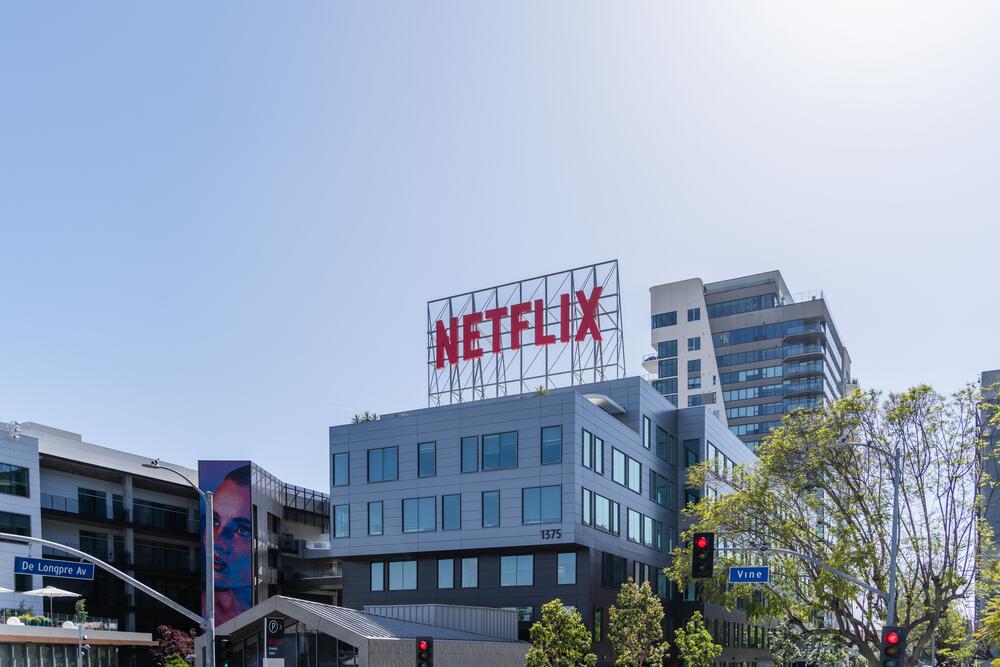
Successen als ‘Knokke Off’ en ‘Undercover’ zijn het bewijs dat ook Vlaanderen de capaciteiten heeft om een Netflix-serie te creëren. Voor mijn onderzoek interviewde ik acht lokale professionals over hun ervaring in coproducties met de streamer. Niet alleen werd de dynamiek tussen Vlaamse makers en Netflix duidelijker, ook de houding van de streamer tegenover onze markt werd blootgelegd.
Door samen te werken met lokale producenten creëert Netflix originele lokale content met internationaal potentieel. Series als ‘Squid Game’ en ‘La casa de papel’ begonnen als lokale investeringen waarvan Netflix de rechten verwierf en zich gaandeweg meer met de productie bemoeide. Vlaamse Netflix-producties volgden hetzelfde stramien, maar werden geleidelijk vervormd met het oog op de Nederlandse markt: Nederlandse personages kwamen op de voorgrond, settings verplaatsten naar Nederlandse steden en de inhoud werd aangepast.
"Ik weet dat ze nog niet klaar zijn om series in Vlaanderen alleen te maken... Knokke Off is uiteraard ook gewoon een groot voorbeeld van de succesvolle Vlaamse reeks die in Nederland heel populair was ... toch is het voor hen niet genoeg om die stap volledig te durven zetten."
- Scenarist Z
Maar, als dit het geval is, wat valt er dan te winnen en verliezen wanneer Vlaamse filmmakers met Netflix samenwerken?
Kansen in een moeilijk financieringslandschap
In een landschap waar producenten alle middelen bijeen moeten rapen, voelt een aanbod van de streamer als een geschenk. Coproductie met Netflix zorgt ervoor dat projecten snel in productie gaan (wat anders jaren kan duren). Hiernaast zijn er genoeg middelen, er is ruimte voor creativiteit, er is de mogelijkheid tot meer internationaal bereik en het staat nog eens goed op de makers hun cv.
"Voor ons als kleine Belgische makers ... de impact is veel groter, of kan veel groter zijn ... voor ons is dat wel iets waar we mee kunnen uitpakken."
- Director of photography X
Wie betaalt de prijs?
Maar, aan deze samenwerking zitten ook schaduwzijden. Netflix eigent zich een groot deel van de rechten toe, wat langdurige inkomsten en de duurzaamheid van lokale producenten beperkt. Daarnaast werft de streamer lokaal talent aan via exclusiviteitscontracten. Dit betekent dat de rol van de producent, die normaal gezien zelf verantwoordelijk is voor het talent, verschuift naar een meer uitvoerende rol, waar Netflix komt met het talent en de producer hiermee aan de slag moet onder vorm van meer rechtstreekse betaling. Drie schrijvers die momenteel onder exclusiviteitscontract bij Netflix werken belichten hier ook hoe ze nu ook enkel Nederlandse fictie meer schrijven. Dit legt bloot hoe Vlaamse producties gericht naar de Vlaamse markt hun talenten kunnen verliezen aan de streamer.
Data en publiek
De voorkeur voor de Nederlandse markt heeft natuurlijk alles te maken met bereik. Vlaanderen is veel kleiner dan Nederland en het is niet makkelijk om een film of serie uit te brengen met succes binnen beide markten. Alhoewel we dezelfde taal spreken, zijn er toch teveel verschillen in cultuur en traditie. Op zichzelf is Vlaanderen te klein volgens Netflix, dus richten ze zich op het grootste publiekssegment.
Dit sluit aan bij een thema dat vaak in dezelfde adem als Netflix wordt genomen: data. Hoewel televisiemakers altijd naar kijkcijfers kijken, laat Netflix nauwelijks in zijn kaarten kijken. Hun beslissingen lijken sterk geïnformeerd door data over doelgroepen, maar de streamer is uiterst selectief in wat hij deelt. Makers moeten daardoor vaak gissen naar de exacte motivatie achter beslissingen.
Hoe beïnvloeden de algoritmes en inzichten over kijkersgedrag de benadering van Netflix dan tijdens een productie? Veel van de experts interpreteerden de beslissingen van de streamer als data-geïnformeerd, maar enkel in een klein aantal voorvallen refereerde Netflix expliciet data als motivatie.

Netflix als “black box”
De motivaties van Netflix zijn dus moeilijk te achterhalen gezien hun beperkte communicatie met de filmmakers, maar ook openheid met externe actoren zoals pers en publiek kan hier een rol in spelen.
In de publieke opinie wordt vaak gesproken over de "Netflix-formule" en eenheidsworst, gebaseerd op gebruikersdata. Doordat Netflix hier beperkt over communiceert, moeten professionals zelf invullen wat ze hier van moeten maken. Dit geldt ook voor thema's zoals diversiteit:
"Qua team achter de schermen hebben die geen enkele eis qua diversiteit, die willen gewoon kwaliteit."
- Producer X
De meeste lokale professionals delen deze mening, maar hoe kan het dan dat er ook wordt gezegd dat het kantoor van Netflix Amsterdam veel meer divers is dan achter de schermen bij de grote producties in Vlaanderen? Meer uitgebreide communicatie tussen lokale professionals en Netflix zou de nodige nuance in dit verhaal kunnen brengen.
Maar ook kan selectieve transparantie bijdragen tot de macht van de streamer. Als lokale professionals ervan uitgaan dat Netflix meer gebruikersdata heeft om beslissingen op te baseren, maar dit niet wil delen met hun, worden de filmmakers onrechtstreeks in een machtsverhouding onder Netflix geplaatst (i.e. "knowledge is power"). De symbolische macht die gepaard gaat met de internationale status van Netflix als grote speler, draagt dan ook nog eens bij tot deze machtsverhouding. Een regisseur toont dit aan met zijn getuigenis van hoe de producent zich gedraagt rekening houdend met deze symbolische macht:
"... die wouden vooral heel veel nog voor Netflix kunnen doen, maar het was de eerste keer dat ze rechtstreeks voor Netflix werkten, dus die smeten ons soms wel regelmatig onder de bus."
- Regisseur X
Wat betekent samenwerken met Netflix?
Gewichtig is de afweging: wegen de scheve machtsverhoudingen, de veranderende rol van de producent en het weglekken van Vlaams talent op tegen een vlotter productieproces en een groter bereik op de Nederlandse markt? Verrijkt Netflix de capaciteiten van de Vlaamse sector, of werkt de samenwerking eerder verstorend? Meer transparantie vanuit Netflix is noodzakelijk om die vraag definitief te beantwoorden.
Bibliografie
Afilipoaie, A., Iordache, C., & Raats, T. (2021). The “Netflix Original” and what it
means for the production of European television content. Critical Studies in
Television, 16(3), 304–325. https://doi.org/10.1177/17496020211023318
Asmar, A., Raats, T., & Van Audenhove, L. (2025). Producing diversity: On the
discourses at the heart of Netflix’s production culture. Media and Communication,
13, Article 9410. https://doi.org/10.17645/mac.9410
Asmar, A., Orestes, G., & Raats, T. (2026). Working with global streamers: Navigating
revenue, reach and autonomy in European television production. In T. Raats & C.
Iordache (Eds.), Streaming Europe: How transnational streaming is reshaping
European film and television markets (pp. 45–59). Routledge.
https://doi.org/10.4324/9781003672128-6
Banks, M. J., Conor, B., & Mayer, V. (Eds.). (2015). Production studies, the sequel!:
Cultural studies of global media industries. Routledge.
https://doi.org/10.4324/9781315736471
BARB. (2022, October 12). Netflix signs up to BARB.
https://www.barb.co.uk/news/netflix-signs-up-to-barb/
Bengesser, C., De Rosa, P., Jensen, P. M., & Spalletta, M. (2023). Audiences of popular
European television crime drama: A nine-country study on consumption patterns,
attitudes and drivers of transcultural connection. European Journal of
Communication, 38(2), 148–165. https://doi.org/10.1177/02673231221112535
Bignell, J., & Woods, F. (2022). An introduction to television studies (4th ed.).
Routledge. https://doi.org/10.4324/9781315619675
Bossuyt, L., & Joye, S. (2023). Tekenen van banaal nationalisme in de Vlaamse en
Nederlandse adaptaties van het televisieformat SKAM. Tijdschrift voor
Communicatiewetenschap, 51(1), 4–24.
https://doi.org/10.5117/TCW2023.1.002.BOSS
Braun, V., & Clarke, V. (2006). Using thematic analysis in psychology. Qualitative
Research in Psychology, 3(2), 77–101. https://doi.org/10.1191/1478088706qp063oa
De Caluwe, J. (2013). Nederland en Vlaanderen: (A)symmetrisch pluricentrisme in taal
en cultuur. Internationale Neerlandistiek, 51(1), 45–59.
https://doi.org/10.5117/IVN2013.1.CALU
Castro, D., & Cascajosa, C. (2020). From Netflix to Movistar+: How subscription
video-on-demand services have transformed Spanish TV production. Journal of
Cinema and Media Studies, 59(3), 154–160. https://doi.org/10.1353/cj.2020.0019
39
Chalaby, J. K. (2025). Streaming giants and the global shift: Building value chains and
remapping trade flows. Journal of Communication, 75(2), 112–124.
https://doi.org/10.1093/joc/jqae040
Council of Europe. (2025). Regulations in force in 2025 [Eurimages co-production
support regulations].
https://www.coe.int/en/web/eurimages/regulations-coproduction
Cuelenaere, E., Joye, S., & Willems, G. (2016). Reframing the remake: Dutch–Flemish
monolingual remakes and their theoretical and conceptual implications. Frames
Cinema Journal, 10(1), 1–19.
https://framescinemajournal.com/article/reframing-the-remake-dutch-flem…
ingual-remakes-and-their-theoretical-and-conceptual-implications/
Cuelenaere, E., Joye, S., & Willems, G. (2019). Local flavors and regional markers: The
Low Countries and their commercially driven and proximity-focused film remake
practice. Communications, 44(3), 262–281.
https://doi.org/10.1515/commun-2019-2057
Cuelenaere, E., & Joye, S. (2024). From Undercover to Ferry: SVOD franchise
development in small European audiovisual markets. In C. Meir & R. Smits (Eds.),
European cinema in the streaming era: Policy, platforms, and production (pp.
259–280). Palgrave Macmillan. https://doi.org/10.1007/978-3-031-42182-2_13
Cuelenaere, E., Willems, G., & Joye, S. (2018). Same same same, but different: A
comparative film analysis of the Belgian, Dutch and American Loft. Tijdschrift voor
Communicatiewetenschap, 46(4), 263–279.
https://doi.org/10.5117/2018.046.004.002
Dams, T. (2018, June 21). How Netflix, Amazon and HBO are expanding into Europe.
Screen Daily.
https://www.screendaily.com/features/how-netflix-amazon-and-hbo-are-exp…
nto-europe/5130197.article
D’Arma, A., Raats, T., & Steemers, J. (2021). Public service media in the age of SVoDs:
A comparative study of PSM strategic responses in Flanders, Italy and the UK.
Media, Culture & Society, 43(4), 682–700.
https://doi.org/10.1177/0163443720972909
De Man, A. (2025). Producing difference: The cultural politics of diasporic cinema in
Flanders (2002–2022) [Doctoral dissertation, Ghent University and University of
Antwerp].
http://hdl.handle.net/1854/LU-01JZFXK2QW1RMSWWPYWXN1M39K
40
De Man, A., Willems, G., & Biltereyst, D. (2025). Discourses of cultural diversity and
inclusion in film policy: The case of Flanders (2002–2022). European Journal of
Cultural Studies, 28(2), 306–325. https://doi.org/10.1177/13675494241228937
De Marez, L., Georges, A., Sevenhant, R., & Devos, E. (2025). imec.digimeter 2024:
Digitale trends in Vlaanderen. imec.
De Vinck, S. (2009). Europudding or Europaradise? A performance evaluation of the
Eurimages co-production film fund, twenty years after its inception.
Communications, 34(2), 257–285. https://doi.org/10.1515/COMM.2009.017
Dunleavy, T., & Weissmann, E. (2023). Cultural diversity in internationally coproduced
high-end drama. Critical Studies in Television, 18(2), 117–127.
https://doi.org/10.1177/17496020231161643
European Commission. (n.d.). European Media Freedom Act.
https://commission.europa.eu/strategy-and-policy/priorities-2019-2024/n…
ropean-democracy/protecting-democracy/european-media-freedom-act_en
Regulation (EU) 2024/1083 of the European Parliament and of the Council of 11 April
2024 establishing a common framework for media services in the internal market
and amending Directive 2010/13/EU (European Media Freedom Act), 2024 O.J. (L
1083). https://eur-lex.europa.eu/eli/reg/2024/1083/oj/eng
Fereday, J., & Muir-Cochrane, E. (2006). Demonstrating rigor using thematic analysis: A
hybrid approach of inductive and deductive coding and theme development.
International Journal of Qualitative Methods, 5(1), 80–92.
https://doi.org/10.1177/160940690600500107
Haddad, F. G., & Dhoest, A. (2021). Netflix speaks Arabic, Arabs speak Netflix: How
SVOD is transforming Arabic series screenwriting. Journal of Arab & Muslim
Media Research, 14(2), 261–280. https://doi.org/10.1386/jammr_00034_1
Hansen, K. T. (2020). Nordic Noir from within and beyond: Negotiating geopolitical
regionalisation through SVoD crime narratives. Nordicom Review, 41(S1), 123–137.
https://doi.org/10.2478/nor-2020-0012
Idiz, D. R. (2024). Local production for global streamers: How Netflix shapes European
production cultures. International Journal of Communication, 18, 2129–2148. [No
DOI assigned.]
Iordache, C., Raats, T., & Afilipoaie, A. (2022). Transnationalisation revisited through
the Netflix Original: An analysis of investment strategies in Europe. Convergence,
28(1), 236–254. https://doi.org/10.1177/13548565211047344
41
Iordache, C., Afilipoaie, A., Raats, T., & Li, R. (2026). Investments in original fiction
series by foreign streamers and the boundaries of localisation. In T. Raats & C.
Iordache (Eds.), Streaming Europe: How transnational streaming is reshaping
European film and television markets (pp. 60–75). Routledge.
https://doi.org/10.4324/9781003672128-7
Johnson, C. (2019). Online TV. Routledge. https://doi.org/10.4324/9781315396828
Khazoom, F. (2025). Televisuality on a global scale: Netflix’s local-language strategy.
Media and Communication, 13, Article 9356. https://doi.org/10.17645/mac.9356
Kim, T. (2022). Cultural politics of Netflix in local contexts: A case of the Korean media
industries. Media, Culture & Society, 44(8), 1508–1522.
https://doi.org/10.1177/01634437221111917
Koljonen, J. (2026). Challenging projections: Nostradamus report 2026. Göteborg Film
Festival.
Kostovska, I. (2025). Corporate ownership in the TV production sector and cultural
diversity: Analysis of consolidated companies and indies’ access to TV drama
financing. Communication & Society, 38(1), 574–589.
https://doi.org/10.15581/003.38.1.040
Krauß, F. (2024). Television drama from Germany: Production, storytelling and
“quality”. Palgrave Macmillan. https://doi.org/10.1007/978-3-031-60622-9
Lobato, R. (2019). Netflix nations: The geography of digital distribution. New York
University Press. https://doi.org/10.18574/nyu/9781479882281.001.0001
Lotz, A. D. (2021). In between the global and the local: Mapping the geographies of
Netflix as a multinational service. International Journal of Cultural Studies, 24(2),
195–215. https://doi.org/10.1177/1367877920953166
Mayer, V., Banks, M. J., & Caldwell, J. T. (Eds.). (2009). Production studies: Cultural
studies of media industries. Routledge. https://doi.org/10.4324/9780203879597
Netflix. (2021, November 16). Top 10 things to know about our weekly Top 10.
https://about.netflix.com/news/top-10-things-about-netflix-top-10
Netflix. (2023, December 12). What we watched: A Netflix engagement report.
https://about.netflix.com/news/what-we-watched-a-netflix-engagement-rep…
Netflix, Inc. (2025). 2024 annual report (Form 10-K).
https://ir.netflix.net/financials/annual-reports-and-proxies/
Petruska, K., & Woods, F. (2019). Traveling without a passport: “Original” streaming
content in the transatlantic distribution ecosystem. In M. Hilmes, M. Hills, & R.
42
Pearson (Eds.), Transatlantic television drama: Industries, programs, and fans (pp.
49–68). Oxford University Press.
https://doi.org/10.1093/oso/9780190663124.003.0004
Raats, T., & Iordache, C. (2020). From Nordic Noir to Belgian Bright? Shifting TV
drama production and distribution in small markets: The case of Flanders. VIEW
Journal of European Television History and Culture, 9(17), 79–92.
https://doi.org/10.18146/view.243
Rasmussen, N. V. (2022, November 2–5). The Netflix machine: How European screen
workers interpret and interact with streaming data [Paper presentation]. AoIR 2022:
The 23rd Annual Conference of the Association of Internet Researchers, Dublin,
Ireland. https://spir.aoir.org/ojs/index.php/spir/article/view/12953
Screen Flanders. (n.d.-a). Financing. https://www.screenflanders.be/en/financing
Screen Flanders. (n.d.-b). Screen Flanders.
https://www.screenflanders.be/en/financing/screen-flanders
Smith, S. L., Pieper, K., Neff, K., & Wheeler, S. (2025). Inclusion in Netflix original U.S.
scripted films & series: Full report. USC Annenberg Inclusion Initiative.
https://assets.uscannenberg.org/docs/aii-2025-netflix-full-report.pdf
Sundet, V. S. (2021). “Youthification” of drama through real-time storytelling: A
production study of blank and the legacy of SKAM. Critical Studies in Television,
16(2), 145–162. https://doi.org/10.1177/17496020211005311
Truffaut, F. (1985). Hitchcock (Rev. ed.; H. G. Scott, Collaborator). Simon & Schuster.
[No DOI assigned.]
Van der Elst, P., Iordache, C., & Raats, T. (2026). Strategic responses by public service
media to global video streamers: Practices and key trends in Europe. In T. Raats &
C. Iordache (Eds.), Streaming Europe: How transnational streaming is reshaping
European film and television markets (pp. 209–223). Routledge.
https://doi.org/10.4324/9781003672128-19
van Es, K. (2023). Netflix & big data: The strategic ambivalence of an entertainment
company. Television & New Media, 24(6), 656–672.
https://doi.org/10.1177/15274764221125745
Vlaamse Gemeenschap, & Vlaamse Radio- en Televisieomroeporganisatie. (2025).
Beheersovereenkomst tussen de Vlaamse Gemeenschap en de VRT 2026–2030.
Vlaamse Regulator voor de Media. (2019). 3.4 De Vlaamse mediasector in een
internationale context. In Mediaconcentratie in Vlaanderen 2019.
43
https://www.vlaamseregulatormedia.be/nl/over-vrm/rapporten/2019/rapport…
oncentratie/mediaconcentratie-in-vlaanderen-2019/3-7
Vlaamse Regulator voor de Media. (2023, March 27). Erkenning coproductieproject
“Blind Sherlocks” (Netflix International B.V.).
https://www.vlaamseregulatormedia.be/nl/beslissingen/2023/erkenning-cop…
project-blind-sherlocks-netflix-international-bv
Vlaamse Regulator voor de Media. (2024, March 25). Erkenning coproductieproject
“Knokke Off S2 en S3” (BV Netflix International).
https://www.vlaamseregulatormedia.be/nl/beslissingen/2024/erkenning-cop…
project-knokke-s2-en-s3-bv-netflix-international
VRT. (2025, March 26). From historical conflicts to family ties: New8 showcases second
slate of international drama series.
https://communication.vrt.be/from-historical-conflicts-to-family-ties-n…
es-second-slate-of-international-drama-series
VRT. (2026, January 28). Eight public broadcasters continue New8 to co-produce more
high-quality European drama.
https://communication.vrt.be/eight-public-broadcasters-continue-new8-to…
e-more-high-impact-european-drama
VRT tekent akkoord met Vlaamse tv-makers: “We moeten de Vlaming laten genieten
van kwaliteitsvolle verhalen van hier.” (2025, September 30). Het Nieuwsblad.
https://www.nieuwsblad.be/media-en-cultuur/tv-en-radio/vrt-tekent-akkoo…
aamse-tv-makers-we-moeten-de-vlaming-laten-genieten-van-kwaliteitsvolle-verhale
n-van-hier/94073065.html
Wayne, M. L., & Uribe Sandoval, A. C. (2023). Netflix original series, global audiences
and discourses of streaming success. Critical Studies in Television, 18(1), 81–100.
https://doi.org/10.1177/17496020211037259