Het volk van Midas in kaart gebracht
Eindelijk is er een overzicht van de Phrygische geschiedenis. Velen hebben gehoord van Koning Midas, het volk waarvan hij koning was waarschijnlijk niet. Van oudsher schreven de Grieken en de Romeinen al over de Phryges, verhalen die tot op de dag van vandaag zijn overgeleverd. Maar historici hadden vóór deze thesis die verslagen nog niet geprobeerd samen te brengen om een geheelbeeld te schetsen.
Wie?
De Grieken en de Romeinen waren lang niet de enige spelers tijdens de klassieke oudheid. De Phryges namen naast verscheidene andere volkeren deel aan diezelfde historische periode, maar omwille van hun lage maatschappelijke status kregen zij weinig aandacht in de literaire traditie. Het is ook een eerder recente ontwikkeling dat oudheidkundigen zich met volkeren in de marges van de klassieke wereld bezigen. Zij duiken op in geschiedkundige teksten, die zeker niet altijd betrouwbaar zijn voor historici, en opschriften, die na duizendenjaren in steen bewaard zijn gebleven.
Ouder dan Griekenland en Rome
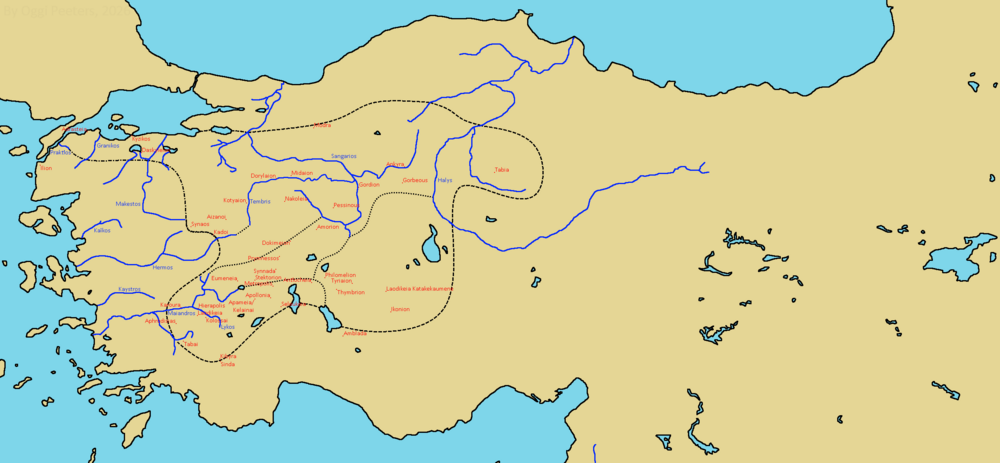
Een kleine duizend jaar vóór Christus stak de Phryges over van Europa naar hedendaags Turkije. Zij vestigden zich in een uitgestrekt gebied: van de Zee van Marmara in het westen tot aan de Kızılırmakrivier in het oosten, daar lag Phrygië. Archeologen hebben al een aantal sites zoals Gordion onderzocht die getuigen van economische productiviteit. Concreet bewijs voor een verenigd Phrygisch rijk is er daarentegen niet, ook al komt Midas in verschillende historische teksten voor.
In de zesde eeuw vóór Christus veroverde het naburige Lydië de Phryges. Niet veel later werden zij opgenomen in het Perzische Rijk en werd Phrygië beheerd als twee aparte provincies. Twee eeuwen later versloeg Alexander de Grote de Perzen, waarmee hij een periode van Griekse invloed in het Nabije Oosten inluidde. Na zijn plotse dood vochten zijn generaals en hun nakomelingen eeuwenlang in oorlogen voor controle over de vergriekste gebieden. Phrygië maakte daardoor nu eens deel uit van één koninkrijk, dan weer van een ander. In de derde eeuw vóór Christus stroomde ook nog een groep Kelten binnen, die deel van Phrygië voor zichzelf opeisten.
De Romeinen deden hun intrede een eeuw later. Toen stierf de Aziatische koning Attalos zonder erfgenamen en schonk hij zijn rijk aan de Romeinse staat. De provincies die als gevolg van die schenking ontstonden, zouden deel blijven uitmaken van het Romeinse Rijk tot in de middeleeuwen. Phrygië viel dan geleidelijk aan af van Byzantijns bewind.
De Phrygische beschaving
Een ander interessant aspect van Phrygische geschiedenis focust op de lokale bevolking. De samenleving van de Phryges ontwikkelde namelijk onder invloed van de bovengenoemde gebeurtenissen, waarbij culturele verandering ten zeerste opvalt. In de Perzische tijd verloren lokale elites hun politieke invloed en namen zij onder andere de klederdracht over van hun Perzische gouverneurs. De Grieken deden hun best om volwaardig Griekse steden in Phrygië te stichten. Die waren belangrijk om Griekse gebruiken door te geven aan de Phrygische bevolking zoals namen en het oprichten van verticale grafstenen. Later slopen ook een aantal Romeinse namen de Phrygische maatschappij binnen. De constitutio Antoniniana (212 na Christus) was daar het orgelpunt van, omdat toen elke vrijgeboren inwoner van Phrygië aan de hand van hun naam kon pronken met het Romeinse burgerrecht. Rond die periode nam het belang van de Phrygische identiteit echter sterk af in de steden. Het platteland was waarschijnlijk meer behoudsgezind tegenover de Phrygische cultuur, maar ook daar zou die tegen de zevende eeuw na Christus verdwenen zijn.
Bibliografie
I. Edities
a. Grieks-Romeins materiaal
Epigrafie
- Fränkel, M. (ed.), Die Inschriften von Pergamon, vol. 1 (Berlin, 1890);
- Drew-Bear, T., “Frig Dilinde Yeni Yazıtlar”, Araştırma Sonuçları Toplantısı 3 (1985), 257–260;
- Ricl, M., “A New Royal Letter from Pessinus: Some Corrections and Suggestions”, Epigraphica Anatolica 47 (2014), 141–146.
Literatuur
Ailianos
- Scholfield, A.F. (tr.), Aelian, On Animals. Books 12–17, vol. 3, The Loeb Classical Library (Cambridge, MA – London, England, 1959);
- Wilson, N.G. (tr.), Aelian, Historical Miscellany, The Loeb Classical Library (Cambridge, MA – London, England, 1997).
Ammianus Marcellinus
- Rolfe, J.C. (tr.), Ammianus Marcellinus, History. Books 14–19, vol. 1, The Loeb Classical Library (Cambridge, MA – London, England, 1950);
- Rolfe, J.C. (tr.), Ammianus Marcellinus, History. Books 20–26, vol. 2, The Loeb Classical Library (Cambridge, MA – London, England, 1940).
Anthologia Graeca
- Paton, W.R. (tr.), The Greek Anthology. Books 7–8, vol. 2, The Loeb Classical Library (Cambridge, MA – London, England, 1917).
Apollodoros
- Frazer, J.G. (tr.), Apollodorus, The Library. Books 1–3.9, vol. 1, The Loeb Classical Library (Cambridge, MA – London, England, 1921).
Appianos
- McGing, B. (ed., tr.), Appian, Roman History. Books 1–7, vol. 1, The Loeb Classical Library (Cambridge, MA – London, England, 2019a);
- McGing, B. (ed., tr.), Appian, Roman History. Books 11–12, vol. 3, The Loeb Classical Library (Cambridge, MA – London, England, 2019b);
- McGing, B. (ed., tr.), Appian, Roman History: Civil Wars. Books 1–2, vol. 4, The Loeb Classical Library (Cambridge, MA – London, England, 2020a);
- McGing, B. (ed., tr.), Appian, Roman History: Civil Wars. Book 5, vol. 6, The Loeb Classical Library (Cambridge, MA – London, England, 2020b).
Aristoteles
- Peck, A.L. (tr.), Aristotle, History of Animals. Books 4–6, vol. 2, The Loeb Classical Library (Cambridge, MA – London, England, 1970);
- Rackham, H. (tr.), Aristotle, Politics, The Loeb Classical Library (Cambridge, MA – London, England, 1932);
- Rose, V. (ed.), Aristotelis qui ferebantur librorum fragmenta. Editio stereotypa editionis primae, Bibliotheca scriptorum Graecorum et Romanorum Teubneriana (Stutgardiae, 1886).
Arrianos
- Brunt, P.A. (tr.), Arrian, Anabasis of Alexander. Books 1–4, vol. 1, The Loeb Classical Library (Cambridge, MA – London, England, 1976).
Athenaios
- Olson, S.D. (ed., tr.), Athenaeus, The Learned Banqueters. Books 1–3.106e, vol. 1, The Loeb Classical Library (Cambridge, MA – London, England, 2007a)
- Olson, S.D. (ed., tr.), Athenaeus, The Learned Banqueters. Books 3.106e–5, vol. 2, The Loeb Classical Library (Cambridge, MA – London, England, 2007b);
- Olson, S.D. (ed., tr.), Athenaeus, The Learned Banqueters. Books 6–7, vol. 3, The Loeb Classical Library (Cambridge, MA – London, England, 2008a);
- Olson, S.D. (ed., tr.), Athenaeus, The Learned Banqueters. Books 8–10.420e, vol. 4, The Loeb Classical Library (Cambridge, MA – London, England, 2008b);
- Olson, S.D. (ed., tr.), Athenaeus, The Learned Banqueters. Books 12–13.594b, vol. 6, The Loeb Classical Library (Cambridge, MA – London, England, 2010);
- Olson, S.D. (ed., tr.), Athenaeus, The Learned Banqueters. Book 15. General Indexes, vol. 8, The Loeb Classical Library (Cambridge, MA – London, England, 2012).
Augustus
- Shipley, F.W. (tr.), Velleius Paterculus, Compendium of Roman History. Res Gestae Divi Augusti, The Loeb Classical Library (Cambridge, MA – London, England, 1924).
Aurelius Victor
- Bird, H.W. (tr.), Liber de Caesaribus of Sextus Aurelius Victor: Translated with an Introduction and Commentary (Liverpool, 1994).
Boëthius
- Stewart, H.F., Rand, E.K., Tester, S.J. (tr.), Boethius, Theological Tractates: The Consolation of Philosophy, The Loeb Classical Library (Cambridge, MA – London, England, 1973).
Cassius Dion
- Cary, E., Foster, H.B. (tr.), Dio Cassius, Roman History. Books 1–11, vol. 1, The Loeb Classical Library (Cambridge, MA – London, England, 1914a);
- Cary, E., Foster, H.B. (tr.), Dio Cassius, Roman History. Books 12–35, vol. 2, The Loeb Classical Library (Cambridge, MA – London, England, 1914b);
- Cary, E., Foster, H.B. (tr.), Dio Cassius, Roman History. Books 36–40, vol. 3, The Loeb Classical Library (Cambridge, MA – London, England, 1914c);
- Cary, E., Foster, H.B. (tr.), Dio Cassius, Roman History. Books 41–45, vol. 4, The Loeb Classical Library (Cambridge, MA – London, England, 1916);
- Cary, E., Foster, H.B. (tr.), Dio Cassius. Roman History. Books 46–50, vol. 5, The Loeb Classical Library (Cambridge, MA – London, England, 1917a);
- Cary, E., Foster, H.B. (tr.), Dio Cassius. Roman History. Books 51–55, vol. 6, The Loeb Classical Library (Cambridge, MA – London, England, 1917b);
- Cary, E., Foster, H.B. (tr.), Dio Cassius, Roman History. Books 61–70, vol. 8, The Loeb Classical Library (Cambridge, MA – London, England, 1925);
- Cary, E., Foster, H.B. (tr.), Dio Cassius, Roman History. Books 71–80, vol. 9, The Loeb Classical Library (Cambridge, MA – London, England, 1927).
Certamen Homeri et Hesiodi
- West, M.L. (ed., tr.), Homeric Hymns. Homeric Apocrypha. Lives of Homer, The Loeb Classical Library (Cambridge, MA – London, England, 2003).
Cicero
- Falconer, W.A. (tr.), Cicero, On Old Age. On Friendship. On Divination, The Loeb Classical Library (Cambridge, MA – London, England, 1923);
- Gardner, R. (tr.), Cicero, Pro Sestio. In Vatinium, The Loeb Classical Library (Cambridge, MA – London, England, 1958);
- Grose Hodge, H. (tr.), Cicero, Pro Lege Manilia. Pro Caecino. Pro Cluentio. Pro Rabirio Perduellionis Reo, The Loeb Classical Library (Cambridge, MA – London, England, 1927);
- Hendrickson, G.L., Hubbell, H.M. (tr.), Cicero, Brutus. Orator, The Loeb Classical Library (Cambridge, MA – London, England, 1939);
- King, J.E. (tr.), Cicero, Tusculan Disputations, The Loeb Classical Library (Cambridge, MA – London, England, 1927);
- Macdonald, C. (tr.), Cicero, In Catilinam 1–4. Pro Murena. Pro Sulla. Pro Flacco, The Loeb Classical Library (Cambridge, MA – London, England, 1976);
- Rackham, H. (tr.), Cicero, On the Nature of the Gods. Academics, The Loeb Classical Library (Cambridge, MA – London, England, 1933);
- Shackleton Bailey, D.R. (ed., tr.), Cicero, Letters to Friends: Letters 1–113, vol. 1, The Loeb Classical Library (Cambridge, MA – London, England, 2001a);
- Shackleton Bailey, D.R. (ed., tr.), Cicero, Letters to Friends: Letters 281–435, vol. 3, The Loeb Classical Library (Cambridge, MA – London, England, 2001b);
- Shackleton Bailey, D.R. (ed., tr.), Cicero, Letters to Quintus and Brutus. Letter Fragments. Letter to Octavian. Invectives. Handbook of Electioneering, The Loeb Classical Library (Cambridge, MA – London, England, 2002);
- Watts, N.H. (tr.), Cicero, Pro Archia. Post Reditum in Senatu. Post Reditum ad Quirites. De Domo Sua. De Haruspicum Responsis. Pro Plancio, The Loeb Classical Library (Cambridge, Ma – London, England, 1923).
Clemens of Alexandreia
- Butterworth, G.W. (tr.), Clement of Alexandria, The Exhortation to the Greeks. The Rich Man's Salvation. To the Newly Baptized, The Loeb Classical Library (Cambridge, MA – London, England, 1919).
Curtius Rufus
- Rolfe, J.C. (tr.), Quintus Curtius, History of Alexander. Books 1–5, vol. 1, The Loeb Classical Library (Cambridge, MA – London, England, 1946).
Demosthenes
- Vince, J.H. (tr.), Demosthenes, Orations. Orations 1–17 and 20: Olynthiacs 1–3. Philippic 1. On the Peace. Philippic 2. On Halonnesus. On the Chersonese. Philippics 3 and 4. Answer to Philip’s Letter. Philip’s Letter. On Organization. On the Navy-Boards. For the Liberty of the Rhodians. For the People of Megalopolis. On the Treaty with Alexander. Against Leptines, vol. 1, The Loeb Classical Library (Cambridge, MA – London, England, 1930).
Diodoros
- Geer, R.M. (tr.), Diodorus Siculus, Library of History. Books 18–19.65, vol. 9, The Loeb Classical Library (Cambridge, MA – London, England, 1947);
- Geer, R.M. (tr.), Diodorus Siculus, Library of History. Books 19.66–20, vol. 10, The Loeb Classical Library (Cambridge, MA – London, England, 1954);
- Oldfather, C.H. (tr.), Diodorus Siculus. Library of History. Books 1–2.34, vol. 1, The Loeb Classical Library (Cambridge, MA – London, England, 1933);
- Oldfather, C.H. (tr.), Diodorus Siculus, Library of History. Books 2.35–4.58, vol. 2, The Loeb Classical Library (Cambridge, MA – London, England, 1935);
- Oldfather, C.H. (tr.), Diodorus Siculus, Library of History. Books 4.59–8, vol. 3, The Loeb Classical Library (Cambridge, MA – London, England, 1939);
- Oldfather, C.H. (tr.), Diodorus Siculus, Library of History. Books 9–12.40, vol. 4, The Loeb Classical Library (Cambridge, MA – London, England, 1946);
- Oldfather, C.H. (tr.), Diodorus Siculus, Library of History. Books 12.41–13, vol. 5, The Loeb Classical Library (Cambridge, MA – London, England, 1950);
- Oldfather, C.H. (tr.), Diodorus Siculus, Library of History. Books 14–15.19, vol. 6, The Loeb Classical Library (Cambridge, MA – London, England, 1954);
- Sherman, C.L. (tr.), Diodorus Siculus, Library of History. Books 15.20–16.65, vol. 7, The Loeb Classical Library (Cambridge, MA – London, England, 1952);
- Walton, F.R. (tr.), Diodorus Siculus, Library of History. Books 21–32, vol. 11, The Loeb Classical Library (Cambridge, MA – London, England, 1957);
- Walton, F.R. (tr.), Diodorus Siculus, Library of History. Fragments of Books 33–40, vol. 12, The Loeb Classical Library (Cambridge, MA – London, England, 1967);
- Welles, C.B. (tr.), Diodorus Siculus, Library of History. Books 16.66–17, vol. 8, The Loeb Classical Library (Cambridge, MA – London, England, 1963).
Diogenes Laërtios
- Hicks, R.D. (tr.), Diogenes Laertius, Lives of Eminent Philosophers. Books 1–5, vol. 1, The Loeb Classical Library (Cambridge, MA – London, England, 1925a);
- Hicks, R.D. (tr.), Diogenes Laertius, Lives of Eminent Philosophers. Books 6–10, vol. 2, The Loeb Classical Library (Cambridge, MA – London, England, 1925b).
Dion Chrysostomos
- Cohoon, J.W., Crosby, H.L. (tr.), Dio Chrysostom, Discourses 31–36, The Loeb Classical Library (Cambridge, MA – London, England, 1940);
- Crosby, H.L. (tr.), Dio Chrysostom, Discourses 37–60, The Loeb Classical Library (Cambridge, MA – London, England, 1946);
- Crosby, H.L. (tr.), Dio Chrysostom, Discourses 61–80. Fragments. Letters, The Loeb Classical Library (Cambridge, MA – London, England, 1951).
Dionysios
- Cary, E. (tr.), Dionysius of Halicarnassus, Roman Antiquities. Books 1–2, vol. 1, The Loeb Classical Library (Cambridge, MA – London, England, 1937).
Euphorion
- Lightfoot, J.L. (ed., tr.), Hellenistic Collection: Philitas. Alexander of Aetolia. Hermesianax. Euphorion. Parthenius, The Loeb Classical Library (Cambridge, MA – London, England, 2010).
FGrHist.
- Jacoby, F. (ed.), Die Fragmente der griechischen Historiker (Leiden, 1923–).
1. Hekataios of Miletos
14. Bion of Prokonnessos
26. Konon
100. Dexippos of Athenai
115. Theopompos of Chios
156. Arrianos
239. Marmor Parium
264. Hekataios of Abdera
273. Alexandros Polyhistor
285. Aretades of Knidos
434. Memnon of Herakleia
709. Skylax of Karyanda
765. Xanthos of Lydia
795. Hermogenes
796. Metrophanes of Eukarpia
800. Phrygian works
Florus
- Forster, E.S. (tr.), Florus, Epitome of Roman History, The Loeb Classical Library (Cambridge, MA – London, England, 1929).
Frontinus
- Bennett, C.E., McElwain, M.B. (tr.), Frontinus, Stratagems. Aqueducts of Rome, The Loeb Classical Library (Cambridge, MA – London, England, 1925).
Hellenica Oxyrhynchia
- Bartoletti, V. (ed.), Hellenica Oxyrhynchia, Bibliotheca scriptorum Graecorum et Romanorum Teubneriana (Lipsiae, 1959).
Herodas
- Rusten, J., Cunningham, I.C. (ed., tr.), Theophrastus, Herodas, Sophron, Characters. Herodas: Mimes. Sophron and Other Mime Fragments, The Loeb Classical Library (Cambridge, MA – London, England, 2003).
Herodianos
- Whittaker, C.R. (tr.), Herodian, History of the Empire. Books 1–4, vol. 1, The Loeb Classical Library (Cambridge, MA – London, England, 1969);
- Whittaker, C.R. (tr.), Herodian, History of the Empire. Books 5–8, vol. 2, The Loeb Classical Library (Cambridge, MA – London, England, 1970).
Herodotos
- Godley, A.D. (tr.), Herodotus, The Persian Wars. Books 1–2, vol. 1, The Loeb Classical Library (Cambridge, MA – London, 1920);
- Godley, A.D. (tr.), Herodotus, The Persian Wars. Books 3–4, vol. 2, The Loeb Classical Library (Cambridge, MA – London, 1921);
- Godley, A.D. (tr.), Herodotus, The Persian Wars. Books 5–7, vol. 3, The Loeb Classical Library (Cambridge, MA – London, 1922);
- Godley, A.D. (tr.), Herodotus, The Persian Wars. Books 8–9, vol. 4, The Loeb Classical Library (Cambridge, MA – London, 1925).
Hesychios
- Latte, K., Cunningham, I.C. (ed.), Hesychii Alexandrini Lexicon. Α–Δ, vol. 1 (Berlin – Boston, 2018).
Historia Augusta
- Magie, D. (tr.), Historia Augusta. Revised by D. Rohrbacher, vol. 1, The Loeb Classical Library (Cambridge, MA – London, England, 2022a);
- Magie, D. (tr.), Historia Augusta. Revised by D. Rohrbacher, vol. 3, The Loeb Classical Library (Cambridge, MA – London, England, 2022b).
Hyginus
- Schmidt, M. (ed.), Hygini fabulae (Jenae, 1872).
Isokrates
- Norlin, G. (tr.), Isocrates, To Demonicus. To Nicocles or the Cyprians. Panegyricus. To Philip. Archidamus, The Loeb Classical Library (Cambridge, MA – London, England, 1928).
Josephos
- Marcus, R. (tr.), Josephus, Jewish Antiquities. Books 12–13, vol. 5, The Loeb Classical Library (Cambridge, MA – London, England, 1943);
- Marcus, R., Wikgren, A. (tr.), Josephus, Jewish Antiquities. Books 16–17, vol. 7, The Loeb Classical Library (Cambridge, MA – London, England, 1963);
- Thackeray, H.St.J. (tr.), Josephus, The Jewish War. Books 1–2, vol. 1, The Loeb Classical Library (Cambridge, MA – London, England, 1927a);
- Thackeray, H.St.J. (tr.), Josephus, The Jewish War. Books 3–4, vol. 2, The Loeb Classical Library (Cambridge, MA – London, England, 1927b);
- Thackeray, H.St.J. (tr.), Josephus, Jewish Antiquities. Books 1–3, vol. 1, The Loeb Classical Library (Cambridge, MA – London, England, 1930).
Julianus
- Wright, W.C. (tr.), Julian, Orations 1–5, The Loeb Classical Library (Cambridge, MA – London, England, 1913).
Julius Obsequens
- Schlesinger, A.C. (tr.), Livy, Julius Obsequens, History of Rome: Summaries. Fragments. Julius Obsequens. General Index, Index by Russel M. Geer, vol. 14, The Loeb Classical Library (Cambridge, MA – London, England, 1959).
Julius Polydeukes
- Bethe, E. (ed.), Pollucis Onomasticon. Fasciculus posterior lib. VI—X continens, Bibliotheca scriptorum Graecorum et Romanorum Teubneriana (Lipsiae, 1931).
Justinus
- Yardley, J.C. (ed., tr.), Justin, Epitome of Pompeius Trogus. Books 1–20, vol. 1, The Loeb Classical Library (Cambridge, MA – London, England, 2024a);
- Yardley, J.C. (ed., tr.), Justin, Epitome of Pompeius Trogus. Books 21–44, vol. 2, The Loeb Classical Library (Cambridge, MA – London, England, 2024b).
Laterculus Veronensis
- Seeck, O. (ed.), Notitia dignitatum. Accedunt Notitia Urbis Constantinopolitanae et Laterculi provinciarum (Berolini, 1876).
Libanios
- Norman, A.F. (ed., tr.), Libanius, Selected Orations: Julianic Orations, vol. 1, The Loeb Classical Library (Cambridge, MA – London, England, 1969);
- Norman, A.F. (ed., tr.), Libanius, Selected Orations: Orations 2, 19–23, 30, 33, 45, 47–50, vol. 2, The Loeb Classical Library (Cambridge, MA – London, England, 1977);
- Norman, A.F. (ed., tr.), Libanius. Autobiography and Selected Letters: Letters 1–50, vol. 1, The Loeb Classical Library (Cambridge, MA – London, England, 1992a).
- Norman, A.F. (ed., tr.), Libanius. Autobiography and Selected Letters: Letters 51–193, vol. 2, The Loeb Classical Library (Cambridge, MA – London, England, 1992b).
Livius
- Foster, B.O. (tr.), Livy, History of Rome. Books 1–2, vol. 1, The Loeb Classical Library (Cambridge, MA – London, England, 1919);
- Schlesinger, A.C. (tr.), Livy, Julius Obsequens, History of Rome: Summaries. Fragments. Julius Obsequens. General Index. Index by Russel M. Geer, vol. 14, The Loeb Classical Library (Cambridge, MA – London, England, 1959);
- Yardley, J.C. (tr.), Livy, History of Rome. Books 28–30, vol. 8, The Loeb Classical Library (Cambridge, MA – London, 2021);
- Yardley, J.C. (ed., tr.), Livy, History of Rome. Books 35–37, vol. 10, The Loeb Classical Library (Cambridge, MA – London, England, 2018a);
- Yardley, J.C. (ed., tr.), Livy, History of Rome. Books 38–40, vol. 11, The Loeb Classical Library (Cambridge, MA – London, England, 2018b).
Loukianos
- Harmon, A.M. (tr.), Lucian, Phalaris. Hippias or The Bath. Dionysus. Heracles. Amber or The Swans. The Fly. Nigrinus. Demonax. The Hall. My Native Land. Octogenarians. A True Story. Slander. The Consonants at Law. The Carousal (Symposium) or The Lapiths, The Loeb Classical Library (Cambridge, MA – London, England, 1913);
- Harmon, A.M. (tr.), Lucian, The Downward Journey or The Tyrant. Zeus Catechized. Zeus Rants. The Dream or The Cock. Prometheus. Icaromenippus or The Sky-man. Timon or The Misanthrope. Charon or The Inspectors. Philosophies for Sale, The Loeb Classical Library (Cambridge, MA – London, England, 1915);
- Harmon, A.M. (tr.), Lucian, The Dead Come to Life or The Fisherman. The Double Indictment or Trials by Jury. On Sacrifices. The Ignorant Book Collector. The Dream or Lucian's Career. The Parasite. The Lover of Lies. The Judgement of the Goddesses. On Salaried Posts in Great Houses, The Loeb Classical Library (Cambridge, MA – London, England, 1921);
- Harmon, A.M. (tr.), Lucian, Anacharsis or Athletics. Menippus or The Descent into Hades. On Funerals. A Professor of Public Speaking. Alexander the False Prophet. Essays in Portraiture. Essays in Portraiture Defended. The Goddesse of Surrye, The Loeb Classical Library (Cambridge, MA – London, England, 1925);
- Kilburn, K. (tr.), Lucian, How to Write History. The Dipsads. Saturnalia. Herodotus or Aetion. Zeuxis or Antiochus. A Slip of the Tongue in Greeting. Apology for the "Salaried Posts in Great Houses." Harmonides. A Conversation with Hesiod. The Scythian or The Consul. Hermotimus or Concerning the Sects. To One Who Said "You're a Prometheus in Words." The Ship or The Wishes, The Loeb Classical Library (Cambridge, MA – London, England, 1959);
- MacLeod, M.D. (tr.), Lucian, Dialogues of the Dead. Dialogues of the Sea-Gods. Dialogues of the Gods. Dialogues of the Courtesans, The Loeb Classical Library (Cambridge, MA – London, England, 1961).
Maximos of Tyros
- Race, W.H. (ed., tr.), Maximus of Tyre, Philosophical Orations, vol. 1, The Loeb Classical Library (Cambridge, MA – London, England, 2023).
Nepos
- Rolfe, J.C. (tr.), Cornelius Nepos, On Great Generals. On Historians, The Loeb Classical Library (Cambridge, MA – London, England, 1929).
Notitia dignitatum
- Seeck, O. (ed.), Notitia dignitatum. Accedunt Notitia Urbis Constantinopolitanae et Laterculi provinciarum (Berolini, 1876).
Pausanias
- Jones, W.H.S. (tr.), Pausanias, Description of Greece. Books 1–2, vol. 1, The Loeb Classical Library (Cambridge, MA – London, England, 1918);
- Jones, W.H.S., Ormerod, H.A. (tr.), Pausanias, Description of Greece. Books 3–4, vol. 2, The Loeb Classical Library (Cambridge, MA – London, England, 1926);
- Jones, W.H.S. (tr.), Pausanias, Description of Greece. Books 8.22–10, vol. 4, The Loeb Classical Library (Cambridge, MA – London, England, 1935).
Petronius
- Schmeling, G. (ed., tr.), Petronius, Seneca, Satyricon. Apocolocyntosis, The Loeb Classical Library (Cambridge, MA – London, England, 2020).
Philon
- Colson, F.H. (tr.), Philo, Every Good Man is Free. On the Contemplative Life. On the Eternity of the World. Against Flaccus. Apology for the Jews. On Providence, The Loeb Classical Library (Cambridge, MA – London, England, 1941).
Philostratos
- Fairbanks, A. (tr.), Philostratus the Elder, Philostratus the Younger, Callistratus, Imagines. Imagines. Descriptions, The Loeb Classical Library (Cambridge, MA – London, England, 1931);
- Jones, C.P. (ed., tr.), Philostratus, Apollonius of Tyana. Books 5–8, vol. 2, The Loeb Classical Library (Cambridge, MA – London, England, 2005).
Platon
- Bury, R.G. (tr.), Plato, Laws. Books 1–6, vol. 1, The Loeb Classical Library (Cambridge, MA – London, England, 1926);
- Emlyn-Jones, C., Preddy, W. (ed., tr.), Plato, Republic. Books 1–5, vol. 1, The Loeb Classical Library (Cambridge, MA – London, England, 2013);
- Emlyn-Jones, C., Preddy, W. (ed., tr.), Plato, Lysis. Symposium. Phaedrus, The Loeb Classical Library (Cambridge, MA – London, England, 2022);
- Fowler, H.N. (tr.), Plato, Cratylus. Parmenides. Greater Hippias. Lesser Hippias, The Loeb Classical Library (Cambridge, MA – London, England, 1926).
Plinius
- Eichholz, D.E. (tr.), Pliny, Natural History. Books 36–37, vol. 10, The Loeb Classical Library (Cambridge, MA – London, England, 1962);
- Jones, W.H.S, Pliny, Natural History. Books 28–32, vol. 8, The Loeb Classical Library (Cambridge, MA – London, England, 1963);
- Rackham, H. (tr.), Pliny, Natural History. Books 3–7, vol. 2, The Loeb Classical Library (Cambridge, MA – London, England, 1942);
- Rackham, H. (tr.), Pliny, Natural History. Books 12–16, vol. 4, The Loeb Classical Library (Cambridge, MA – London, England, 1945);
- Rackham, H. (tr.), Pliny, Natural History. Books 33–35, vol. 9, The Loeb Classical Library (Cambridge, MA – London, England, 1952).
Ploutarchos
- Babbitt, F.C. (tr.), Plutarch, Moralia: How to Profit by One’s Enemies. On Having Many Friends. Chance. Virtue and Vice. Letter of Condolence to Apollonius. Advice About Keeping Well. Advice to Bride and Groom. The Dinner of the Seven Wise Men. Superstition, vol. 2, The Loeb Classical Library (Cambridge, MA – London, England, 1928);
- Babbitt, F.C. (tr.), Plutarch, Moralia: Sayings of Kings and Commanders. Sayings of Romans. Sayings of Spartans. The Ancient Customs of the Spartans. Sayings of Spartan Women. Bravery of Women, vol. 3, The Loeb Classical Library (Cambridge, MA – London, England, 1931);
- De Lacy, P.H., Einarson, B. (tr.), Plutarch, Moralia: On Love of Wealth. On Compliancy. On Envy and Hate. On Praising Oneself Inoffensively. On the Delays of the Divine Vengeance. On Fate. On the Sign of Socrates. On Exile. Consolation to His Wife, vol. 7, The Loeb Classical Library (Cambridge, MA – London, England, 1959);
- Perrin, B. (tr.), Plutarch, Lives: Theseus and Romulus. Lycurgus and Numa. Solon and Publicola, vol. 1, The Loeb Classical Library (Cambridge, MA – London, England, 1914a);
- Perrin, B. (tr.), Plutarch, Lives: Themistocles and Camillus. Aristides and Cato Major. Cimon and Lucullus, vol. 2, The Loeb Classical Library (Cambridge, MA – London, England, 1914b);
- Perrin, B. (tr.), Plutarch, Lives: Agesilaus and Pompey. Pelopidas and Marcellus, vol. 5, The Loeb Classical Library (Cambridge, MA – London, England, 1917);
- Perrin, B. (tr.), Plutarch, Lives: Demosthenes and Cicero. Alexander and Caesar, vol. 7, The Loeb Classical Library (Cambridge, MA – London, England, 1919);
- Perrin, B. (tr.), Plutarch, Lives: Agis and Cleomenes. Tiberius and Gaius Gracchus. Philopoemen and Flamininus, vol. 10, The Loeb Classical Library (Cambridge, MA – London, England, 1921);
- Perrin, B. (tr.), Plutarch, Lives: Aratus. Artaxerxes. Galba. Otho. General Index, vol. 11, The Loeb Classical Library (Cambridge, MA – London, England, 1926).
Polemius Silvius
- Seeck, O. (ed.), Notitia dignitatum. Accedunt Notitia Urbis Constantinopolitanae et Laterculi provinciarum (Berolini, 1876).
Polybios
- Paton, W.R. (tr.), Polybius, The Histories. Books 1–2. Revised by F.W. Walbank, C. Habicht, vol. 1, The Loeb Classical Library (Cambridge, MA – London, England, 2010);
- Paton, W.R. (tr.), Polybius, The Histories. Books 5–8. Revised by F.W. Walbank, C. Habicht, vol. 3, The Loeb Classical Library (Cambridge, MA – London, England, 2011);
- Paton, W.R. (tr.), Polybius, The Histories. Books 16–27. Revised by F.W. Walbank, C. Habicht, vol. 5, The Loeb Classical Library (Cambridge, MA – London, England, 2012).
Prokopios
- Dewing, H.B. (tr.), Procopius, The Anecdota or Secret History, The Loeb Classical Library (Cambridge, MA – London, England, 1935).
Pseudo-Caesar
- Way, A.G. (tr.), Caesar, Alexandrian War. African War. Spanish War, The Loeb Classical Library (Cambridge, MA – London, England, 1955).
Pseudo-Cicero
- Caplan, H. (tr.), Cicero, Rhetorica ad Herennium, The Loeb Classical Library (Cambridge, MA – London, England, 1954).
Pseudo-Herodotos
- West, M.L. (ed., tr.), Homeric Hymns. Homeric Apocrypha. Lives of Homer, The Loeb Classical Library (Cambridge, MA – London, England, 2003).
Pseudo-Ploutarchos
- Babbitt, F.C. (tr.), Plutarch, Moralia: Roman Questions. Greek Questions. Greek and Roman Parallel Stories. On the Fortune of the Romans. On the Fortune or the Virtue of Alexander. Were the Athenians More Famous in War or in Wisdom?, vol. 4, The Loeb Classical Library (Cambridge, MA – London, England, 1936);
- Einarson, B., De Lacy, P.H. (tr.), Plutarch, Moralia: That Epicurus Actually Makes a Pleasant Life Impossible. Reply to Coletes in Defence of the Other Philosophers. Is “Live Unknown” a Wise Precept? On Music, vol. 14, The Loeb Classical Library (Cambridge, MA – London, England, 1967);
- Hercher, R. (ed.), Plutarchi libellus de fluviis (Lipsiae, 1851);
- Sandbach, F.H. (tr.), Plutarch. Moralia: Fragments, vol. 15, The Loeb Classical Library (Cambridge, MA – London, England, 1969).
Ptolemaios
- Stückelberger, A., Graßhoff, G. (ed.), Klaudios Ptolemaios, Handbuch der Geographie (Basel, 2006).
Ravennas Geographus
- Pinder, M., Parthey, G. (ed.), Ravennatis anonymi Cosmographia et Guidonis Geographica (Berolini, 1860);
- Schnetz, J. (ed.), Ravennatis anonymi Cosmographia et Guidonis Geographica (Stutgardiae, 1990).
Sallustius
- Ramsey, J.T. (ed., tr.), Sallust, Fragments of the Histories. Letters to Caesar, The Loeb Classical Library (Cambridge, MA – London, England, 2015).
Sidonius Apollinaris
- Anderson, W.B. (tr.), Sidonius, Poems. Letters: Books 1–2, vol. 1, The Loeb Classical Library (Cambridge, MA – London, England, 1936);
- Anderson, W.B. (tr.), Sidonius, Letters: Books 3–9, vol. 2, The Loeb Classical Library (Cambridge, MA – London, England, 1965).
Sokrates Scholastikos
- Migne, J.-P. (ed.), Socratis Scholastici, Hermiæ Sozomeni Historia Ecclesiastica. Henricus Valesius Græcum textum collatis mss. codicibus emendavit, Latine vertit, notis illustravit, Patrologia Græca (Lutetiæ Parisiorum, 1864).
Souda
- Adler, A. (ed.), Suidae lexicon: Α – Γ. Editio stereotypa editionis primae (MCMXXVIII), vol. 1 (München – Leipzig, 2001);
- Adler, A. (ed.), Suidae lexicon: Κ – Ο.Ω. Editio stereotypa editionis primae (MCMXXXIII), vol. 3 (München – Leipzig, 1967);
- Adler, A. (ed.), Suidae lexicon: Π – Ψ. Editio stereotypa editionis primae (MCMXXXV), vol. 4 (München – Leipzig, 2001).
Stephanos of Byzantion
- Billerbeck, M. (ed.), Stephani Byzantii Ethnica: Α–Γ, vol. 1 (Berolini – Novi Eboraci, 2006);
- Billerbeck, M., Zubler, C. (ed., tr.), Stephani Byzantii Ethnica: Δ–Ι, vol. 2 (Berolini – Novi Eboraci, 2011);
- Billerbeck, M. (ed.), Stephani Byzantii Ethnica: Κ–Ο, vol. 3 (Berolini – Bostoniae, 2014);
- Billerbeck, M., Neumann-Hartmann, A. (ed., tr.), Stephani Byzantii Ethnica: Φ–Ω, vol. 5 (Berolini – Bostoniae, 2017).
Strabon
- Jones, H.L. (tr.), Strabo, Geography. Books 1–2, vol. 1, The Loeb Classical Library (Cambridge, MA – London, England, 1917);
- Jones, H.L. (tr.), Strabo, Geography. Books 6–7, vol. 3, The Loeb Classical Library (Cambridge, MA – London, England, 1924);
- Jones, H.L. (tr.), Strabo, Geography. Books 10–12, vol. 5, The Loeb Classical Library (Cambridge, MA – London, England, 1928);
- Jones, H.L. (tr.), Strabo, Geography. Books 13–14, vol. 6, The Loeb Classical Library (Cambridge, MA – London, England, 1929);
- Jones, H.L. (tr.), Strabo, Geography. Books 15–16, vol. 7, The Loeb Classical Library (Cambridge, MA – London, England, 1930);
- Jones, H.L. (tr.), Strabo, Geography. Book 17. General Index, vol. 8, The Loeb Classical Library (Cambridge, MA – London, England, 1932).
Suetonius
- Rolfe, J.C. (tr.), Suetonius, Lives of the Caesars: Julius. Augustus. Tiberius. Gaius Caligula. Introduction by K. R. Bradley, vol. 1, The Loeb Classical Library (Cambridge, MA – London, England, 1914a);
- Rolfe, J.C. (tr.), Suetonius, Lives of the Caesars: Claudius. Nero. Galba, Otho, and Vitellius. Vespasian. Titus, Domitian. Lives of Illustrious Men: Grammarians and Rhetoricians. Poets (Terence. Virgil. Horace. Tibullus. Persius. Lucan). Lives of Pliny the Elder and Passienus Crispus, vol. 2, The Loeb Classical Library (Cambridge, MA – London, England, 1914b).
Tacitus
- Moore, C.H. (tr.), Tacitus, Histories: Books 1–3, The Loeb Classical Library (Cambridge, MA – London, England, 1925).
Theophrastos
- Einarson, B., Link, G.K.K. (tr.), Theophrastus. De Causis Plantarum. Books 3–4, vol. 2, The Loeb Classical Library (Cambridge, MA – London, England, 1990).
Thoukydides
- Smith, C.F. (tr.), Thucydides, History of the Peloponnesian War. Books 1–2, vol. 1, The Loeb Classical Library (Cambridge, MA – London, England, 1919);
- Smith, C.F. (tr.), Thucydides, History of the Peloponnesian War. Books 7–8. General Index, vol. 4, The Loeb Classical Library (Cambridge, MA – London, England, 1923).
Valerius Maximus
- Shackleton Bailey, D.R. (ed., tr.), Valerius Maximus, Memorable Doings and Sayings. Books 1–5, vol. 1, The Loeb Classical Library (Cambridge, MA – London, England, 2000).
Velleius Paterculus
- Woodman, A.J. (ed., tr.), Velleius Paterculus, The Loeb Classical Library (Cambridge, MA – London, England, 2025).
Xenophon
- Brownson, C.L. (tr.), Xenophon, Hellenica. Books 1–4, vol. 1, The Loeb Classical Library (Cambridge, MA – London, England, 1918);
- Brownson, C.L. (tr.), Xenophon, Hellenica. Books 5–7, vol. 2, The Loeb Classical Library (Cambridge, MA – London, England, 1921);
- Brownson, C.L. (tr.), Xenophon, Anabasis. Revised by J. Dillery, The Loeb Classical Library (Cambridge, MA – London, England, 1998);
- Marchant, E.C., Bowersock, G.W. (tr.), Xenophon, Scripta Minora, The Loeb Classical Library (Cambridge, MA – London, England, 1925);
- Miller, W. (tr.), Xenophon, Cyropaedia. Books 1–4, vol. 1 The Loeb Classical Library (Cambridge, MA – London, England, 1914a);
- Miller, W. (tr.), Xenophon, Cyropaedia. Books 5–8, vol. 2 The Loeb Classical Library (Cambridge, MA – London, England, 1914b).
b. Phrygian Material
Epigraphy
- Bayun, L.S., Orel, V.E., “The Moesian Inscription from Uyučik”, Kadmos 27.2 (1988), 131–168;
- Brixhe, C., Corpus des inscriptions paleo-phrygiennes. Supplément II, Kadmos 43 (2004), 1–130;
- Brixhe, C., Lejeune, M. (ed.), Corpus des inscriptions paléo-phrygiennes, vol. 1 (Paris, 1984);
- Cox, C.W.M., Cameron, A., “An Inscription from the Myso-Phrygian Borderland”, Klio 25 (1932), 34–49;
- Friedrich, J., Kleinasiatische Sprachdenkmäler (Berlin, 1932);
- Lubotsky, A., “New Phrygian inscription No 48: palaeographic and linguistic comments”, in R. Gusmani, M. Salvini, & P. Vannicelli (ed.), Frigi e Frigio. Atti del 1o Simposio Internazionale (1997), 115–130;
- Lubotsky, A., Kasar, Ö., İren, K., “Tasabara Bagaba𐋇os: A recently discovered Old Phrygian graffito from Daskyleion”, Achémenet 6 (2025), 1–10;
- Obrador-Cursach, B., The Phrygian Language (Leiden – Boston, 2020);
- Obrador-Cursach, B., “A misidentified Old Phrygian parietal graffito”, Kadmos 63.1/2 (2024), 93–97;
- Oreshko, R., Alagöz, U., “A New Phrygian Inscription from Gordion. A Pergamene Contingent in Phrygia in the early Reign of Antiochus I”, Belleten 87.310 (2023), 793–831.
Numismatics
- Adiego, I.-X., Obrador-Cursach, B., “The Iman touch: a coin legend in Phrygian”, Kadmos 60.1/2 (2021), 99–115;
- Adiego, I.-X., Obrador-Cursach, B., “The Ata Touch: a second coin legend in Phrygian”, in I.-X. Adiego, B. Obrador-Cursach (ed.), Phrygian linguistics and epigraphy: new insights (Barcelona, 2022), 13–26;
- Fischer-Bossert, W., “Gordion oder Kelainai. Zu einer Gruppe silberner Kleinmünzen mit phrygischen Inschriften”, Numismatische Zeitschrift 129 (2023), 9–42.
c. Near-Eastern Material
- Baruchi-Unna, A., Cogan, M., “The Cylinder Inscription of Sargon II: A Study in the Relationship between Text Composition and City Construction”, Israel Museum Studies in Archaeology 9 (2018–2019), 41–57;
- CTH – Laroche, E., Catalogue des textes hittites (Paris, 1971);
- Gadd, C.J., “Inscribed Prisms of Sargon II from Nimrud”, Iraq 16.2 (1954), 173–201.
II. Studies
- Alonso-Núñez, J.M., “An Augustan World History: The Historiae Philippicae of Pompeius Trogus”, Greece and Rome 34.1 (1987), 56–72;
- Anfosso, M., “Un soldat phrygien qui parle grec dans l’armée perse. Timothée de Milet, Perses, 140-161”, in A. Payne, Š. Velhartická, J. Wintjes (ed.), Beyond All Boundaries. Anatolia in the First Millennium BC (Leuven – Paris – Bristol, CT, 2021), 44–70;
- Atkinson, K.M.T., “The Governors of the Province Asia in the Reign of Augustus”, Historia: Zeitschrift für Alte Geschichte 7.3 (1958), 300–330;
- Bachvarova, M., From Hittite to Homer: The Anatolian Background of Ancient Greek Epic (Cambridge, 2016);
- Berndt-Ersöz, S., Phrygian Rock-Cut Shrines: Structure, Function, and Cult Practice (Leiden –Boston, 2006);
- Berndt-Ersöz, S., “The Chronology and Historical Context of Midas”, Historia: Zeitschrift für Alte Geschichte 57.1 (2008), 1–37;
- Brixhe, C., Essai sur le grec anatolien au début de notre ère (Nancy, 1987);
- Brixhe, C., “Du paleo- au néo-phrygien”,Comptes rendus des séances de l’Académie des Inscriptions et Belles-Lettres 137.2 (1993), 323–344;
- Brixhe, C., “Phrygian”, in R.D. Woodard (ed.), The Ancient Languages of Asia Minor (Cambridge, 2008), 69–80;
- Brixhe, C., “The personal onomastics of Roman Phrygia”, in P. Thonemann (ed.), Roman Phrygia: Culture and Society (Cambridge, 2013), 55–69;
- Brixhe, C., Summers, G.D., “Les inscriptions phrygiennes de Kerkenes Dağ (Anatolie Centrale)”, Kadmos 45 (2006), 93–135;
- Broughton, T.R.S., The Magistrates of the Roman Republic: 99b.c.–31b.c., vol. 2 (New York, 1952);
- D’Agostini, M., “La strutturazione del potere seleucidico in Anatolia: Il caso di Acheo il Vecchio e Alessandro di Sardi”, Erga-Logoi (2013), 87–106;
- Darbyshire, G., Mitchell, S., Vardar, L., “The Galatian Settlement in Asia Minor”, Anatolian Studies 50 (2000), 75–97;
- Depauw, M., Gheldof, T., “Trismegistos: An Interdisciplinary Platform for Ancient World Texts and Related Information”, in Ł. Bolikowski, V. Casarosa, P. Goodale, N. Houssos, P. Manghi, J. Schirrwagen (ed.), Theory and Practice of Digital Libraries – TPDL 2013 Selected Workshops (Cham, 2014), 40–52;
- Dmetriev, S., “The End of “Provincia Asia””, Historia: Zeitschrift für Alte Geschichte 50.4 (2001), 468–489;
- Drews, R., “Myths of Midas and the Phrygian Migration from Europe”, Klio 75 (1993), 9–26;
- Eck, W., Gesellschaft und Administration im Römischen Reich (Berlin – Boston, 2022);
- Hämmig, A.E., “What if Phrygian were the closest attested cognate of Armenian?”, in A. Bayandur, V. Kazaryan (ed.), XI International Conference on Armenian Linguistics Dedicated to John A. C. Greppin (1937-2016) (Yerevan, 2017), 54–55;
- Jacobs, B., Die Satrapienverwaltung im Perserreich zur Zeit Darius’ III (Wiesbaden, 1994);
- Jorro, F.A., Adrados, F.R. (ed.), Diccionario micénico, vol. 1 (Madrid, 1985);
- Kantor, G., “Law in Roman Phrygia: rules and jurisdictions”, in P. Thonemann (ed.), Roman Phrygia: Culture and Society (Cambridge, United Kingdom, 2013), 143–167;
- Kelp, U., “Grave monuments and local identities in Roman Phrygia”, in P. Thonemann (ed.), Roman Phrygia: Culture and Society (Cambridge, United Kingdom, 2013), 70–94;
- Ligorio, O., Lubotsky, A., “Phrygian”, in J. Klein, B. Joseph, M. Fritz (ed.), Handbook of Comparative and Historical Indo-European Linguistics (Berlin – Boston, 2018), 1816–1831;
- Llewellyn-Jones, Ll., Persians. The Age of the Great Kings (London, 2022);
- Ma, J., Antiochos III and the Cities of Western Asia Minor (Oxford, 1999);
- Magie, D., Roman Rule in Asia Minor: To the End of the Third Century After Christ. Notes, vol. 2 (Princeton, New Jersey, 1950);
- Martirosyan, H., “The Place of Armenian in the Indo-European language family: the relationship with Greek and Indo-Iranian”, Journal of Language Relationship 10 (2013), 85–137;
- Meesters, R., “Muski, Phrygiërs en koning Midas”, Tetradio 21 (2012), 85–104;
- McPherson, F., Indo-European Cognate Dictionary (Wellington, 2018);
- Miller, M., “Clothes and Identity: The Case of the Greeks in Ionia c. 400 bc”, Antichthon 47 (2013), 18–38;
- Mitchell, S., “The Administration of Roman Asia from 133 BC to AD 250”, in W. Eck, E. Müller-Luckner (ed.), Lokale Autonomie und römische Ordnungsmacht in den kaiserzeitlichen Provinzen vom 1. bis. 3. Jahrhundert (München, 1999), 17–46;
- Mitchell, S., A History of the Later Roman Empire: ad 284–641. Second Edition (Chichester, UK, 2015);
- Morris, J., “Changing Fashions in Roman Nomenclature in the Early Empire”, Listy filologické / Folia philologica 86.1 (1963), 34–46;
- Muscarella, O., “Ancient Safety Pins: Their Function and Significance”, Expedition 6.2 (1964) 34–40;
- Obrador-Cursach, B., “On the place of Phrygian among the Indo-European languages”, Journal of Linguistic Relationship 17.3 (2019a), 233–245;
- Obrador-Cursach, B., “The Neo-Assyrian word muškinnu”, Nouvelles Assyriologiques Brèves et Utilitaires 2019.1 (2019b), 47;
- Obrador-Cursach, B., “Γορδίας and Γόρδιον: A Remark on Phrygian Onomastics and Ethnics”, The Journal of Indo-European Studies 47.3/4 (2019c), 545–552;
- Obrador-Cursach, B., “Hypotheses of interference between Greek and the languages of Ancient Anatolia: the case of patronymics”, Journal of Language Relationship 19.1 (2021), 54–70;
- Orel, V., “The Position of Phrygian”, Annual of Armenian Linguistics 14 (1993), 55–67;
- Oreshko, R., “The rare letters of the Phrygian alphabet revisited”, in P.M. Steele, P.J. Boyes (ed.), Writing Around the Ancient Mediterranean (2022), 145–166;
- Oreshko, R., “Observations on the language of the newly discovered Phrygian inscription from Gordion (G-12)”, Kadmos 62.1/2 (2023), 53–94;
- Oreshko, R., “Mysians on the Borders of Lydia: The ‘Old-Phrygian’ Inscription on the Spindle-Whorl from the Thyateira Region (HP-101) Revisited”, Altorientalische Forschungen 51.2 (2024), 221–238;
- Pokorny, J., Indogermanisches etymologisches Wörterbuch (Bern – München, 1959);
- Potter, D., “Procurators in Asia and Dacia under Marcus Aurelius: A Case Study of Imperial Initiative in Government”, Zeitschrift für Papyrologie und Epigrafik 123 (1998), 270–274;
- Przeworski, S., “Die Lage von Pteria”, Archiv Orientální 1 (1929), 312–315;
- Ramsay, W.M., “The Geographical Conditions Determining History and Religion in Asia Minor”, The Geographical Journal 20.3 (1902), 257–275;
- Ramsay, W.M., “Studies in the Roman Province Galatia”, The Journal of Roman Studies 12 (1922), 147–186;
- Rémy, B., Les carrières sénatoriales dans les provinces romaines d’Anatolie au Haut-Empire: 31 av. J.-C. – 284 ap. J.-C. Pont-Bithynie, Galatie, Cappadoce, Lycie-Pamphylie et Cilicie. Préface d’André Chastagnol (Istanbul – Paris, 1989);
- Rix, H., Kümmel, M., et al., Lexikon der indogermanischen Verben. Die Wurzeln und ihre Primärstammbildungen (Wiesbaden, 2001);
- Roller, L.E., “The Legend of Midas”, Classical Antiquity 2.2 (1983), 299–317;
- Rose, C.B., “Midas, Matar, and Homer at Gordion and Midas City”, Hesperia 90 (2021), 27–78;
- Rose, C.B., Darbyshire, G. (ed.), The New Chronology of Iron Age Gordion (Philadelphia, 2011);
- Ryan, G., Greek Cities and Roman Governors: Placing Power in Imperial Asia Minor (London – New York, 2022);
- Salway, B., “What’s in a Name? A Survey of Roman Onomastic Practice From c. 700 b.c. to a.d. 700”, The Journal of Roman Studies 84 (1994), 124–145;
- Schreiner, G.L.M., “De compositie van Herodotus’ werk”, Lampas 20.3 (1987), 168–181;
- Strubbe, J.H.M., ““Cursed be he that moves my bones””, in C.A. Faraone & D. Obbink (ed.), Magika Hiera. Ancient Greek Magic and Religion (New York – Oxford, 1991), 33–59;
- Summers, G.D., “The Identification of the Iron Age City on the Kerkenes Dağ in Central Anatolia”, Journal of Near Eastern Studies 77 (1997), 67–84;
- Summers, G.D., “Phrygians east of the red river: Phrygianisation, migration and desertion”, Anatolian Studies 68 (2018), 99–118;
- Šorgo, A., A Historical Grammar of Phrygian (Leiden, 2026);
- Thonemann, P., “Phrygia: an anarchist history, 950 BC–AD 100”, in P. Thonemann (ed.), Roman Phrygia. Culture and Society (Cambridge, United Kingdom, 2013), 1–40;
- Vassileva, M., “King Midas in Southeastern Anatolia”, in B.J. Collins, M.R. Bachvarova, I.C. Rutherford (ed.), Anatolian Interfaces: Hittites, Greeks and their Neighbours. Proceedings of an International Conference on Cross-Cultural Interaction, September 17-19, 2004, Emory University, Atlanta, GA (2008), 165–171;
- Voigt, M.M., Young, T.C., “From Phrygian Capital to Achaemenid Entrepot: Middle and Late Phrygian Gordion”, Iranica Antiqua 34 (1999);
- von Kienlin, A., Summerer, L., Ivantchik, A.I., “A Phrygian City between East and West”, in H. Bru, G. Labarre (ed.), L’Anatolie des peoples, des cités et des cultures (IIe millénaire av. J.-C. – Ve siècle ap. J.-C.). Colloque international de Besançon – 26-27 novembre 2010, vol. 2 (2013), 221–230;
- Wallner, C., “Zur Öffentlichkeit von Agonen im kaiserzeitlichen Kleinasien. Das Beispiel Ankyra”, Nikephoros 30 (2024), 69–90;
- Witczak, K.T., “Two Bithynian Deities in the Old and New Phrygian Inscriptional Texts”, Folia Orientalia 29 (1992–1993), 265–271;
- Woodhouse, R., “An Overview of Research on Phrygian from the Nineteenth Century to the Present Day”, Studia Linguistica 126 (2009), 167–188;
- Young, R.S., “The Gordion Tomb”, Expedition 1.1 (1958), 3–13.