Een visuele brug in de zorg: pictogrammen doorbreken taalbarrières bij medicatie-instructies
Door Hanne Jacobs – Universiteit Antwerpen

Stel je voor: je krijgt een nieuw medicijn voorgeschreven, maar de uitleg en instructie is in een taal die je niet begrijpt. Wat nu? Voor duizenden mensen in ons land is dit dagelijkse realiteit.
“In België heeft ruim één op vijf inwoners een buitenlandse achtergrond.”
📰 Taalbarrières: een risico voor medicatieveiligheid
De toenemende diversiteit in de maatschappij brengt ook uitdagingen in de gezondheidszorg met zich mee. Patiëntgerichte zorg en veiligheid worden bedreigd door taalbarrières. In de eerstelijnszorg leidt dit tot communicatieproblemen, medicatiefouten en frustratie - zowel bij patiënten als bij zorgverleners. In mijn masterproef onderzocht ik of USP-pictogrammen, gestandaardiseerde afbeeldingen die medicatie-instructies voorstellen, daadwerkelijk een oplossing kunnen bieden.
🔍 Wat werd onderzocht?
Dit onderzoek richtte zich op patiënten die het Nederlands niet beheersen en werd uitgevoerd in vier eerstelijnsinstellingen zoals huisartsenpraktijken en wijkgezondheidscentra, en het opvangcentrum Fedasil in Arendonk. In totaal namen 178 mensen met een taalbarrière deel. De centrale vraag is in hoeverre anderstalige patiënten USP-pictogrammen correct begrijpen om hun medicatie-instructies effectief te kunnen opvolgen. Daarbij werd ook gekeken naar de invloed van sociodemografische factoren zoals leeftijd, geslacht, nationaliteit en opleidingsniveau.
Via een meertalige digitale vragenlijst kregen de deelnemers tien pictogrammen voorgelegd. Ze moesten aangeven wat elk pictogram volgens hen betekende en hoe gemakkelijk of moeilijk het te begrijpen was. De pictogrammen gingen onder meer over de wijze van inname, bijwerkingen en belangrijke voorzorgsmaatregelen.
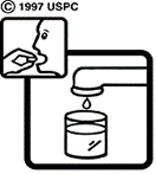
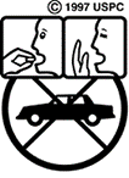
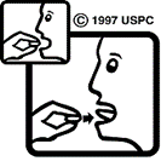
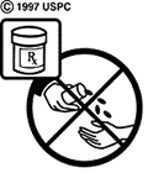
De begrijpelijkheid werd gemeten volgens internationale ISO-normen: minstens 67% van de deelnemers moest het pictogram correct interpreteren én een duidelijke relatie zien tussen beeld en betekenis.
📈 Wat blijkt?
De resultaten zijn veelbelovend: 9 van de 10 pictogrammen voldeden aan de ISO-normen en werden als begrijpelijk beschouwd. De meeste deelnemers vonden de pictogrammen gemakkelijk te begrijpen.
Toch zijn er verschillen. De factoren opleidingsniveau, taal en nationaliteit vertoonde significante invloed op de resultaten. Deelnemers met een diploma hoger onderwijs of een universitair diploma behaalden hogere scores op begrijpelijkheid dan deelnemers zonder diploma of met een lager opleidingsniveau. Ook taal speelde een rol: deelnemers die Arabisch als best beheersbare taal aangaven, behaalden lagere scores dan deelnemers met Engels als voorkeurstaal. Nationaliteit beïnvloedde eveneens de resultaten: Syrische deelnemers scoorden lager op begrijpelijkheid dan deelnemers met de Belgische nationaliteit.
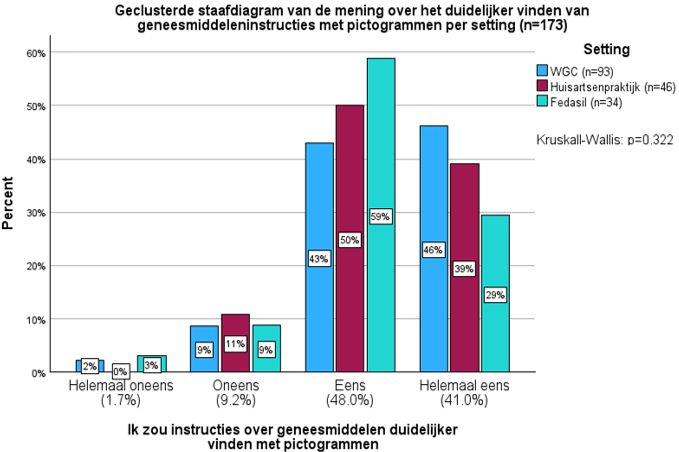
Opvallend is dat, hoewel veel deelnemers aangaven moeite te hebben met het begrijpen van medicatie-instructies, 89% instructies duidelijker zouden vinden met pictogrammen.
💡 Waarom is dit belangrijk (voor de zorg)?
Medicatiefouten kunnen ernstige gevolgen hebben zoals ziekenhuisopnames, invaliditeit of zelfs levensbedreigende situaties. Daarnaast veroorzaken ze economisch lasten en een bron van trauma voor zorgpersoneel.
Voor verpleegkundigen en andere zorgverleners zijn pictogrammen een evidence-based hulpmiddel voor het verlenen van medicatie-instructies bij mensen met een taalbarrière. Bovendien past het binnen een patiëntgerichte en kwaliteitsvolle zorg. Pictogrammen bieden een laagdrempelige, kostenefficiënte manier om communicatie te verbeteren en fouten te voorkomen.
Tegelijk is nuance belangrijk. Niet elke patiënt interpreteert elk pictogram op dezelfde manier. Daarom blijven culturele afstemming en evaluatie essentieel voor effectieve begrijpelijkheid.
“In een wereld waar communicatie steeds complexer wordt, is eenvoud soms het krachtigste antwoord.”
Deze masterproef toont aan dat pictogrammen een waardevolle stap zijn richting toegankelijke en veilige zorg voor iedereen – ongeacht taal of achtergrond.
Bibliografie
- FOD Volkgezondheid, Veiligheid van de Voedselketen en Leefmilieu. Patiëntenrechten. [Internet]. Beschikbaar op: https://www.health.belgium.be/nl/gezondheid/zorg-voor-jezelf/patientenrechten. 2024
- Patel J. The Impact of Language Barriers on Patient Care: A Pharmacy Perspective. PM Healthcare Journal. 2023;4:5-18.
- Statbel. Bevolking. [Internet]. Beschikbaar op: https://statbel.fgov.be/nl/themas/bevolking/structuur-van-de-bevolking/herkomst
- Ferreira-Alfaya FJ, Zarzuelo-Romero MJ, Cura Y. Comprehension of US Pharmacopeia and South African pictograms by sub-Saharan migrants who newly arrived in Europe. Res Social Adm Pharm. 2024 Jan;20(1):54-62. doi: 10.1016/j.sapharm.2023.09.001.
- Al Shamsi H, Almutairi AG, Al Mashrafi S, Al Kalbani T. Implications of Language Barriers for Healthcare: A Systematic Review. Oman Med J. 2020 Apr 30;35(2):e122. doi: 10.5001/omj.2020.40.
- Kim PC, Shen JJ, Angosta AD, Frakes K, Li C. Errors associated with the rights of medication administration at hospital settings. J Hosp Health Care Admin. 2018;JHHA-111. doi:10.29011/JHHA-111.000011.
- Merks P, Vaillancourt R, Roux D, Gierczyński R, Juszczyk G, Plagens-Rotman K, Religioni U, Cameron J, Zender M. Pictograms for safer medication handling by health care workers: a validation study in nursing students in Poland. BMC Health Serv Res. 2022 May 13;22(1):642. doi: 10.1186/s12913-022-08029-8.
- Rodziewicz TL, Houseman B, Vaqar S, Hipskind JE. Medical Error Reduction and Prevention. 2024 Feb 12. In: StatPearls [Internet]. Treasure Island (FL): StatPearls Publishing; 2025 Jan.
- Vlaams Patiënten Platform. De eerstelijnszorg in Vlaanderen. 2024. [Internet]. Beschikbaar op: https://vlaamspatientenplatform.be/nl/advies-en-tips/de-eerstelijnszorg-in-vlaanderen
- Kheir N, Awaisu A, Radoui A, El Badawi A, Jean L, Dowse R. Development and evaluation of pictograms on medication labels for patients with limited literacy skills in a culturally diverse multiethnic population. Res Social Adm Pharm. 2014 Sep-Oct;10(5):720-30. doi: 10.1016/j.sapharm.2013.11.003.
- Vlaamse overheid. Bevolking naar herkomst. [Internet]. Beschikbaar op: https://www.vlaanderen.be/statistiek-vlaanderen/bevolking/bevolking-naar-herkomst/metadata-bevolking-naar-herkomst
- Berthenet M, Vaillancourt R, Pouliot A. Evaluation, Modification, and Validation of Pictograms Depicting Medication Instructions in the Elderly. J Health Commun. 2016;21 Suppl 1:27-33. doi: 10.1080/10810730.2015.1133737.
- Barros IM, Alcântara TS, Mesquita AR, Bispo ML, Rocha CE, Moreira VP, Lyra Junior DP. Understanding of pictograms from the United States Pharmacopeia Dispensing Information (USP-DI) among elderly Brazilians. Patient Prefer Adherence. 2014 Oct 29;8:1493-501. doi: 10.2147/PPA.S65301.
- Cohen J. Statistical Power Analysis for the Behavioral Sciences. 2nd ed. Routledge; 1988.
- Saremi M, Shekaripour ZS, Khodakarim S. Guessability of U.S. pharmaceutical pictograms in Iranian prospective users. Pharm Pract (Granada). 2020 Jan-Mar;18(1):1705. doi: 10.18549/PharmPract.2020.1.1705
- International Organization for Standardization. ISO 9186–1:2014 ‑ Graphical symbols ‑‑ Test methods ‑‑ Part 1: Method for testing comprehensibility.
- Bloomberg K, Karlan GR, Lloyd LL. The comparative translucency of initial lexical items represented in five graphic symbol systems and sets. J Speech Hear Res. 1990 Dec;33(4):717-25. doi: 10.1044/jshr.3304.717.
- Koller M, Kantzer V, Mear I, Zarzar K, Martin M, Greimel E, Bottomley A, Arnott M, Kuliś D; ISOQOL TCA-SIG. The process of reconciliation: evaluation of guidelines for translating quality-of-life questionnaires. Expert Rev Pharmacoecon Outcomes Res. 2012 Apr;12(2):189-97. doi: 10.1586/erp.11.102.
- Lee WL, Chinna K, Lim Abdullah K, Zainal Abidin I. The forward-backward and dual-panel translation methods are comparable in producing semantic equivalent versions of a heart quality of life questionnaire. Int J Nurs Pract. 2019 Feb;25(1):e12715. doi: 10.1111/ijn.12715.
- Microsoft Corporation. Microsoft AI-assistent Copilot. Microsoft. 2023. Beschikbaar op: https://www.microsoft.com/copilot
- Droogmans A, Jorden K, Maes C, De Cuyper P, Schiepers M. Op zoek naar een inburgeringstraject dat klikt: onderzoek naar digitale geletterdheid bij laaggeletterde anderstalige nieuwkomers. Steunpunt Inburgering en Integratie. 2016.
- Hooft H, Vandermeerschen H, Chakkar S, Vandommele G, De Cuyper P, Schiepers M. Laaggeletterdheid bij volwassen nieuwkomers in de Belgische opvang: een verkennende analyse. Leuven: Centrum voor Taal en Onderwijs & Hoger Instituut voor Arbeid en Samenleving. 2020.
- Dewulf L, Van Nieuwenhove L, De Smedt F, De Neve J, Valcke M, Van Keer H, et al. Vaardigheden voor de uitdagingen van morgen: Vlaamse resultaten van PIAAC 2023. Beschikbaar op: https://piaac.ugent.be/wp-content/uploads/2024/12/PIAAC2023_samenvatting.pdf
- D’hulster J. Opvattingen van Turkse en Bulgaarse patiënten over het gebruik van professionele en informele tolken tijdens de consultatie in Gentse wijkgezondheidscentra. [Masterproef]. Universiteit Gent. 2016.
- Bekteshi V, Sifat M, Kendzor DE. Reaching the unheard: overcoming challenges in health research with hard-to-reach populations. Int J Equity Health. 2024 Mar 18;23(1):61. doi: 10.1186/s12939-024-02145.
- Al Shamsi H, Almutairi AG, Al Mashrafi S, Al Kalbani T. Implications of Language Barriers for Healthcare: A Systematic Review. Oman Med J. 2020 Apr 30;35(2):e122. doi: 10.5001/omj.2020.40.
- Arpey NC, Gaglioti AH, Rosenbaum ME. How socioeconomic status affects patient perceptions of health care: a qualitative study. J Prim Care Community Health. 2017;8(3):169–75.
- Gil-Salmerón A, Katsas K, Riza E, Karnaki P, Linos A. Access to Healthcare for Migrant Patients in Europe: Healthcare Discrimination and Translation Services. Int J Environ Res Public Health. 2021 Jul 26;18(15):7901. doi: 10.3390/ijerph18157901.
- Urzúa A, Ferrer R, Godoy N, Leppes F, Trujillo C, Osorio C, Caqueo-Urízar A. The mediating effect of self-esteem on the relationship between perceived discrimination and psychological well-being in immigrants. PLoS One. 2018 Jun 21;13(6):e0198413. doi: 10.1371/journal.pone.0198413.
- Urzúa A, Henríquez D, Caqueo-Urízar A, Landabur R. Ethnic Identity and Collective Self-Esteem Mediate the Effect of Anxiety and Depression on Quality of Life in a Migrant Population. Int J Environ Res Public Health. 2021 Dec 24;19(1):174. doi: 10.3390/ijerph19010174.
- Oczlon S, Bardach L, Lüftenegger M. Immigrant adolescents' perceptions of cultural pluralism climate: Relations to self-esteem, academic self-concept, achievement, and discrimination. New Dir Child Adolesc Dev. 2021 May;2021(177):51-75. doi: 10.1002/cad.20412.
- Verkuyten M. Perceived discrimination and self-esteem among ethnic minority adolescents. J Soc Psychol. 1998 Aug;138(4):479-93. doi: 10.1080/00224549809600402.
- Linthout L, Keygnaert I, Benbouriche M, Desombre C, Derluyn I. ‘We Hold on and Have Patience’: Perspectives and Experiences of Migrant Fathers in Belgian Asylum Centres. Child Fam Soc Work. 2024.
- Kwame A, Petrucka PM. A literature-based study of patient-centered care and communication in nurse-patient interactions: barriers, facilitators, and the way forward. BMC Nurs. 2021 Sep 3;20(1):158. doi: 10.1186/s12912-021-00684.
- Wolf MS, Davis TC, Shrank W, Rapp DN, Bass PF, Connor UM, Clayman M, Parker RM. To err is human: patient misinterpretations of prescription drug label instructions. Patient Educ Couns. 2007 Aug;67(3):293-300. doi: 10.1016/j.pec.2007.03.024.
- Ngoh LN. Health literacy: a barrier to pharmacist-patient communication and medication adherence. J Am Pharm Assoc (2003). 2009 Sep-Oct;49(5):e132-46; quiz e147-9. doi: 10.1331/JAPhA.2009.07075.
- Wolf MS, Davis TC, Tilson HH, Bass PF 3rd, Parker RM. Misunderstanding of prescription drug warning labels among patients with low literacy. Am J Health Syst Pharm. 2006 Jun 1;63(11):1048-55. doi: 10.2146/ajhp050469.
- The United States Pharmacopeial Convention, 2015. [Internet]. Beschikbaar op: Improving Health Literacy: USP Pictograms | Quality Matters | U.S. Pharmacopeia Blog
- De Baetselier E, Van Rompaey B, Dijkstra NE, Sino CG, Akerman K, Batalha LM, et al. The NUPHAC-EU Framework for Nurses' Role in Interprofessional Pharmaceutical Care: Cross-Sectional Evaluation in Europe. Int J Environ Res Public Health. 2021 Jul 25;18(15):7862. doi: 10.3390/ijerph18157862.
- Korku C, Kaya S. Relationship between authentic leadership, transformational leadership and innovative work behavior: mediating role of innovation climate. Int J Occup Saf Ergon. 2023 Sep;29(3):1128-1134. doi: 10.1080/10803548.2022.2112445.
- Ystaas LMK, Nikitara M, Ghobrial S, Latzourakis E, Polychronis G, Constantinou CS. The Impact of Transformational Leadership in the Nursing Work Environment and Patients' Outcomes: A Systematic Review. Nurs Rep. 2023 Sep 11;13(3):1271-1290. doi: 10.3390/nursrep13030108.
- van den Hoed MW, Backhaus R, de Vries E, Hamers JPH, Daniëls R. Factors contributing to innovation readiness in health care organizations: a scoping review. BMC Health Serv Res. 2022 Aug 5;22(1):997. doi: 10.1186/s12913-022-08185.
- Tsapnidou E, Kelesi M, Rovithis M, Katharakis G, Gerogianni G, Dafogianni C, Toylia G, Fasoi G, Stavropoulou A. Transformational Leadership—Quality Achievements and Benefits for the Healthcare Organizations: A Scoping Review. Hospitals. 2024; 1(1):87-103. https://doi.org/10.3390/hospitals1010008.