Krijgt mijn buur ander drinkwater dan ik?
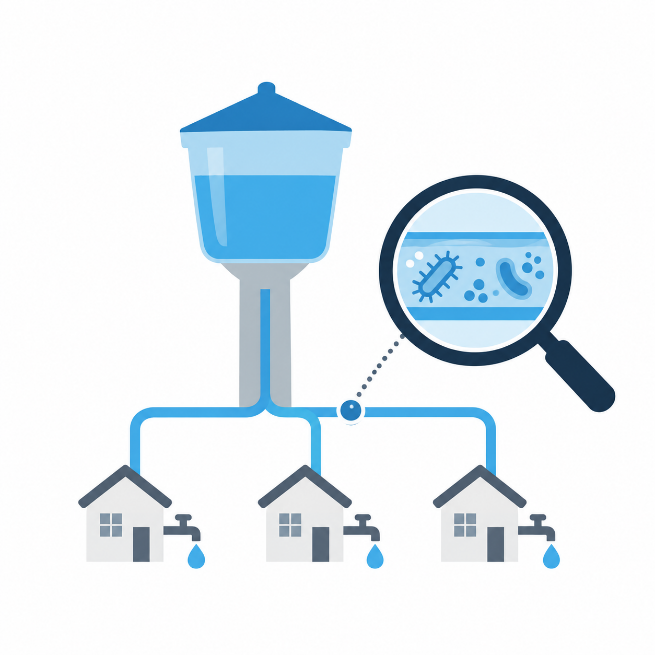
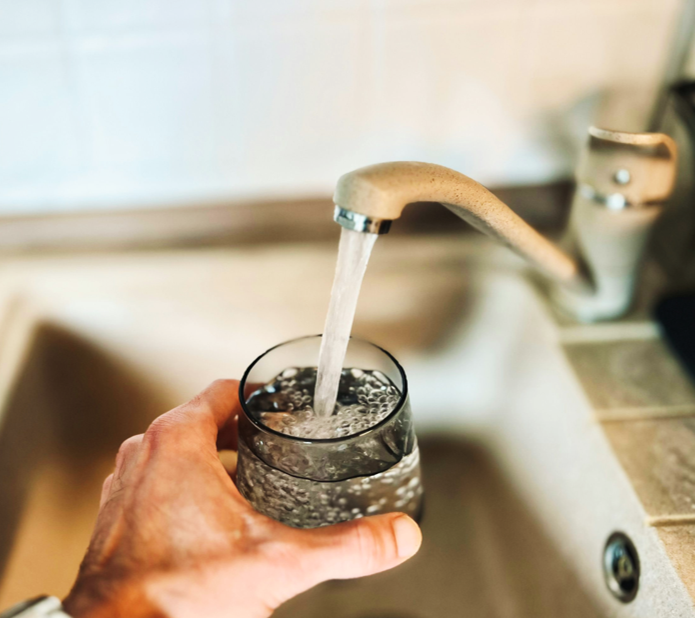 Wanneer je thuis een glas water inschenkt, sta je er waarschijnlijk niet bij stil waar dat water precies vandaan komt. In Vlaanderen is veilig drinkwater namelijk zo vanzelfsprekend geworden dat we nauwelijks nadenken over wat er tussen de waterbron en onze kraan gebeurt. Toch legt drinkwater een lange reis af vanaf het drinkwaterproductiecentrum door reservoirs, watertorens en kilometerslange leidingen. Dat water reist niet alleen, ook micro-organismen bewegen mee doorheen dat netwerk. Dit betekent dat ons drinkwater niet steriel is, maar juist een hele gemeenschap aan microscopisch kleine organismen bevat. Daarbij wordt er misschien eerst aan alleen bacteriën gedacht maar ook complexere organismen, zoals eukaryoten, maken deel uit van die onzichtbare wereld. Bacteriën en eukaryoten leven daarbij niet los van elkaar want ze beïnvloeden elkaar voortdurend. Zo kunnen op verschillende plaatsen in het drinkwater netwerk andere gemeenschappen van micro-organismen ontstaan.
Maar hoe lokaal zijn die verschillen eigenlijk? Kunnen twee mensen die vlak bij elkaar wonen toch drinkwater met een andere microbiële samenstelling krijgen? Dit kan niet beter onderzocht worden dan door letterlijk bij twee buren aan te kloppen!
Beter een goede buur dan een verre vriend
Om die verschillen te onderzoeken, volgden we het water vanaf drie verschillende watertorens, waarbij we per watertoren zes keukenkranen bemonsterden. Daarbij zagen we een duidelijk verschil in het aantal bacteriën met meer bacteriën aan de kraan dan aan de watertoren. Dit suggereert dat organismen zich tijdens hun weg door het drinkwaterdistributiesysteem of in de binneninstallatie van een huis opnieuw kunnen vermeerderen, een proces dat hergroei wordt genoemd. Die hergroei wordt beïnvloed door verschillende factoren, zoals omgevingsomstandigheden, het materiaal van de leiding, stagnatie en interacties tussen de verschillende organismen, inclusief de vorming van een biofilm. Maar daarmee weten we nog niet hoe groot de verschillen kunnen zijn tussen twee kranen die slechts enkele meters van elkaar verwijderd zijn. Daarvoor namen we ook stalen van aanpalende woningen of buren in een appartement.
“Ons drinkwater is niet steriel, maar bevat een hele gemeenschap aan microscopisch kleine organismen.”
Twee opvallende resultaten kwamen naar voren bij twee rechtstreekse burenparen. Bij het ene burenpaar was de microbiologische samenstelling van het drinkwater bijna identiek, wat erop wijst dat beide woningen zeer gelijkaardig water ontvangen. Bij het andere burenpaar verschilde de samenstelling en de concentratie aan organismen net sterk, wat aantoont dat zelfs tussen naburige woningen duidelijke verschillen kunnen optreden. Bij het laatste burenpaar lijkt er dus lokaal iets te gebeuren. Uit de literatuur zijn hiervoor verschillende mogelijke verklaringen bekend. Zo kan stagnatie een rol spelen, waarbij water voor een lange tijd stilstaat. Wanneer water langere tijd stilstaat, kan biofilmvorming worden bevorderd. Een biofilm vormt een geschikte leefomgeving voor micro-organismen en kan daardoor leiden tot een toename en verschuiving van de aanwezige soorten. Ook het materiaal van de leidingen kan een invloed hebben, omdat sommige materialen de vorming en samenstelling van biofilm kunnen beïnvloeden. Echter, na contact met het betrokken burenpaar, kwam nog een andere mogelijke verklaring naar voren. In een van de woningen bleek een speciale filter aan de kraan geïnstalleerd te zijn. Micro-organismen kunnen zich op deze filter ophopen en er een biofilm vormen. Daardoor kan lokaal een andere microbiële gemeenschap ontstaan dan in het water dat rechtsreeks uit het distributienetwerk komt.
Betekent dit dan dat je beter nooit een filter op je kraan installeert? Neen, zolang een filter goed wordt onderhouden en tijdig wordt gereinigd of vervangen, hoeft dat geen probleem te zijn. Wel is het belangrijk om te beseffen dat elke extra installatie aan de kraan een extra barrière vormt waarop micro-organismen zich kunnen vasthechten. Daardoor kunnen zowel de samenstelling als de concentratie van micro-organismen in het drinkwater worden beïnvloed.
Het drinkwater is dus geen steriele vloeistof en dat hoeft het ook niet te zijn. Drinkwaterproducenten streven daarom naar biostabiliteit doorheen het volledige drinkwatersysteem. Dit betekent dat de microbiologische samenstelling van het water zo stabiel mogelijk blijft en dat ongewenste groei van micro-organismen tijdens de weg van productie tot kraan wordt beperkt.
Een echt buurtfeest (of niet?)
Dus in een microbiële “buurt” blijft de samenstelling niet constant. Sommige micro-organismen verdwijnen, terwijl andere erbij komen. Zulke verandering zijn op zich niet negatief. Het wordt echter wel relevant wanneer zo een verandering gepaard gaat met de introductie of sterke toename van ongewenste micro-organismen. Een algemeen bekend voorbeeld is de legionellabacterie, die zich onder gunstige omstandigheden en bij onvoldoende naleving van de juist beheersmaatregelen kan vermenigvuldigen en een risico kan vormen voor de gezondheid. Een minder bekend voorbeeld zijn niet-tuberculeuze mycobacteriën. Deze bacteriën worden beschouwd als opportunistische pathogenen, wat betekent dat ze vooral ziekteverwekkend zijn voor mensen met een verzwakt immuunsysteem, zoals ouderen of personen met een verminderde weerstand. Tijdens mijn thesis kwam ik deze bacteriën zelf tegen in waterstalen die ik op een paar locaties in Vlaanderen heb genomen. Tot op heden is de aanwezigheid van deze bacteriën in het Vlaamse drinkwater nog niet aangetoond. In mijn verdere onderzoek als doctoraatstudent zal ik daarom nagaan waar en onder welke omstandigheden ze voorkomen, met als doel hun verspreiding in het Vlaamse drinkwater voor het eerst in kaart te brengen.
Een goede buurt is goud waard
Krijgt mijn buur nu ander drinkwater dan ik? Hoewel het water vaak uit dezelfde bron en hetzelfde distributienet afkomstig is, kan de microbiële samenstelling onderweg veranderen. Die verschillen zijn niet problematisch, maar ze tonen wel aan hoe belangrijk het is om de microbiële kwaliteit van drinkwater goed te begrijpen en op te volgen. Door beter in kaart te brengen hoe de micro-organismen veranderen doorheen de drinkwaterdistributiesystemen, kunnen mogelijke risico’s sneller worden herkend en kan de kwaliteit van ons drinkwater beter worden gewaarborgd. Daar hoort ook het tijdig detecteren en opvolgen van potentieel ziekteverwekkend micro-organismen in ons drinkwater.
Een goede microbiële “buurt” draait dus niet om overal exact dezelfde microbiële samenstelling te hebben, maar om een stabiele gemeenschap waarin ongewenste micro-organismen zo weinig mogelijk kansen krijgen.
Bibliografie
Afonso, T. B., Simões, L. C., & Lima, N. (2021). Occurrence of filamentous fungi in drinking water: Their role on fungal-bacterial biofilm formation. Research in Microbiology, 172(1), 103791. https://doi.org/10.1016/j.resmic.2020.11.002
Ahmad, J. I., Dignum, M., Liu, G., Medema, G., & Van Der Hoek, J. P. (2021). Changes in biofilm composition and microbial water quality in drinking water distribution systems by temperature increase induced through thermal energy recovery. Environmental Research, 194, 110648. https://doi.org/10.1016/j.envres.2020.110648
Albers, C. N., Ellegaard-Jensen, L., Harder, C. B., Rosendahl, S., Knudsen, B. E., Ekelund, F., & Aamand, J. (2015). Groundwater Chemistry Determines the Prokaryotic Community Structure of Waterworks Sand Filters. Environmental Science & Technology, 49(2), 839-846. https://doi.org/10.1021/es5046452
Al-gabr, H. Moh., Zheng, T., & Yu, X. (2014). Occurrence and quantification of fungi and detection of mycotoxigenic fungi in drinking water in Xiamen City, China. Science of The Total Environment, 466-467, 1103-1111. https://doi.org/10.1016/j.scitotenv.2012.12.060
Allen, M. J., Edberg, S. C., & Reasoner, D. J. (2004). Heterotrophic plate count bacteria—What is their significance in drinking water? International Journal of Food Microbiology, 92(3), 265-274. https://doi.org/10.1016/j.ijfoodmicro.2003.08.017
Alves, A. T., Lasmar, D. J., De Andrade Miranda, I. P., Da Silva Chaar, J., & Dos Santos Reis, J. (2021). The Potential of Activated Carbon in the Treatment of Water for Human Consumption, a Study of the State of the Art and Its Techniques Used for Its Development. Advances in Bioscience and Biotechnology, 12(06), 143-153. https://doi.org/10.4236/abb.2021.126010
AquaFlanders. (z.d.). Mijn drinkwaterbedrijf en rioolbeheerder—AquaFlanders. Geraadpleegd https://www.aquaflanders.be/mijn-drinkwaterbedrijf-en-rioolbeheerder
Ashbolt, N., Grabow, W., & Snozzi, M. (2001). Indicators of microbial water quality. Water Quality: Guidelines, Standards and Health, (Grabow 1996), 289-316. https://doi.org/10.4324/9781315693606
Baele, A., Waegenaar, F., De Maeyer, K., De Gusseme, B., Vervaeren, H., Spanoghe, P., & Boon, N. (2023). Insects in water towers: Hibernating flies could compromise microbial drinking water quality. Frontiers in Water, 5, 1022271. https://doi.org/10.3389/frwa.2023.1022271
Bai, X., Dinkla, I. J. T., & Muyzer, G. (2022). Microbial ecology of biofiltration used for producing safe drinking water. Applied Microbiology and Biotechnology, 106(13-16), 4813-4829. https://doi.org/10.1007/s00253-022-12013-x
Bal Krishna, K. C., Qiu, Z. G., & Sathasivan, A. (2024). High pH and chloramine suppress nontuberculous mycobacterial growth in a model water distribution system. Journal of Environmental Chemical Engineering, 12(1), 111813. https://doi.org/10.1016/j.jece.2023.111813
Balczun, C., & Scheid, P. (2017). Free-Living Amoebae as Hosts for and Vectors of Intracellular Microorganisms with Public Health Significance. Viruses, 9(4), 65. https://doi.org/10.3390/v9040065
Barker, J., & Brown, M. R. W. (1994). Trojan Horses of the microbial world: Protozoa and the survival of bacterial pathogens in the environment. Microbiology, 140(6), 1253-1259. https://doi.org/10.1099/00221287-140-6-1253
Bartram, J., Cotruvo, J., Exner, M., Fricker, C., & Glasmacher, A. (2003). Heterotropic Plate Counts and Drinking-water Safety: The Significance of HPCs for Water Quality and Human Health. World Health Organization.
Baumgartner, M., Yapi, A., Gr�bner-Ferreira, R., & Stetter, K. O. (2003). Cultivation and properties of Echinamoeba thermarum n. Sp., an extremely thermophilic amoeba thriving in hot springs. Extremophiles, 7(4), 267-274. https://doi.org/10.1007/s00792-003-0319-6
Beech, I. B., & Sunner, J. (2004). Biocorrosion: Towards understanding interactions between biofilms and metals. Current Opinion in Biotechnology, 15(3), 181-186. https://doi.org/10.1016/j.copbio.2004.05.001
Berney, M., Vital, M., Hülshoff, I., Weilenmann, H.-U., Egli, T., & Hammes, F. (2008). Rapid, cultivation-independent assessment of microbial viability in drinking water. Water Research, 42(14), 4010-4018. https://doi.org/10.1016/j.watres.2008.07.017
Berney, M., Weilenmann, H.-U., & Egli, T. (2006). Flow-cytometric study of vital cellular functions in Escherichia coli during solar disinfection (SODIS). Microbiology, 152(6), 1719-1729. https://doi.org/10.1099/mic.0.28617-0
Bian, K., Wang, C., Jia, S., Shi, P., Zhang, H., Ye, L., Zhou, Q., & Li, A. (2021). Spatial dynamics of bacterial community in chlorinated drinking water distribution systems supplied with two treatment plants: An integral study of free-living and particle-associated bacteria. Environment International, 154, 106552. https://doi.org/10.1016/j.envint.2021.106552
Bichai, F., Payment, P., & Barbeau, B. (2008). Protection of waterborne pathogens by higher organisms in drinking water: A review. Canadian Journal of Microbiology, 54(7), 509-524. https://doi.org/10.1139/W08-039
Blokker, E. J. M., Vreeburg, J. H. G., Schaap, P. G., & Van Dijk, J. C. (2011). The Self-Cleaning Velocity in Practice. Water Distribution Systems Analysis 2010, 187-199. https://doi.org/10.1061/41203(425)19
Bodzek, M., Konieczny, K., & Kwiecińska, A. (2011). Application of membrane processes in drinking water treatment–state of art. Desalination and Water Treatment, 35(1-3), 164-184. https://doi.org/10.5004/dwt.2011.2435
Boe-Hansen, R., Albrechtsen, H.-J., Arvin, E., & Jørgensen, C. (2002). Bulk water phase and biofilm growth in drinking water at low nutrient conditions. Water Research, 36(18), 4477-4486. https://doi.org/10.1016/S0043-1354(02)00191-4
Brennan, P. J., & Nikaido, H. (1995). THE ENVELOPE OF MYCOBACTERIA. Annual Review of Biochemistry, 64(1), 29-63. https://doi.org/10.1146/annurev.bi.64.070195.000333
Brumfield, K. D., Hasan, N. A., Leddy, M. B., Cotruvo, J. A., Rashed, S. M., Colwell, R. R., & Huq, A. (2020). A comparative analysis of drinking water employing metagenomics. PLOS ONE, 15(4), e0231210. https://doi.org/10.1371/journal.pone.0231210
Bureau of Reclamation. (2020, april 11). Water Facts—Worldwide Water Supply | ARWEC| CCAO | Area Offices | California-Great Basin | Bureau of Reclamation. https://www.usbr.gov/mp/arwec/water-facts-ww-water-sup.html
Buysschaert, B., Vermijs, L., Naka, A., Boon, N., & De Gusseme, B. (2018). Online flow cytometric monitoring of microbial water quality in a full-scale water treatment plant. Npj Clean Water, 1(1), 16. https://doi.org/10.1038/s41545-018-0017-7
Callahan, B. J., McMurdie, P. J., Rosen, M. J., Han, A. W., Johnson, A. J. A., & Holmes, S. P. (2016). DADA2: High-resolution sample inference from Illumina amplicon data. Nature Methods, 13(7), 581-583. https://doi.org/10.1038/nmeth.3869
Chandel, P., Mahajan, D., Thakur, K., Kumar, R., Kumar, S., Brar, B., Sharma, D., & Sharma, A. K. (2024). A review on plankton as a bioindicator: A promising tool for monitoring water quality. World Water Policy, 10(1), 213-232. https://doi.org/10.1002/wwp2.12137
Chandrapati, S., & Williams, M. G. (2014). TOTAL VIABLE COUNTS | Most Probable Number (MPN). In Encyclopedia of Food Microbiology (pp. 621-624). Elsevier. https://doi.org/10.1016/B978-0-12-384730-0.00333-5
Chatzigiannidou, I., Props, R., & Boon, N. (2018). Drinking water bacterial communities exhibit specific and selective necrotrophic growth. Npj Clean Water, 1(1), 22. https://doi.org/10.1038/s41545-018-0023-9
Chhipi-Shrestha, G., Mian, H. R., Mohammadiun, S., Rodriguez, M., Hewage, K., & Sadiq, R. (2023). Digital water: Artificial intelligence and soft computing applications for drinking water quality assessment. Clean Technologies and Environmental Policy, 25(5), 1409-1438. https://doi.org/10.1007/s10098-023-02477-4
Chien, A.-C., Hill, N. S., & Levin, P. A. (2012). Cell Size Control in Bacteria. Current Biology, 22(9), R340-R349. https://doi.org/10.1016/j.cub.2012.02.032
Christensen, S., Arvin, E., Nissen, E., & Albrechtsen, H.-J. (2013). Asellus aquaticus as a Potential Carrier of Escherichia coli and Other Coliform Bacteria into Drinking Water Distribution Systems. International Journal of Environmental Research and Public Health, 10(3), 845-855. https://doi.org/10.3390/ijerph10030845
Clark, R., Grayman, W., Buchberger, S., Yeongho, L., & Hartman, D. (2004). Drinking Water Distribution System: An Overview.
Collivignarelli, M., Abbà, A., Benigna, I., Sorlini, S., & Torretta, V. (2017). Overview of the Main Disinfection Processes for Wastewater and Drinking Water Treatment Plants. Sustainability, 10(1), 86. https://doi.org/10.3390/su10010086
Corpe, W. A., & Jensen, T. E. (1996). The diversity of bacteria, eukaryotic cells and viruses in an oligotrophic lake. Applied Microbiology and Biotechnology, 46(5-6), 622-630. https://doi.org/10.1007/s002530050872
Daffé, M., & Draper, P. (1997). The Envelope Layers of Mycobacteria with Reference to their Pathogenicity. In Advances in Microbial Physiology (Vol. 39, pp. 131-203). Elsevier. https://doi.org/10.1016/S0065-2911(08)60016-8
Dai, Z., Sevillano-Rivera, M. C., Calus, S. T., Bautista-de Los Santos, Q. M., Eren, A. M., Van Der Wielen, P. W. J. J., Ijaz, U. Z., & Pinto, A. J. (2020). Disinfection exhibits systematic impacts on the drinking water microbiome. Microbiome, 8(1), 42. https://doi.org/10.1186/s40168-020-00813-0
Daims, H. (2014). The Family Nitrospiraceae. In E. Rosenberg, E. F. DeLong, S. Lory, E. Stackebrandt, & F. Thompson (Red.), The Prokaryotes (pp. 733-749). Springer Berlin Heidelberg. https://doi.org/10.1007/978-3-642-38954-2_126
Daims, H., Lebedeva, E. V., Pjevac, P., Han, P., Herbold, C., Albertsen, M., Jehmlich, N., Palatinszky, M., Vierheilig, J., Bulaev, A., Kirkegaard, R. H., Von Bergen, M., Rattei, T., Bendinger, B., Nielsen, P. H., & Wagner, M. (2015). Complete nitrification by Nitrospira bacteria. Nature, 528(7583), 504-509. https://doi.org/10.1038/nature16461
Dávalos, A. F., Garcia, P. K., Montoya-Pachongo, C., Rengifo, A., Guerrero, D., Díaz-Ordoñez, L., Díaz, G., & Ferro, B. E. (2021). Identification of Nontuberculous Mycobacteria in Drinking Water in Cali, Colombia. International Journal of Environmental Research and Public Health, 18(16), 8451. https://doi.org/10.3390/ijerph18168451
De Vet, W. W. J. M., Dinkla, I. J. T., Rietveld, L. C., & Van Loosdrecht, M. C. M. (2011). Biological iron oxidation by Gallionella spp. In drinking water production under fully aerated conditions. Water Research, 45(17), 5389-5398. https://doi.org/10.1016/j.watres.2011.07.028
De Watergroep. (z.d.). Grondwater. Geraadpleegd http://dewatergroep.be/nl-be/drinkwater/weetjes-en-tips/van-bron-tot-kr…
Del Olmo, G., Malinowski, N., Puzon, G. J., Morgan, M. J., Calero, C., & Douterelo, I. (2021). Biofilm and Related Amoebas in an UK Chlorinated Drinking Water System. Water, 13(21), 3069. https://doi.org/10.3390/w13213069
Delafont, V., Mougari, F., Cambau, E., Joyeux, M., Bouchon, D., Héchard, Y., & Moulin, L. (2014). First Evidence of Amoebae–Mycobacteria Association in Drinking Water Network. Environmental Science & Technology, 48(20), 11872-11882. https://doi.org/10.1021/es5036255
Dickmann, D., National Research Council Canada, Poplar Council of Canada, & Poplar Council of the United States (Red.). (2001). Poplar culture in North America. NRC Research Press.
Diricks, M., Frank, D., Friesen, I., Niemann, S., Wichelhaus, T. A., Wetzstein, N., the NTMscope-Eco study group, Alisch, T., Appel, T., Burbach, T., Burger, G., Cirillo, D., Faber, S., Torres, S. G., Ghodousi, A., Giesbrecht, K., Hafner, J., Heidmann, D., Hofbauer, L., … Zielbauer, A.-S. (2025). Global lineages of non-tuberculous mycobacteria in residential water samples from Germany. BMC Microbiology, 25(1), 792. https://doi.org/10.1186/s12866-025-04563-7
Dowdell, K., Haig, S.-J., Caverly, L. J., Shen, Y., LiPuma, J. J., & Raskin, L. (2019). Nontuberculous mycobacteria in drinking water systems – the challenges of characterization and risk mitigation. Current Opinion in Biotechnology, 57, 127-136. https://doi.org/10.1016/j.copbio.2019.03.010
Dowdell, K. S., Potgieter, S. C., Olsen, K., Lee, S., Vedrin, M., Caverly, L. J., LiPuma, J. J., & Raskin, L. (2024). Source-to-tap investigation of the occurrence of nontuberculous mycobacteria in a full-scale chloraminated drinking water system. Applied and Environmental Microbiology, 90(9), e00609-24. https://doi.org/10.1128/aem.00609-24
Eberhardt, U., Kong, A., Montoya, A., Schütz, N., Bartlett, P., & Beker, H. J. (2022). Not (only) poison pies – Hebeloma (Agaricales, Hymenogastraceae) in Mexico. MycoKeys, 90, 163-202. https://doi.org/10.3897/mycokeys.90.85267
Egli, T. (2010). How to live at very low substrate concentration. Water Research, 44(17), 4826-4837. https://doi.org/10.1016/j.watres.2010.07.023
Egli, T., Campostrini, L., Leifels, M., Füchslin, H. P., Kolm, C., Dan, C., Zimmermann, S., Hauss, V., Guiller, A., Grasso, L., Shajkofci, A., Farnleitner, A. H., & Kirschner, A. K. T. (2024). Domestic hot-water boilers harbour active thermophilic bacterial communities distinctly different from those in the cold-water supply. Water Research, 253, 121109. https://doi.org/10.1016/j.watres.2024.121109
El Khéchine, A., Couderc, C., Flaudrops, C., Raoult, D., & Drancourt, M. (2011). Matrix-Assisted Laser Desorption/Ionization Time-of-Flight Mass Spectrometry Identification of Mycobacteria in Routine Clinical Practice. PLoS ONE, 6(9), e24720. https://doi.org/10.1371/journal.pone.0024720
El-Chakhtoura, J., Saikaly, P. E., Van Loosdrecht, M. C. M., & Vrouwenvelder, J. S. (2018). Impact of Distribution and Network Flushing on the Drinking Water Microbiome. Frontiers in Microbiology, 9, 2205. https://doi.org/10.3389/fmicb.2018.02205
European Parliament. EPDG32. (2021). The human right to drinking water :impact of large scale agriculture and industry: In depth analysis. Publications Office. https://data.europa.eu/doi/10.2861/714431
Falkenmark, M., & Rockström, J. (2005). Balancing water for humans and nature: The new approach in ecohydrology (Repr). Earthscan.
Falkinham, Iii, J. O. (2009). Surrounded by mycobacteria: Nontuberculous mycobacteria in the human environment. Journal of Applied Microbiology, 107(2), 356-367. https://doi.org/10.1111/j.1365-2672.2009.04161.x
Falkinham, J. O. (2015). Environmental Sources of Nontuberculous Mycobacteria. Clinics in Chest Medicine, 36(1), 35-41. https://doi.org/10.1016/j.ccm.2014.10.003
Fan, M., Xu, Q., Wang, X., Fang, Z., Van Loosdrecht, M. C. M., Pabst, M., Tao, Y., Rose, J. B., Van Der Meer, W., & Liu, G. (2026). Coupled chemical–microbial deterioration in stagnant fire hydrant branches threatens drinking water quality. Nature Water, 4(1), 44-57. https://doi.org/10.1038/s44221-025-00542-4
Farys. (2024). Jaarverslag 2024 Farys. https://www.farys.be/sites/farys/files/media/documents/WEB-250616_Farys…
Faust, K., & Raes, J. (2012). Microbial interactions: From networks to models. Nature Reviews Microbiology, 10(8), 538-550. https://doi.org/10.1038/nrmicro2832
Favere, J., Barbosa, R. G., Sleutels, T., Verstraete, W., De Gusseme, B., & Boon, N. (2021). Safeguarding the microbial water quality from source to tap. Npj Clean Water, 4(1), 28. https://doi.org/10.1038/s41545-021-00118-1
Favere, J., Buysschaert, B., Boon, N., & De Gusseme, B. (2020). Online microbial fingerprinting for quality management of drinking water: Full-scale event detection. Water Research, 170, 115353. https://doi.org/10.1016/j.watres.2019.115353
Favere, J., Waegenaar, F., Boon, N., & De Gusseme, B. (2021). Online microbial monitoring of drinking water: How do different techniques respond to contaminations in practice? Water Research, 202, 117387. https://doi.org/10.1016/j.watres.2021.117387
Favere, J., Waegenaar, F., Jia, M., Folens, K., Verhoeven, M., Balliu, E., Rajkovic, A., De Gusseme, B., & Boon, N. (2024). Production of biostable drinking water using a lab-scale biological trickling filter enriched with hydrogen-oxidizing bacteria. Npj Clean Water, 7(1), 101. https://doi.org/10.1038/s41545-024-00396-5
Fernando, F., Fredriksen, S., Lorentsen, E. D., Moen, L., & Bakke, I. (2026). High abundances of ammonia-oxidizing archaea in nitrifying biofilters of brackish recirculating aquaculture systems (RAS) with tolerance for abrupt salinity changes. Aquaculture, 612, 743280. https://doi.org/10.1016/j.aquaculture.2025.743280
Fish, K. E., Osborn, A. M., & Boxall, J. (2016). Characterising and understanding the impact of microbial biofilms and the extracellular polymeric substance (EPS) matrix in drinking water distribution systems. Environmental Science: Water Research & Technology, 2(4), 614-630. https://doi.org/10.1039/C6EW00039H
Flemming, H.-C. (2000, april). Biofilms—Life on the edge of the aqueous phase. Nachrichten aus der Chemie.
Flemming, H.-C., Neu, T. R., & Wozniak, D. J. (2007). The EPS Matrix: The “House of Biofilm Cells”. Journal of Bacteriology, 189(22), 7945-7947. https://doi.org/10.1128/JB.00858-07
Flemming, H.-C., Van Hullebusch, E. D., Neu, T. R., Nielsen, P. H., Seviour, T., Stoodley, P., Wingender, J., & Wuertz, S. (2023). The biofilm matrix: Multitasking in a shared space. Nature Reviews Microbiology, 21(2), 70-86. https://doi.org/10.1038/s41579-022-00791-0
Flemming, H.-C., & Wingender, J. (2010). The biofilm matrix. Nature Reviews Microbiology, 8(9), 623-633. https://doi.org/10.1038/nrmicro2415
Flemming, H.-C., Wingender, J., Szewzyk, U., Steinberg, P., Rice, S. A., & Kjelleberg, S. (2016). Biofilms: An emergent form of bacterial life. Nature Reviews Microbiology, 14(9), 563-575. https://doi.org/10.1038/nrmicro.2016.94
Fujioka, T., & Boivin, S. (2020). Assessing bacterial infiltration through reverse osmosis membrane. Environmental Technology & Innovation, 19, 100818. https://doi.org/10.1016/j.eti.2020.100818
Fukano, H., Wada, S., Kurata, O., Katayama, K., Fujiwara, N., & Hoshino, Y. (2017). Mycobacterium stephanolepidis sp. Nov., a rapidly growing species related to Mycobacterium chelonae, isolated from marine teleost fish, Stephanolepis cirrhifer. International Journal of Systematic and Evolutionary Microbiology, 67(8), 2811-2817. https://doi.org/10.1099/ijsem.0.002028
Furuhata, K., Kato, Y., Goto, K., Saitou, K., Sugiyama, J.-I., Hara, M., & Fukuyama, M. (2007). Identification of Yellow-Pigmented Bacteria Isolated from Hospital Tap Water in Japan and Their Chlorine Resistance. Biocontrol Science, 12(2), 39-46. https://doi.org/10.4265/bio.12.39
Gabrielli, M., Dai, Z., Delafont, V., Timmers, P. H. A., Van Der Wielen, P. W. J. J., Antonelli, M., & Pinto, A. J. (2023). Identifying Eukaryotes and Factors Influencing Their Biogeography in Drinking Water Metagenomes. Environmental Science & Technology, 57(9), 3645-3660. https://doi.org/10.1021/acs.est.2c09010
Gabrielli, M., Turolla, A., & Antonelli, M. (2021). Bacterial dynamics in drinking water distribution systems and flow cytometry monitoring scheme optimization. Journal of Environmental Management, 286, 112151. https://doi.org/10.1016/j.jenvman.2021.112151
García-Timermans, C., Malfroot, B., Dierendonck, C., Mol, Z., Pluym, T., Waegenaar, F., Arends, J., Walgraeve, C., Boon, N., & De Gusseme, B. (2022). Pilot-scale drinking water distribution system to study water quality changes during transport. In Review. https://doi.org/10.21203/rs.3.rs-2120214/v1
Gerba, C. P., & Pepper, I. L. (2019). Drinking Water Treatment. In Environmental and Pollution Science (pp. 435-454). Elsevier. https://doi.org/10.1016/B978-0-12-814719-1.00024-0
Gibbs, D. S., Anderson, G. L., Beuchat, L. R., Carta, L. K., & Williams, P. L. (2005). Potential Role of Diploscapter sp. Strain LKC25, a Bacterivorous Nematode from Soil, as a Vector of Food-Borne Pathogenic Bacteria to Preharvest Fruits and Vegetables. Applied and Environmental Microbiology, 71(5), 2433-2437. https://doi.org/10.1128/AEM.71.5.2433-2437.2005
Gonçalves, A. B., Paterson, R. R. M., & Lima, N. (2006). Survey and significance of filamentous fungi from tap water. International Journal of Hygiene and Environmental Health, 209(3), 257-264. https://doi.org/10.1016/j.ijheh.2005.12.001
Griebler, C., & Lueders, T. (2009). Microbial biodiversity in groundwater ecosystems. Freshwater Biology, 54(4), 649-677. https://doi.org/10.1111/j.1365-2427.2008.02013.x
Griffith, D. E., Aksamit, T., Brown-Elliott, B. A., Catanzaro, A., Daley, C., Gordin, F., Holland, S. M., Horsburgh, R., Huitt, G., Iademarco, M. F., Iseman, M., Olivier, K., Ruoss, S., Von Reyn, C. F., Wallace, R. J., & Winthrop, K. (2007). An Official ATS/IDSA Statement: Diagnosis, Treatment, and Prevention of Nontuberculous Mycobacterial Diseases. American Journal of Respiratory and Critical Care Medicine, 175(4), 367-416. https://doi.org/10.1164/rccm.200604-571ST
Grigg, N. S. (2024). Water Distribution Systems: Integrated Approaches for Effective Utility Management. Water, 16(4), 524. https://doi.org/10.3390/w16040524
Grzegorzek, M., Wartalska, K., & Kaźmierczak, B. (2023). Review of water treatment methods with a focus on energy consumption. International Communications in Heat and Mass Transfer, 143, 106674. https://doi.org/10.1016/j.icheatmasstransfer.2023.106674
Guillou, L., Bachar, D., Audic, S., Bass, D., Berney, C., Bittner, L., Boutte, C., Burgaud, G., De Vargas, C., Decelle, J., Del Campo, J., Dolan, J. R., Dunthorn, M., Edvardsen, B., Holzmann, M., Kooistra, W. H. C. F., Lara, E., Le Bescot, N., Logares, R., … Christen, R. (2012). The Protist Ribosomal Reference database (PR2): A catalog of unicellular eukaryote Small Sub-Unit rRNA sequences with curated taxonomy. Nucleic Acids Research, 41(D1), D597-D604. https://doi.org/10.1093/nar/gks1160
Gunkel, G., Michels, U., & Scheideler, M. (2021). Water Lice and Other Macroinvertebrates in Drinking Water Pipes: Diversity, Abundance and Health Risk. Water, 13(3), 276. https://doi.org/10.3390/w13030276
Guo, M.-T., Yuan, Q.-B., & Yang, J. (2013). Microbial selectivity of UV treatment on antibiotic-resistant heterotrophic bacteria in secondary effluents of a municipal wastewater treatment plant. Water Research, 47(16), 6388-6394. https://doi.org/10.1016/j.watres.2013.08.012
Hammes, F., Berney, M., Wang, Y., Vital, M., Köster, O., & Egli, T. (2008). Flow-cytometric total bacterial cell counts as a descriptive microbiological parameter for drinking water treatment processes. Water Research, 42(1-2), 269-277. https://doi.org/10.1016/j.watres.2007.07.009
Hammes, F., & Egli, T. (2010). Cytometric methods for measuring bacteria in water: Advantages, pitfalls and applications. Analytical and Bioanalytical Chemistry, 397(3), 1083-1095. https://doi.org/10.1007/s00216-010-3646-3
Hammes, F., Goldschmidt, F., Vital, M., Wang, Y., & Egli, T. (2010). Measurement and interpretation of microbial adenosine tri-phosphate (ATP) in aquatic environments. Water Research, 44(13), 3915-3923. https://doi.org/10.1016/j.watres.2010.04.015
Harter, T. (2003). Basic Concepts of Groundwater Hydrology. University of California, Agriculture and Natural Resources.
Hemmerling, C., Labrosse, A., Ruess, L., & Steinert, M. (2023). Legionella pneumophila and Free-Living Nematodes: Environmental Co-Occurrence and Trophic Link. Microorganisms, 11(3), 738. https://doi.org/10.3390/microorganisms11030738
Henne, K., Kahlisch, L., Brettar, I., & Höfle, M. G. (2012). Analysis of Structure and Composition of Bacterial Core Communities in Mature Drinking Water Biofilms and Bulk Water of a Citywide Network in Germany. Applied and Environmental Microbiology, 78(10), 3530-3538. https://doi.org/10.1128/AEM.06373-11
Hoffmann, C., Leis, A., Niederweis, M., Plitzko, J. M., & Engelhardt, H. (2008). Disclosure of the mycobacterial outer membrane: Cryo-electron tomography and vitreous sections reveal the lipid bilayer structure. Proceedings of the National Academy of Sciences, 105(10), 3963-3967. https://doi.org/10.1073/pnas.0709530105
Hong, P.-Y., Hwang, C., Ling, F., Andersen, G. L., LeChevallier, M. W., & Liu, W.-T. (2010). Pyrosequencing Analysis of Bacterial Biofilm Communities in Water Meters of a Drinking Water Distribution System. Applied and Environmental Microbiology, 76(16), 5631-5635. https://doi.org/10.1128/AEM.00281-10
Horn, M., & Wagner, M. (2004). Bacterial Endosymbionts of Free‐living Amoebae1. Journal of Eukaryotic Microbiology, 51(5), 509-514. https://doi.org/10.1111/j.1550-7408.2004.tb00278.x
Huber Technology. (n.d.). Aeration of water reservoirs | HUBER Technology. Geraadpleegd 20 mei 2026, van https://www.huber-se.com/products/stainless-steel-equipment/air-filteri…
Hurtado-McCormick, S., Sánchez, L., Martínez, J., Calderón, C., Calvo, D., Narváez, D., Lemus, M., Groot, H., & Rodríguez Susa, M. (2016). Fungi in biofilms of a drinking water network: Occurrence, diversity and mycotoxins approach. Water Supply, 16(4), 905-914. https://doi.org/10.2166/ws.2016.024
Jang, H.-J. (2011). Effects of Diverse Water Pipe Materials on Bacterial Communities and Water Quality in the Annular Reactor. Journal of Microbiology and Biotechnology, 21(2), 115-123. https://doi.org/10.4014/jmb.1010.10012
Ji, P., Parks, J., Edwards, M. A., & Pruden, A. (2015). Impact of Water Chemistry, Pipe Material and Stagnation on the Building Plumbing Microbiome. PLOS ONE, 10(10), e0141087. https://doi.org/10.1371/journal.pone.0141087
Jiang, J.-Q. (2015). The role of coagulation in water treatment. Current Opinion in Chemical Engineering, 8, 36-44. https://doi.org/10.1016/j.coche.2015.01.008
Jiang, S., Li, Y., & Ladewig, B. P. (2017). A review of reverse osmosis membrane fouling and control strategies. Science of The Total Environment, 595, 567-583. https://doi.org/10.1016/j.scitotenv.2017.03.235
Kahlisch, L., Henne, K., Gröbe, L., Brettar, I., & Höfle, M. G. (2012). Assessing the Viability of Bacterial Species in Drinking Water by Combined Cellular and Molecular Analyses. Microbial Ecology, 63(2), 383-397. https://doi.org/10.1007/s00248-011-9918-4
Kalmbach, S. (2000). In situ probing reveals Aquabacterium commune as a widespread and highly abundant bacterial species in drinking water biofilms. Water Research, 34(2), 575-581. https://doi.org/10.1016/S0043-1354(99)00179-7
Kantor, R. S., Kennedy, L. C., Miller, S. E., Favere, J., & Nelson, K. L. (2025). Reverse Osmosis in an Advanced Water Treatment Train Produces a Simple, Consistent Microbial Community. ACS ES&T Engineering, 5(3), 772-781. https://doi.org/10.1021/acsestengg.4c00665
Karanfil, T. (2006). Chapter 7 Activated carbon adsorption in drinking water treatment. In Interface Science and Technology (Vol. 7, pp. 345-373). Elsevier. https://doi.org/10.1016/S1573-4285(06)80016-5
Kassambara, A. (2020). ggpubr: “ggplot2” Based Publication Ready Plots. https://CRAN.R-project.org/package=ggpubr
Katsanou, K., & Karapanagioti, H. K. (2017). Surface Water and Groundwater Sources for Drinking Water. In A. Gil, L. A. Galeano, & M. Á. Vicente (Red.), Applications of Advanced Oxidation Processes (AOPs) in Drinking Water Treatment (Vol. 67, pp. 1-19). Springer International Publishing. https://doi.org/10.1007/698_2017_140
Ketelaars, H. A. M., Wagenvoort, A. J., Peters, M. C. F. M., Wunderer, J., & Hijnen, W. A. M. (2023). Taxonomic diversity and biomass of the invertebrate fauna of nine drinking water treatment plants and their non-chlorinated distribution systems. Water Research, 242, 120269. https://doi.org/10.1016/j.watres.2023.120269
Kim, S.-Y., Shin, S. H., Moon, S. M., Yang, B., Kim, H., Kwon, O. J., Huh, H. J., Ki, C.-S., Lee, N. Y., Shin, S. J., & Koh, W.-J. (2017). Distribution and clinical significance of Mycobacterium avium complex species isolated from respiratory specimens. Diagnostic Microbiology and Infectious Disease, 88(2), 125-137. https://doi.org/10.1016/j.diagmicrobio.2017.02.017
Klindworth, A., Pruesse, E., Schweer, T., Peplies, J., Quast, C., Horn, M., & Glöckner, F. O. (2013). Evaluation of general 16S ribosomal RNA gene PCR primers for classical and next-generation sequencing-based diversity studies. Nucleic Acids Research, 41(1), e1-e1. https://doi.org/10.1093/nar/gks808
Koh, W.-J. (2017). Nontuberculous Mycobacteria—Overview. Microbiology Spectrum, 5(1), 5.1.11. https://doi.org/10.1128/microbiolspec.TNMI7-0024-2016
Koskinen, R., Ali-Vehmas, T., Kampfer, P., Laurikkala, M., Tsitko, I., Kostyal, E., Atroshi, F., & Salkinoja-Salonen, M. (2000). Characterization of Sphingomonas isolates from Finnish and Swedish drinking water distribution systems. Journal of Applied Microbiology, 89(4), 687-696. https://doi.org/10.1046/j.1365-2672.2000.01167.x
Kwon, S., Moon, E., Kim, T.-S., Hong, S., & Park, H.-D. (2011). Pyrosequencing Demonstrated Complex Microbial Communities in a Membrane Filtration System for a Drinking Water Treatment Plant. Microbes and Environments, 26(2), 149-155. https://doi.org/10.1264/jsme2.ME10205
LaPara, T. M., Hope Wilkinson, K., Strait, J. M., Hozalski, R. M., Sadowksy, M. J., & Hamilton, M. J. (2015). The Bacterial Communities of Full-Scale Biologically Active, Granular Activated Carbon Filters Are Stable and Diverse and Potentially Contain Novel Ammonia-Oxidizing Microorganisms. Applied and Environmental Microbiology, 81(19), 6864-6872. https://doi.org/10.1128/AEM.01692-15
Lautenschlager, K., Boon, N., Wang, Y., Egli, T., & Hammes, F. (2010). Overnight stagnation of drinking water in household taps induces microbial growth and changes in community composition. Water Research, 44(17), 4868-4877. https://doi.org/10.1016/j.watres.2010.07.032
Lautenschlager, K., Hwang, C., Ling, F., Liu, W.-T., Boon, N., Köster, O., Egli, T., & Hammes, F. (2014). Abundance and composition of indigenous bacterial communities in a multi-step biofiltration-based drinking water treatment plant. Water Research, 62, 40-52. https://doi.org/10.1016/j.watres.2014.05.035
Le Dantec, C., Duguet, J.-P., Montiel, A., Dumoutier, N., Dubrou, S., & Vincent, V. (2002). Chlorine Disinfection of Atypical Mycobacteria Isolated from a Water Distribution System. Applied and Environmental Microbiology, 68(3), 1025-1032. https://doi.org/10.1128/AEM.68.3.1025-1032.2002
LeChevallier, M. W., Prosser, T., & Stevens, M. (2024). Opportunistic Pathogens in Drinking Water Distribution Systems—A Review. Microorganisms, 12(5), 916. https://doi.org/10.3390/microorganisms12050916
Legube, B. (2025). Drinking water production, a major public health issue. Encyclopédie de l’Environnement. https://www.encyclopedie-environnement.org/en/water/drinking-water-prod…
Lehtola, M. J., Miettinen, I. T., Keinänen, M. M., Kekki, T. K., Laine, O., Hirvonen, A., Vartiainen, T., & Martikainen, P. J. (2004). Microbiology, chemistry and biofilm development in a pilot drinking water distribution system with copper and plastic pipes. Water Research, 38(17), 3769-3779. https://doi.org/10.1016/j.watres.2004.06.024
Lesimple, A., Ahmed, F. E., & Hilal, N. (2020). Remineralization of desalinated water: Methods and environmental impact. Desalination, 496, 114692. https://doi.org/10.1016/j.desal.2020.114692
Ley, C. J., Proctor, C. R., Singh, G., Ra, K., Noh, Y., Odimayomi, T., Salehi, M., Julien, R., Mitchell, J., Nejadhashemi, A. P., Whelton, A. J., & Aw, T. G. (2020). Drinking water microbiology in a water-efficient building: Stagnation, seasonality, and physicochemical effects on opportunistic pathogen and total bacteria proliferation. Environmental Science: Water Research & Technology, 6(10), 2902-2913. https://doi.org/10.1039/D0EW00334D
Leys, N. M., Ryngaert, A., Bastiaens, L., Wattiau, P., Top, E. M., Verstraete, W., & Springael, D. (2005). Occurrence and community composition of fast-growing Mycobacterium in soils contaminated with polycyclic aromatic hydrocarbons. FEMS Microbiology Ecology, 51(3), 375-388. https://doi.org/10.1016/j.femsec.2004.09.015
Li, C., Ling, F., Zhang, M., Liu, W.-T., Li, Y., & Liu, W. (2017). Characterization of bacterial community dynamics in a full-scale drinking water treatment plant. Journal of Environmental Sciences, 51, 21-30. https://doi.org/10.1016/j.jes.2016.05.042
Li, Q., Yu, S., Li, L., Liu, G., Gu, Z., Liu, M., Liu, Z., Ye, Y., Xia, Q., & Ren, L. (2017). Microbial Communities Shaped by Treatment Processes in a Drinking Water Treatment Plant and Their Contribution and Threat to Drinking Water Safety. Frontiers in Microbiology, 8, 2465. https://doi.org/10.3389/fmicb.2017.02465
Liao, X., Chen, C., Wang, Z., Wan, R., Chang, C.-H., Zhang, X., & Xie, S. (2013). Changes of biomass and bacterial communities in biological activated carbon filters for drinking water treatment. Process Biochemistry, 48(2), 312-316. https://doi.org/10.1016/j.procbio.2012.12.016
Lin, W., Yu, Z., Zhang, H., & Thompson, I. P. (2014). Diversity and dynamics of microbial communities at each step of treatment plant for potable water generation. Water Research, 52, 218-230. https://doi.org/10.1016/j.watres.2013.10.071
Ling, F., Whitaker, R., LeChevallier, M. W., & Liu, W.-T. (2018). Drinking water microbiome assembly induced by water stagnation. The ISME Journal, 12(6), 1520-1531. https://doi.org/10.1038/s41396-018-0101-5
Liu, G., Bakker, G. L., Li, S., Vreeburg, J. H. G., Verberk, J. Q. J. C., Medema, G. J., Liu, W. T., & Van Dijk, J. C. (2014). Pyrosequencing Reveals Bacterial Communities in Unchlorinated Drinking Water Distribution System: An Integral Study of Bulk Water, Suspended Solids, Loose Deposits, and Pipe Wall Biofilm. Environmental Science & Technology, 48(10), 5467-5476. https://doi.org/10.1021/es5009467
Liu, G., Lut, M. C., Verberk, J. Q. J. C., & Van Dijk, J. C. (2013). A comparison of additional treatment processes to limit particle accumulation and microbial growth during drinking water distribution. Water Research, 47(8), 2719-2728. https://doi.org/10.1016/j.watres.2013.02.035
Liu, G., Verberk, J. Q. J. C., & Van Dijk, J. C. (2013). Bacteriology of drinking water distribution systems: An integral and multidimensional review. Applied Microbiology and Biotechnology, 97(21), 9265-9276. https://doi.org/10.1007/s00253-013-5217-y
Liu, S., Gunawan, C., Barraud, N., Rice, S. A., Harry, E. J., & Amal, R. (2016). Understanding, Monitoring, and Controlling Biofilm Growth in Drinking Water Distribution Systems. Environmental Science & Technology, 50(17), 8954-8976. https://doi.org/10.1021/acs.est.6b00835
Loret, J.-F., & Greub, G. (2010). Free-living amoebae: Biological by-passes in water treatment. International Journal of Hygiene and Environmental Health, 213(3), 167-175. https://doi.org/10.1016/j.ijheh.2010.03.004
Lu, J., Buse, H., Struewing, I., Zhao, A., Lytle, D., & Ashbolt, N. (2017). Annual variations and effects of temperature on Legionella spp. And other potential opportunistic pathogens in a bathroom. Environmental Science and Pollution Research, 24(3), 2326-2336. https://doi.org/10.1007/s11356-016-7921-5
Lu, Z., Jing, Z., Huang, J., Ke, Y., Li, C., Zhao, Z., Ao, X., & Sun, W. (2022). Can we shape microbial communities to enhance biological activated carbon filter performance? Water Research, 212, 118104. https://doi.org/10.1016/j.watres.2022.118104
Ma, L., Liu, F., Zhou, M., Zhang, M., Zheng, J., Wang, Z., He, Z., Yan, Q., Wu, B., Wang, C., & Shu, L. (2025). Amoebae contribute to the diversity and fate of antibiotic resistance genes in drinking water system. Environment International, 204, 109867. https://doi.org/10.1016/j.envint.2025.109867
Ma, X., Vikram, A., Casson, L., & Bibby, K. (2017). Centralized Drinking Water Treatment Operations Shape Bacterial and Fungal Community Structure. Environmental Science & Technology, 51(13), 7648-7657. https://doi.org/10.1021/acs.est.7b00768
Madsen, H. T. (2014). Membrane Filtration in Water Treatment – Removal of Micropollutants. In Chemistry of Advanced Environmental Purification Processes of Water (pp. 199-248). Elsevier. https://doi.org/10.1016/B978-0-444-53178-0.00006-7
Malinowski, N., Domingos, S., Wylie, J., Morgan, M. J., Metcalfe, S., Walsh, T., Ahmed, W., Kaksonen, A. H., & Puzon, G. J. (2022). Free-Living Amoeba and Associated Pathogenic Bacteria in Well-Chlorinated Drinking Water Storage Tanks. ACS ES&T Water, 2(9), 1511-1520. https://doi.org/10.1021/acsestwater.1c00428
McKinnon, K. M. (2018). Flow Cytometry: An Overview. Current Protocols in Immunology, 120(1). https://doi.org/10.1002/cpim.40
McMurdie, P. J., & Holmes, S. (2013). phyloseq: An R Package for Reproducible Interactive Analysis and Graphics of Microbiome Census Data. PLoS ONE, 8(4), e61217. https://doi.org/10.1371/journal.pone.0061217
Mol, Z., Waegenaar, F., Pluym, T., Vermeir, P., Van Langenhove, H., De Gusseme, B., Boon, N., Walgraeve, C., & Demeestere, K. (2025). Effect of biofilm, temperature and type of source water on the formation of haloanisoles in a pilot drinking water distribution system. Water Research, 285, 124078. https://doi.org/10.1016/j.watres.2025.124078
Moreno, Y., Moreno-Mesonero, L., Soler, P., Zornoza, A., & Soriano, A. (2024). Influence of drinking water biofilm microbiome on water quality: Insights from a real-scale distribution system. Science of The Total Environment, 921, 171086. https://doi.org/10.1016/j.scitotenv.2024.171086
Nathanson, J. A. (2025). Pumps. Britannica. https://www.britannica.com/technology/wastewater-treatment
National Research Council. (2006). Drinking Water Distribution Systems: Assessing and Reducing Risks (p. 11728). National Academies Press. https://doi.org/10.17226/11728
Nescerecka, A., Rubulis, J., Vital, M., Juhna, T., & Hammes, F. (2014). Biological Instability in a Chlorinated Drinking Water Distribution Network. PLoS ONE, 9(5), e96354. https://doi.org/10.1371/journal.pone.0096354
Niquette, P. (2000). Impacts of pipe materials on densities of fixed bacterial biomass in a drinking water distribution system. Water Research, 34(6), 1952-1956. https://doi.org/10.1016/S0043-1354(99)00307-3
Nriagu, J., Xi, C., Siddique, A., Vincent, A., & Shomar, B. (2018). Influence of Household Water Filters on Bacteria Growth and Trace Metals in Tap Water of Doha, Qatar. Scientific Reports, 8(1), 8268. https://doi.org/10.1038/s41598-018-26529-8
Obaid, S., Hosoi, K., Ngoc, N. M., Inoue, T., & Yokota, K. (2025). Modelling free residual chlorine decay in a residential district water distribution network using smart water meter data. International Journal of Environmental Science and Technology, 22(12), 11809-11816. https://doi.org/10.1007/s13762-025-06378-5
Oksanen, J., Simpson, G. L., Blanchet, F. G., Kindt, R., Legendre, P., Minchin, P. R., O’Hara, R. B., Solymos, P., Stevens, M. H. H., Szoecs, E., Wagner, H., Barbour, M., Bedward, M., Bolker, B., Borcard, D., Carvalho, G., Chirico, M., Caceres, M. D., Durand, S., … Weedon, J. (2022). vegan: Community Ecology Package. https://CRAN.R-project.org/package=vegan
Osborne, E., Haddix, M., & Garner, E. (2022). Impact of hydraulic and physicochemical factors on spatiotemporal variations of particle-associated bacteria in a drinking water distribution system. Frontiers in Water, 4, 959618. https://doi.org/10.3389/frwa.2022.959618
Palomo, A., Jane Fowler, S., Gülay, A., Rasmussen, S., Sicheritz-Ponten, T., & Smets, B. F. (2016). Metagenomic analysis of rapid gravity sand filter microbial communities suggests novel physiology of Nitrospira spp. The ISME Journal, 10(11), 2569-2581. https://doi.org/10.1038/ismej.2016.63
Park, S., & Hu, J. Y. (2010). Assessment of the extent of bacterial growth in reverse osmosis system for improving drinking water quality. Journal of Environmental Science and Health, Part A, 45(8), 968-977. https://doi.org/10.1080/10934521003772386
Pei, T., Liu, X., Xu, G., Xin, T., Wu, G., Ma, B., Liu, X., & Zhang, H. (2025). Hydraulic regimes-driven microbial community assembly and network stability in drinking water distribution systems: Mechanistic linkages with transport distance and stagnation effects. Journal of Hazardous Materials, 498, 139825. https://doi.org/10.1016/j.jhazmat.2025.139825
Pereira, A. C., Ramos, B., Reis, A. C., & Cunha, M. V. (2020). Non-Tuberculous Mycobacteria: Molecular and Physiological Bases of Virulence and Adaptation to Ecological Niches. Microorganisms, 8(9), 1380. https://doi.org/10.3390/microorganisms8091380
Pfaller, S., King, D., Mistry, J. H., & Donohue, M. (2022). Occurrence revisited: Mycobacterium avium and Mycobacterium intracellulare in potable water in the USA. Applied Microbiology and Biotechnology, 106(7), 2715-2727. https://doi.org/10.1007/s00253-022-11849-7
Pluym, T., García-Timermans, C., Vervloet, S., Cornelissen, R., Boon, N., & De Gusseme, B. (2023). Flow cytometry for on-line microbial regrowth monitoring in a membrane filtration plant: Pilot-scale case study for wastewater reuse. Environmental Science: Water Research & Technology, 9(8), 2128-2139. https://doi.org/10.1039/D2EW00921H
Pluym, T., Waegenaar, F., De Gusseme, B., & Boon, N. (2024). Microbial drinking water monitoring now and in the future. Microbial Biotechnology, 17(7), e14532. https://doi.org/10.1111/1751-7915.14532
Pluym, T., Waegenaar, F., Dejaeger, K., Dhoore, M., Mestdagh, E., Cornelissen, E., Boon, N., & De Gusseme, B. (2025). Membrane filtration reduces nutrient availability and invasion potential in drinking water systems, without affecting mature biofilms. Frontiers in Microbiology, 16, 1622038. https://doi.org/10.3389/fmicb.2025.1622038
Prest, E. I., El-Chakhtoura, J., Hammes, F., Saikaly, P. E., Van Loosdrecht, M. C. M., & Vrouwenvelder, J. S. (2014). Combining flow cytometry and 16S rRNA gene pyrosequencing: A promising approach for drinking water monitoring and characterization. Water Research, 63, 179-189. https://doi.org/10.1016/j.watres.2014.06.020
Prest, E. I., Hammes, F., Van Loosdrecht, M. C. M., & Vrouwenvelder, J. S. (2016). Biological Stability of Drinking Water: Controlling Factors, Methods, and Challenges. Frontiers in Microbiology, 7. https://doi.org/10.3389/fmicb.2016.00045
Prest, E. I., Schaap, P. G., Besmer, M. D., & Hammes, F. (2021). Dynamic Hydraulics in a Drinking Water Distribution System Influence Suspended Particles and Turbidity, But Not Microbiology. Water, 13(1), 109. https://doi.org/10.3390/w13010109
Proctor, C. R., Rhoads, W. J., Keane, T., Salehi, M., Hamilton, K., Pieper, K. J., Cwiertny, D. M., Prévost, M., & Whelton, A. J. (2020). Considerations for large building water quality after extended stagnation. AWWA Water Science, 2(4), e1186. https://doi.org/10.1002/aws2.1186
Props, R., Monsieurs, P., Mysara, M., Clement, L., & Boon, N. (2016). Measuring the biodiversity of microbial communities by flow cytometry. Methods in Ecology and Evolution, 7(11), 1376-1385. https://doi.org/10.1111/2041-210X.12607
Publications Office of the European Union. (2023). Drinkwater—Essentiële kwaliteitsnormen (tot 2023) | EUR-Lex. EUR-Lex. https://eur-lex.europa.eu/NL/legal-content/summary/drinking-water-essen…
Putri, R. E., Felix, A. I., Vrouwenvelder, J. S., & Farhat, N. (2025). Remineralization of reverse osmosis produced drinking water: Impact of magnesium on biological stability and microbial community. Next Research, 2(4), 100924. https://doi.org/10.1016/j.nexres.2025.100924
Quast, C., Pruesse, E., Yilmaz, P., Gerken, J., Schweer, T., Yarza, P., Peplies, J., & Glöckner, F. O. (2012). The SILVA ribosomal RNA gene database project: Improved data processing and web-based tools. Nucleic Acids Research, 41(D1), D590-D596. https://doi.org/10.1093/nar/gks1219
Quintela-Alonso, P., Nitsche, F., & Arndt, H. (2011). Molecular Characterization and Revised Systematics of Microdiaphanosoma arcuatum (Ciliophora, Colpodea): REVISED SYSTEMATICS OF M. ARCUATUM. Journal of Eukaryotic Microbiology, 58(2), 114-119. https://doi.org/10.1111/j.1550-7408.2010.00527.x
Razali, M. C., Wahab, N. A., Sunar, N., & Shamsudin, N. H. (2023). Existing Filtration Treatment on Drinking Water Process and Concerns Issues. Membranes, 13(3), 285. https://doi.org/10.3390/membranes13030285
Rhoads, W. J., Pruden, A., & Edwards, M. A. (2016). Survey of green building water systems reveals elevated water age and water quality concerns. Environmental Science: Water Research & Technology, 2(1), 164-173. https://doi.org/10.1039/C5EW00221D
Ridgway, H. F., Means, E. G., & Olson, B. H. (1981). Iron Bacteria in Drinking-Water Distribution Systems: Elemental Analysis of Gallionella Stalks, Using X-Ray Energy-Dispersive Microanalysis. Applied and Environmental Microbiology, 41(1), 288-297. https://doi.org/10.1128/aem.41.1.288-297.1981
Rodriguez-Temporal, D., Alcaide, F., Mareković, I., O’Connor, J. A., Gorton, R., Van Ingen, J., Van Den Bossche, A., Héry-Arnaud, G., Beauruelle, C., Orth-Höller, D., Palacios-Gutiérrez, J.-J., Tudó, G., Bou, G., Ceyssens, P.-J., Garrigó, M., González-Martin, J., Greub, G., Hrabak, J., Ingebretsen, A., … Rodríguez-Sánchez, B. (2022). Multicentre study on the reproducibility of MALDI-TOF MS for nontuberculous mycobacteria identification. Scientific Reports, 12(1), 1237. https://doi.org/10.1038/s41598-022-05315-7
Rodríguez-Zaragoza, S. (1994). Ecology of Free-Living Amoebae. Critical Reviews in Microbiology, 20(3), 225-241. https://doi.org/10.3109/10408419409114556
Rosenqvist, T., Chan, S., & Paul, C. J. (2025). Uncharacterized members of the phylum Rozellomycota dominate the fungal community of a full-scale slow sand filter for drinking water production. Water Research, 279, 123447. https://doi.org/10.1016/j.watres.2025.123447
Rui, M., Chen, H., Ye, Y., Deng, H., & Wang, H. (2020). Effect of Flow Configuration on Nitrifiers in Biological Activated Carbon Filters for Potable Water Production. Environmental Science & Technology, 54(22), 14646-14655. https://doi.org/10.1021/acs.est.0c02479
Salonen, N., Salonen, K., Suokas, M., & Latva, M. (2026). Biofilm development, dynamics, and control in a pilot drinking water network with different pipe materials. Environmental Science: Water Research & Technology, 12(4), 1264-1279. https://doi.org/10.1039/D5EW00965K
Samba-Louaka, A., Delafont, V., Rodier, M.-H., Cateau, E., & Héchard, Y. (2019). Free-living amoebae and squatters in the wild: Ecological and molecular features. FEMS Microbiology Reviews, 43(4), 415-434. https://doi.org/10.1093/femsre/fuz011
Sammon, N. B., Harrower, K. M., Fabbro, L. D., & Reed, R. H. (2011). Three Potential Sources of Microfungi in a Treated Municipal Water Supply System in Sub-Tropical Australia. International Journal of Environmental Research and Public Health, 8(3), 713-732. https://doi.org/10.3390/ijerph8030713
Sang, S., Zhang, X., Dai, H., Hu, B. X., Ou, H., & Sun, L. (2018). Diversity and predictive metabolic pathways of the prokaryotic microbial community along a groundwater salinity gradient of the Pearl River Delta, China. Scientific Reports, 8(1), 17317. https://doi.org/10.1038/s41598-018-35350-2
Schulz, F., Lagkouvardos, I., Wascher, F., Aistleitner, K., Kostanjšek, R., & Horn, M. (2014). Life in an unusual intracellular niche: A bacterial symbiont infecting the nucleus of amoebae. The ISME Journal, 8(8), 1634-1644. https://doi.org/10.1038/ismej.2014.5
Sciensano. (n.d.). Poplar (Populus spp.) | AirAllergy.be. Geraadpleegd 20 mei 2026, van https://airallergy.sciensano.be/content/poplar-populus-spp
Sedlak, D. L., & Von Gunten, U. (2011). The Chlorine Dilemma. Science, 331(6013), 42-43. https://doi.org/10.1126/science.1196397
September, S. M., Brözel, V. S., & Venter, S. N. (2004). Diversity of Nontuberculoid Mycobacterium Species in Biofilms of Urban and Semiurban Drinking Water Distribution Systems. Applied and Environmental Microbiology, 70(12), 7571-7573. https://doi.org/10.1128/AEM.70.12.7571-7573.2004
Shan, L., Xu, S., Pei, Y., Zhu, Z., Xu, L., Liu, X., & Yuan, Y. (2023). Effect of domestic pipe materials on microbiological safety of drinking water: Different biofilm formation and chlorination resistance for diverse pipe materials. Process Biochemistry, 129, 11-21. https://doi.org/10.1016/j.procbio.2023.03.012
Shi, Y., Queller, D. C., Tian, Y., Zhang, S., Yan, Q., He, Z., He, Z., Wu, C., Wang, C., & Shu, L. (2021). The Ecology and Evolution of Amoeba-Bacterium Interactions. Applied and Environmental Microbiology, 87(2), e01866-20. https://doi.org/10.1128/AEM.01866-20
Shirey, T. B., Thacker, R. W., & Olson, J. B. (2012). Composition and stability of bacterial communities associated with granular activated carbon and anthracite filters in a pilot scale municipal drinking water treatment facility. Journal of Water and Health, 10(2), 244-255. https://doi.org/10.2166/wh.2012.092
Sibille, I., Sime-Ngando, T., Mathieu, L., & Block, J. C. (1998). Protozoan Bacterivory and Escherichia coli Survival in Drinking Water Distribution Systems. Applied and Environmental Microbiology, 64(1), 197-202. https://doi.org/10.1128/AEM.64.1.197-202.1998
Smeets, P. W. M. H., Medema, G. J., & Van Dijk, J. C. (2008). The Dutch secret: Safe drinking water without chlorine in the Netherlands. https://doi.org/10.5194/dwesd-1-173-2008
Soler, P., Moreno-Mesonero, L., Zornoza, A., Macián, V. J., & Moreno, Y. (2021). Characterization of eukaryotic microbiome and associated bacteria communities in a drinking water treatment plant. Science of The Total Environment, 797, 149070. https://doi.org/10.1016/j.scitotenv.2021.149070
Srinivasan, S., & Harrington, G. W. (2007). Biostability analysis for drinking water distribution systems. Water Research, 41(10), 2127-2138. https://doi.org/10.1016/j.watres.2007.02.014
Stoeck, T., Bass, D., Nebel, M., Christen, R., Jones, M. D. M., Breiner, H., & Richards, T. A. (2010). Multiple marker parallel tag environmental DNA sequencing reveals a highly complex eukaryotic community in marine anoxic water. Molecular Ecology, 19(s1), 21-31. https://doi.org/10.1111/j.1365-294X.2009.04480.x
Su, F., Luo, M., Zhang, F., Li, P., Lou, K., & Xing, X. (2009). Performance of microbiological control by a point-of-use filter system for drinking water purification. Journal of Environmental Sciences, 21(9), 1237-1246. https://doi.org/10.1016/S1001-0742(08)62410-9
Świętochowska, M., & Bartkowska, I. (2022). Optimization of Energy Consumption in the Pumping Station Supplying Two Zones of the Water Supply System. Energies, 15(1), 310. https://doi.org/10.3390/en15010310
Tabari, H., Taye, M. T., & Willems, P. (2015). Water availability change in central Belgium for the late 21st century. Global and Planetary Change, 131, 115-123. https://doi.org/10.1016/j.gloplacha.2015.05.012
Tessema, A., Woldemedhin, A., Gnaro, M. A., & Wamolo, M. (2026). Water quality modeling and distribution network evaluation in Hosanna Town, Ethiopia. Results in Engineering, 29, 109531. https://doi.org/10.1016/j.rineng.2026.109531
Thomas, V., Loret, J., Jousset, M., & Greub, G. (2008). Biodiversity of amoebae and amoebae‐resisting bacteria in a drinking water treatment plant. Environmental Microbiology, 10(10), 2728-2745. https://doi.org/10.1111/j.1462-2920.2008.01693.x
Tian, J., Lu, J., Zhang, Y., Li, J.-C., Sun, L.-C., & Hu, Z.-L. (2014). Microbial Community Structures and Dynamics in the O3/BAC Drinking Water Treatment Process. International Journal of Environmental Research and Public Health, 11(6), 6281-6290. https://doi.org/10.3390/ijerph110606281
Tortoli, E. (2014). Microbiological Features and Clinical Relevance of New Species of the Genus Mycobacterium. Clinical Microbiology Reviews, 27(4), 727-752. https://doi.org/10.1128/CMR.00035-14
Torvinen, E., Suomalainen, S., Lehtola, M. J., Miettinen, I. T., Zacheus, O., Paulin, L., Katila, M.-L., & Martikainen, P. J. (2004). Mycobacteria in Water and Loose Deposits of Drinking Water Distribution Systems in Finland. Applied and Environmental Microbiology, 70(4), 1973-1981. https://doi.org/10.1128/AEM.70.4.1973-1981.2004
Tse, H. (2024). Challenges for pumping station design in water industries: An overview of impacts from climate change and energy crisis. Water Research, 253, 121250. https://doi.org/10.1016/j.watres.2024.121250
Van Assche, A., Crauwels, S., De Brabanter, J., Willems, K. A., & Lievens, B. (2019). Characterization of the bacterial community composition in water of drinking water production and distribution systems in Flanders, Belgium. MicrobiologyOpen, 8(5), e00726. https://doi.org/10.1002/mbo3.726
Van Den Boomen, M., Van Mazijk, A., & Beuken, R. H. S. (2004). First evaluation of new design concepts for self-cleaning distribution networks. Journal of Water Supply: Research and Technology-Aqua, 53(1), 43-50. https://doi.org/10.2166/aqua.2004.0005
Van Der Kooij, D. (2000). Biological Stability: A Multidimensional Quality Aspect of Treated Water. Water, Air, and Soil Pollution, 123(1-4), 25-34. https://doi.org/10.1023/A:1005288720291
Van Der Kooij, D., Hein, J., Van Lieverloo, M., Schellart, J., & Hiemstra, P. (1999). Maintaining quality without a disinfectant residual. Journal AWWA, 91(1), 55-64. https://doi.org/10.1002/j.1551-8833.1999.tb08568.x
Van Der Kooij, Van Lieverloo, Schellart, & Hiemstra. (1999). Distributing drinking water without disinfectant: Highest achievement or height of folly? Aqua, 48(1), 31-37. https://doi.org/10.1046/j.1365-2087.1999.00120.x
Van Der Wielen, P. W. J. J., Brouwer-Hanzens, A., Italiaander, R., & Hijnen, W. A. M. (2023). Initiating guidance values for novel biological stability parameters in drinking water to control regrowth in the distribution system. Science of The Total Environment, 871, 161930. https://doi.org/10.1016/j.scitotenv.2023.161930
Vang, Ó. K., Corfitzen, C. B., Smith, C., & Albrechtsen, H. J. (2014). Evaluation of ATP measurements to detect microbial ingress by wastewater and surface water in drinking water. Water Research, 64, 309-320. https://doi.org/10.1016/j.watres.2014.07.015
Vingerhoeds, M. H., Nijenhuis-de Vries, M. A., Ruepert, N., Van Der Laan, H., Bredie, W. L. P., & Kremer, S. (2016). Sensory quality of drinking water produced by reverse osmosis membrane filtration followed by remineralisation. Water Research, 94, 42-51. https://doi.org/10.1016/j.watres.2016.02.043
Vlaamse Milieumaatschappij. (2025a). Drinkwaterbalans voor Vlaanderen—2024.
Vlaamse Milieumaatschappij. (2025b). Drinkwaterproductie. https://vmm.vlaanderen.be/feiten-cijfers/water/drinkwater/indicator-dri…
Vlaamse Regering. (2023, januari 20). Besluit van de Vlaamse Regering over de kwaliteit, kwanitieit en levering van water bestemd voor menselijke consumptie. Belgisch Staatsblad. https://www.farys.be/sites/farys/files/media/documents/Besluit%20VR%20w…
VMM. (2022). Waterverbruik huishoudens. https://vmm.vlaanderen.be/feiten-cijfers/water/drinkwater/indicator-wat…
VMM. (2025a). Kwaliteit en controle van drinkwater. https://vmm.vlaanderen.be/beleid/waterbeleid/drinkwater/kwaliteit?activ…
VMM. (2025b). Kwaliteit van het drinkwater—2024. Vlaamse Milieumaatschappij.
Vosloo, S., Crous, M., Moodely, K., Gounden, L., MacRae, S., Sigudu, M., Pinto, A., & Venter, S. (2018). Diversity and Dynamics of the Microbial Population Associated with Drinking Water Distribution Systems and their Impact on Drinking Water Quality.
Vreeburg, J. H. G., Blokker, E. J. M., Horst, P., & Van Dijk, J. C. (2009). Velocity-based self-cleaning residential drinking water distribution systems. Water Supply, 9(6), 635-641. https://doi.org/10.2166/ws.2009.689
Waegenaar, F., Pluym, T., Coene, L., Schelfhout, J., García-Timermans, C., De Gusseme, B., & Boon, N. (2024). Impact of temperature and water source on drinking water microbiome during distribution in a pilot-scale study. Npj Clean Water, 7(1), 76. https://doi.org/10.1038/s41545-024-00371-0
Waegenaar, F., Vander Meeren, S., Dejaeger, K., Rummens, K., Diez, T., Jacobs, W., Boon, N., & De Gusseme, B. (2026). Quality assessment and microbial monitoring of a full-scale direct potable reuse plant in Flanders, Belgium. Water Reuse, 16(1), 90-107. https://doi.org/10.2166/wrd.2026.095
Wang, D., Ren, A., Yao, M., Hu, B., Van Der Meer, W., & Liu, G. (2024). Bio-safe drinking water with or without chlorine: A review. Blue-Green Systems, 6(1), 169-183. https://doi.org/10.2166/bgs.2024.008
Watergroep. (z.d.). Leidingnet, watertorens en waterreservoirs.
Webtechs. (2023, oktober 16). What is a Water Pumping Station. Waterline Controls. https://www.waterlinecontrols.com/what-is-a-water-pumping-station/
Wickham, H. (2016). ggplot2: Elegant Graphics for Data Analysis. Springer-Verlag New York. https://ggplot2.tidyverse.org
Williams, M. M., Domingo, J. W. S., Meckes, M. C., Kelty, C. A., & Rochon, H. S. (2004). Phylogenetic diversity of drinking water bacteria in a distribution system simulator. Journal of Applied Microbiology, 96(5), 954-964. https://doi.org/10.1111/j.1365-2672.2004.02229.x
Wilpiszeski, R. L., Zhang, Z., & House, C. H. (2019). Biogeography of thermophiles and predominance of Thermus scotoductus in domestic water heaters. Extremophiles, 23(1), 119-132. https://doi.org/10.1007/s00792-018-1066-z
World Health Organization (Red.). (2017). Guidelines for drinking-water quality (Fourth edition incorporating the first addendum). World Health Organization.
Yan, M., Chen, S., Huang, T., Li, B., Li, N., Liu, K., Zong, R., Miao, Y., & Huang, X. (2020). Community Compositions of Phytoplankton and Eukaryotes during the Mixing Periods of a Drinking Water Reservoir: Dynamics and Interactions. International Journal of Environmental Research and Public Health, 17(4), 1128. https://doi.org/10.3390/ijerph17041128
Yu, J., Kim, D., & Lee, T. (2010). Microbial diversity in biofilms on water distribution pipes of different materials. Water Science and Technology, 61(1), 163-171. https://doi.org/10.2166/wst.2010.813
Yuan, K.-X., Wu, Q., Hu, K., Liu, Y.-L., Wang, W., Feng, H., Liu, Y., Bao, X., & Ma, J. (2025). Harnessing Electrochemistry Synergy in Reverse Osmosis: Modulating Ammonium Localized Oxidation and Restricted Transport. Environmental Science & Technology, 59(8), 4188-4198. https://doi.org/10.1021/acs.est.4c13098
Zhao, H.-X., He, H., Zeng, C., Zhang, T.-Y., Hu, C.-Y., Pan, R., Xu, M.-Y., Tang, Y.-L., & Xu, B. (2024). Overlooked Role of Fungi in Drinking Water Taste and Odor Issues. Environmental Science & Technology, 58(40), 17817-17827. https://doi.org/10.1021/acs.est.4c02575
Zhou, W., Li, W., Chen, J., Zhou, Y., Wei, Z., & Gong, L. (2021). Microbial diversity in full-scale water supply systems through sequencing technology: A review. RSC Advances, 11(41), 25484-25496. https://doi.org/10.1039/D1RA03680G
Zlatanović, Lj., Van Der Hoek, J. P., & Vreeburg, J. H. G. (2017). An experimental study on the influence of water stagnation and temperature change on water quality in a full-scale domestic drinking water system. Water Research, 123, 761-772. https://doi.org/10.1016/j.watres.2017.07.019