Voorbij het monsterbeeld: de haai als slachtoffer
Van jongs af aan wordt ons aangeleerd dat haaien gevaarlijk zijn. We associëren ze met gevaarlijke tanden en een drang naar jagen. Wat als ik je nu vertel dat het in de realiteit anders is? Ieder jaar sterven er wereldwijd minder dan 10 mensen door een haaienaanval. Tegenover 100 MILJOEN, de schatting van hoeveel haaien er jaarlijks gedood worden door mensen. Wie is nu het echte monster?
Zolang ik me kan herinneren ben ik gefascineerd door de onderwaterwereld en de bijzondere inwoners. Het was dan ook een levenslange droom om met haaien te kunnen duiken in hun natuurlijke habitat. Voor mijn tweede stage besloot ik deel te nemen aan conservatieonderzoek in Zuid-Afrika met The Sharkwise Project, hier voerden we populatiemetingen uit. Hoe dichter ik bij de haaien kwam, hoe meer ik geconfronteerd werd met de realiteit. Amputaties, littekens van bootpropellers, perforaties, achtergebleven vishaken en vislijnen,… Mijn droom werd een confrontatie met werkelijkheid, een verhaal dat ik niet onverteld wil laten. Een verhaal dat ik met mijn bachelorproef wil blootleggen.
Littekens onder het wateroppervlak
Het is vroeg in de ochtend in Zuid-Afrika en we varen met de boot vanuit Umkomaas richting Aliwal Shoal, een rif en beschermd zeegebied. We draaien onze duikfles open, doen ons duikmasker aan en rollen de boot uit. Op 8 meter diepte zien we de eerste haaien verschijnen, ze zwemmen rustig voorbij. Ik neem mijn camera en film de haaien die rond mij cirkelen. Ik zie wel 4 stierhaaien en 13 zwartpunthaaien. Na de eerste duik was het duidelijk, iedere haai vertelt een ander verhaal: een beschadigde vin, een litteken op de rug, een vishaak in de wang of helemaal niets.
Gedurende 3 maanden in Zuid-Afrika verzamelde ik zoveel mogelijk beeldmateriaal van zwartpunthaaien en stierhaaien. Gecombineerd met het beeldmateriaal van The Sharkwise Project, bekeek ik meer dan 28.000 foto’s. Ik zocht naar verwondingen die veroorzaakt zijn door menselijke activiteiten op het lichaam. Deze verwondingen heb ik ingedeeld in 5 categorieën (Figuur 1).

Figuur 1: Categorieën antropogene verwondingen.
Nadat ik de dieren heb ingedeeld per soort in mijn eigen database, noteerde ik duidelijk hoeveel wonden er aanwezig waren. Ik ging dieper in op de soort wonde, lichaamsplaats en indien mogelijk wanneer verkregen. In totaal heb ik 383 individuele haaien onderzocht. Bij bijna de helft van alle onderzochte haaien werd minstens één verwonding vastgesteld die verband hield met menselijke activiteiten. Bij specifiek de stierhaaien had 53 procent minstens één dergelijke verwonding. Bij de zwartpunthaaien was dat 47 procent.
De meeste verwondingen bleken verband te houden met visserij. Bij stierhaaien was ongeveer driekwart van alle geregistreerde verwondingen visserijgerelateerd. Bij zwartpunthaaien 61 procent. De overige percentages kunnen gelinkt worden aan contact met boten.
Opvallend was waar de haaien het vaakst gewond waren, namelijk hun vinnen. Die zijn noodzakelijk voor het zwemmen. Ook de mond, kaak en kieuwen werden getroffen. Afhankelijk van de plaats en ernst kan een verwonding gevolgen hebben voor de beweging, het vangen van voedsel of zelfs de ademhaling.
Tegelijkertijd vertellen de foto's niet alles. Van veel haaien was het lichaam niet volledig zichtbaar op de foto’s. Daardoor kunnen sommige verwondingen simpelweg gemist zijn. De werkelijke impact van menselijke activiteiten ligt mogelijk dus nog hoger. Juist daarom is onderzoek zoals dit van belang. Een litteken is meer dan een zichtbaar spoor uit het verleden, het kan informatie geven over waar menselijke activiteiten druk uitoefenen op haaien. Door die informatie te verzamelen, ontstaat een beter beeld van wat nodig is om hen in de toekomst beter te gaan beschermen.
Een haai! Wat nu?
Haaien hebben een gevarieerd dieet en mensen staan niet van nature op het menu. Toch kan het voorvallen. Het is daarom uiterst belangrijk dat we weten hoe deze dieren zich gedragen en rekening houden met hun ecologie en biologie. Er bestaan meer dan 400 verschillende haaisoorten. Net als bij mensen heeft ieder individu zijn eigen karakter, de ene is verlegen en de andere nieuwsgierig. Algemeen vertonen de verschillende haaisoorten vergelijkbaar gedrag. Haaien zijn apexpredatoren, het is dan ook vanzelfsprekend dat we ons niet moeten gedragen als een prooi tijdens interacties met deze dieren. Voor een duik krijgen we steeds hetzelfde te horen: blijf rustig, wees je bewust van je omgeving, houdt oogcontact en zwem verticaal.
Wist je dat als het geregend heeft, het troebele water uit riviermondingen bij de publieke stranden terechtkomt? Deze gebieden heten estuariumgebieden. Dit is het ideale jaaggebied voor verschillende haaisoorten, waaronder de stierhaai. De haaien kunnen hier niet goed zien en gebruiken andere zintuigen om hun prooi te gaan lokaliseren. Als je hier onwetend gaat surfen of zwemmen, kan de haai je per ongeluk als prooi aanzien. Educatie over deze dieren is daarom uiterst belangrijk om dergelijke situaties te gaan voorkomen.
De grote boosdoener: angst
Op het nieuws krijgen we het onmiddellijk te horen als er een haaienaanval heeft plaatsgevonden. De reeds bestaande angst voor haaien groeit dan ook meer en meer.
Als oplossing gebruiken vakantiebestemmingen haainetten zodat mensen zich veilig voelen op het strand. Deze fysieke barrières tussen haaien en mensen zijn niet zo onschuldig als ze lijken. Haaien en andere mariene dieren kunnen hierin verstrikt raken en sterven. Hetzelfde geldt voor het plaatsen van ‘drumlines’ die specifiek haaien targeten bij toeristische stranden.
Mensen beschermen wat ze begrijpen en waarderen. Angst voor haaien overschaduwt echter vaak het belang dat deze dieren hebben voor de oceaan.
Meer dan een roofdier
Haaien zijn geen hersenloze jagers, het zijn complexe intelligente dieren. Ze eten de oude, zieke en zwakke dieren en houden zo ecosystemen in balans. Een gezonde oceaan is dan weer van belang voor de mens, denk maar aan zuurstofvoorziening. Het beschermen van haaien is essentieel, nu meer dan ooit. De menselijke aanwezigheid in de oceanen is namelijk al zichtbaar op de dieren zelf.
Wil je zelf meewerken aan conservatieonderzoek in Zuid-Afrika? Neem een kijkje op: https://www.sharkwiseproject.com/
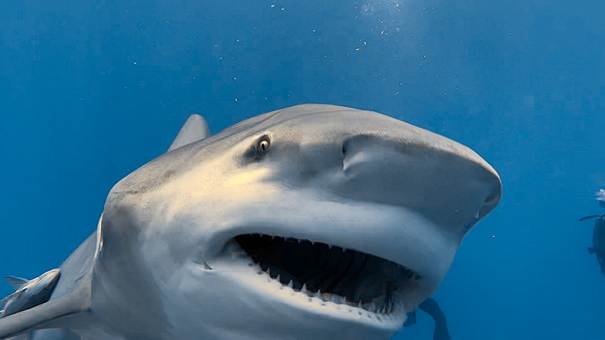
Figuur 2: Stierhaai (Bull shark, Carcharhinus leucas). Gefotografeerd door Marlies Hemelinckx.
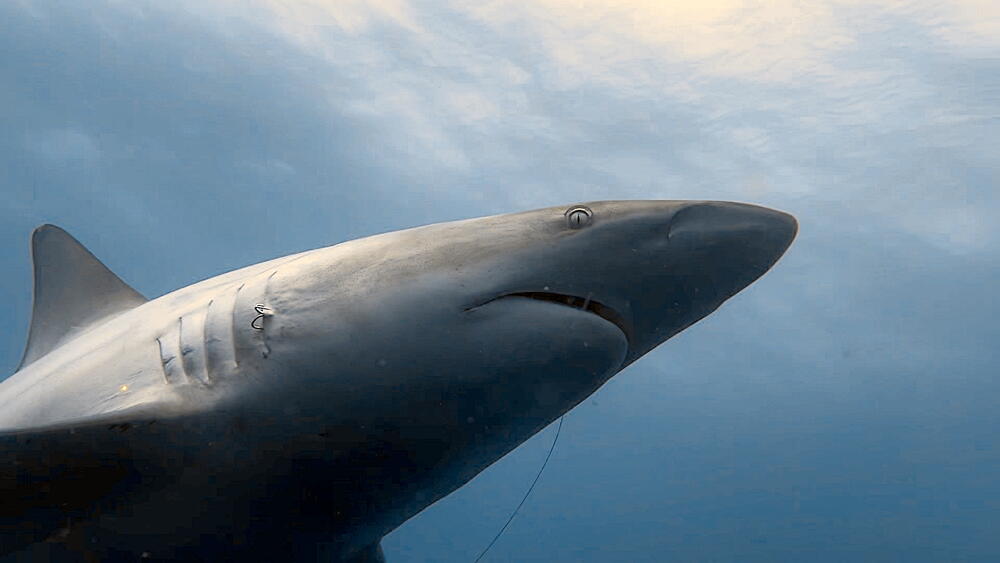
Figuur 3: Zwartpunthaai (Blacktip shark, Carcharhinus limbatus). Gefotografeerd door Marlies Hemelinckx.
Bibliografie
Almojil, D., Cliff, G., & Spaet, J. L. Y. (2018). Weak population structure of the Spot‐tail shark Carcharhinus sorrah and the Blacktip shark C. limbatus along the coasts of the Arabian Peninsula, Pakistan, and South Africa. Ecology And Evolution, 8(18), 9536–9549. https://doi.org/10.1002/ece3.4468
Anderson, S. D., Chapple, T. K., Jorgensen, S. J., Klimley, A. P., & Block, B. A. (2011). Long-term individual identification and site fidelity of white sharks, Carcharodon carcharias, off California using dorsal fins. Marine Biology, 158(6), 1233–1237. https://doi.org/10.1007/s00227-011-1643-5
Anderson, S. D., Kanive, P. E., Chapple, T. K., Andrzejaczek, S., Block, B. A., & Jorgensen, S. J. (2025). A classification system for wounds and scars observed on white sharks (Carcharodon carcharias). Frontiers in Marine Science, 12. https://doi.org/10.3389/fmars.2025.1520348
Andreotti, S., Holtzhausen, P., Rutzen, M., Meÿer, M., Van Der Walt, S., Herbst, B., & Matthee, C. A. (2017). Semi-automated software for dorsal fin photographic identification of marine species: application to Carcharodon carcharias. Marine Biodiversity, 48(3), 1655–1660. https://doi.org/10.1007/s12526-017-0634-2
Andreotti, S., Rutzen, M., Van Der Walt, S., Von Der Heyden, S., Henriques, R., Meÿer, M., Oosthuizen, H., & Matthee, C. (2016). An integrated mark-recapture and genetic approach to estimate the population size of white sharks in South Africa. Marine Ecology Progress Series, 552, 241–253. https://doi.org/10.3354/meps11744
Andreotti, S., Rutzen, M., Wesche, P., O’Connell, C., Meÿer, M., Oosthuizen, H., & Matthee, C. (2014). A novel categorisation system to organise a large photo identification database for white sharksCarcharodon carcharias. African Journal Of Marine Science, 36(1), 59–67. https://doi.org/10.2989/1814232x.2014.892027
Bansemer, C. S., & Bennett, M. B. (2010). Retained fishing gear and associated injuries in the east Australian grey nurse sharks (Carcharias taurus): implications for population recovery. Marine And Freshwater Research, 61(1), 97–103. https://doi.org/10.1071/mf08362
Black, C. (2023). Resilience in the Depths: First Example of Fin Regeneration in a Silky Shark (Carcharhinus falciformis) following Traumatic Injury. Journal Of Marine Sciences, 2023, 1–8. https://doi.org/10.1155/2023/6639805
Binstock, A. L., Richards, T. M., Gibson-Banks, K., Drymon, J. M., Wells, R. D., & Mohan, J. A. (2023). Assessing ecological connectivity of blacktip sharks (Carcharhinus limbatus) in the Gulf of Mexico using stable isotope analysis of multiple tissues. Fisheries Research, 268, 106849. https://doi.org/10.1016/j.fishres.2023.106849
Borucinska, J., Martin, J., & Skomal, G. (2001). Peritonitis and Pericarditis Associated with Gastric Perforation by a Retained Fishing Hook in a Blue Shark. Journal Of Aquatic Animal Health, 13(4), 347–354. https://doi.org/10.1577/1548-8667(2001)013
Capapé, C., Seck, A. A., Diatta, Y., Reynaud, C., Hemida, F., & Zaouali, J. (2021). Reproductive biology of the blacktip shark, Carcharhinus limbatus (Chondrichthyes: Carcharhinidae) off West and North African coasts. Société Française D’Ichtyologie, 28(4), 275–284. https://doi.org/10.26028/cybium/2004-284-001
Carabelli, A., Maso, M. D., Carola, M., Ba, V., Carraturo, M., Milani, I., Bettinetti, R., & Boldrocchi, G. (2025). Knowledge drives conservation: Tackling the shark consumption issue in Italy – A case study. Marine Policy, 180, 106806. https://doi.org/10.1016/j.marpol.2025.106806
Cardeñosa, D., Babcock, E. A., Quinlan, J., Shea, S. K., Zhang, H., Feldheim, K. A., Yang, F., Gale, S. W., & Chapman, D. (2026). CITES compliance gaps: Illegal international trade of fins from Western Pacific–Indian Ocean increasingly sustain pelagic thresher sharks in major global market. Biological Conservation, 318, 111852. https://doi.org/10.1016/j.biocon.2026.111852
Castrejón, M. (2025). Revealing the unseen: Shark finning in the Galapagos Marine Reserve through illegal fishers’ eyes and a situational crime prevention approach. Biological Conservation, 311, 111452. https://doi.org/10.1016/j.biocon.2025.111452
Castro, J. I. (1996). Biology of the blacktip shark, Carcharhinus limbatus, off the southeastern United States. Bulletin of marine science, 59(3), 508-522.
Chapple, T. K., Cade, D. E., Goldbogen, J., Massett, N., Payne, N., & McInturf, A. G. (2024). Behavioral response of megafauna to boat collision measured via animal-borne camera and IMU. Frontiers in Marine Science, 11. https://doi.org/10.3389/fmars.2024.1430961
Chin, A., Mourier, J., & Rummer, J. L. (2015). Blacktip reef sharks (Carcharhinus melanopterus) show high capacity for wound healing and recovery following injury. Conservation Physiology, 3(1), cov062. https://doi.org/10.1093/conphys/cov062
Comms, M. B. (2026). New Hope Spot Champion Takes Helm for Aliwal Shoal Hope Spot. Mission Blue. https://missionblue.org/2025/02/new-hope-spot-champion-takes-helm-for-aliwal-shoal-hope-spot/
Cortés, E. (2000). Life History Patterns and Correlations in Sharks. Reviews in Fisheries Science, 8(4), 299–344. https://doi.org/10.1080/10408340308951115
Dedman, S., Moxley, J. H., Papastamatiou, Y. P., Braccini, M., Caselle, J. E., Chapman, D. D., Cinner, J. E., Dillon, E. M., Dulvy, N. K., Dunn, R. E., Espinoza, M., Harborne, A. R., Harvey, E. S., Heupel, M. R., Huveneers, C., Graham, N. A. J., Ketchum, J. T., Klinard, N. V., Kock, A. A., Heithaus, M. R. (2024). Ecological roles and importance of sharks in the Anthropocene Ocean. Science, 385(6708), adl2362. https://doi.org/10.1126/science.adl2362
Dudley, S. F. J., & Cliff, G. (1993). Sharks caught in the protective gill nets off Natal, South Africa. 7. The blacktip sharkCarcharhinus limbatus(Valenciennes). South African Journal Of Marine Science, 13(1), 237–254. https://doi.org/10.2989/025776193784287356
Dulvy, N. K., Pacoureau, N., Rigby, C. L., Pollom, R. A., Jabado, R. W., Ebert, D. A., Finucci, B., Pollock, C. M., Cheok, J., Derrick, D. H., Herman, K. B., Sherman, C. S., VanderWright, W. J., Lawson, J. M., Walls, R. H., Carlson, J. K., Charvet, P., Bineesh, K. K., Fernando, D., . . . Simpfendorfer, C. A. (2021). Overfishing drives over one-third of all sharks and rays toward a global extinction crisis. Current Biology, 31(21), 4773-4787.e8. https://doi.org/10.1016/j.cub.2021.08.062
Eriksson, B., & Medeiros-Leal, W. (2026). Watching or catching sharks: Tracing the emergence of a marine resource conflict in the North Atlantic. Marine Policy, 190, 107146. https://doi.org/10.1016/j.marpol.2026.107146
Francolini, E., Mann-Lang, J., McKinley, E., Mann, B., & Abrahams, M. (2023). Stakeholder perspectives on socio-economic challenges and recommendations for better management of the Aliwal Shoal Marine Protected Area in South Africa. Marine Policy, 148, 105470. https://doi.org/10.1016/j.marpol.2022.105470
Goldberg, J., & Ayerst, F. (2006). Aliwal Shoal Dive Guide. 3-4.
Heim, V., Grubbs, R. D., Smukall, M. J., Frazier, B. S., Carlson, J. K., & Guttridge, T. L. (2023). Observations of fin injury closure in Great Hammerheads and implications for the use of fin-mounted geolocators. Journal Of Aquatic Animal Health, 35(2), 53–63. https://doi.org/10.1002/aah.10178
Habegger, M. L., Motta, P. J., Huber, D. R., & Dean, M. N. (2012). Feeding biomechanics and theoretical calculations of bite force in bull sharks (Carcharhinus leucas) during ontogeny. Zoology, 115(6), 354–364. https://doi.org/10.1016/j.zool.2012.04.007
Harry, A. V., Butcher, P. A., Macbeth, W. G., Morgan, J. A. T., Taylor, S. M., & Geraghty, P. T. (2019). Life history of the common blacktip shark, Carcharhinus limbatus, from central eastern Australia and comparative demography of a cryptic shark complex. Marine And Freshwater Research, 70(6), 834–848. https://doi.org/10.1071/mf18141
Iucn. (2020a). Carcharhinus limbatus: Rigby, C.L., Carlson, J., Chin, A., Derrick, D., Dicken, M. & Pacoureau, N. [Dataset]. In IUCN Red List of Threatened Species. https://doi.org/10.2305/iucn.uk.2021-2.rlts.t3851a2870736.en
Iucn. (2020b). Carcharhinus leucas: Rigby, C.L., Espinoza, M., Derrick, D., Pacoureau, N. & Dicken, M. [Dataset]. In IUCN Red List of Threatened Species. https://doi.org/10.2305/iucn.uk.2021-2.rlts.t39372a2910670.en
Jorgensen, S., Micheli, F., White, T., Van Houtan, K., Alfaro-Shigueto, J., Andrzejaczek, S., Arnoldi, N., Baum, J., Block, B., Britten, G., Butner, C., Caballero, S., Cardeñosa, D., Chapple, T., Clarke, S., Cortés, E., Dulvy, N., Fowler, S., Gallagher, A., . . . Ferretti, F. (2021). Emergent research and priorities for shark and ray conservation. Endangered Species Research, 47, 171–203. https://doi.org/10.3354/esr01169
Karl, S. A., Castro, A. L. F., Lopez, J. A., Charvet, P., & Burgess, G. H. (2010). Phylogeography and conservation of the bull shark (Carcharhinus leucas) inferred from mitochondrial and microsatellite DNA. Conservation Genetics, 12(2), 371–382. https://doi.org/10.1007/s10592-010-0145-1
Katona, S., Baxter, B., Brazier, O., Kraus, S., Perkins, J., & Whitehead, H. (1979). Identification of Humpback Whales by Fluke Photographs. In Behaviour of marine animals (pp. 33–44). https://doi.org/10.1007/978-1-4684-2985-5_2
Köhler, A., & Köhler, D. (1999). The Underwater Photography Handbook.
Koornhof, A. (2000). Dive Guide South Africa, 49-57.
Lester, E., Meekan, M., Barnes, P., Raudino, H., Rob, D., Waples, K., & Speed, C. (2019). Multi-year patterns in scarring, survival and residency of whale sharks in Ningaloo Marine Park, Western Australia. Marine Ecology Progress Series, 634, 115–125. https://doi.org/10.3354/meps13173
Kohler, N. E., & Turner, P. A. (2001). Shark Tagging: A Review Of Conventional Methods and Studies. Environmental Biology Of Fishes, 60(1–3), 191–224. https://doi.org/10.1023/a:1007679303082
Maroen, M., Rowlinson, M., Matthee, C., & Andreotti, S. (2024). The effectiveness of the semi‐automated Identifin software to accurately fast‐track dorsal fin photographic identifications of sharks. Aquatic Conservation Marine And Freshwater Ecosystems, 34(5). https://doi.org/10.1002/aqc.4159
Marosi, N. D., Ellis, S., Jacoby, D. M., Brunnschweiler, J. M., & Croft, D. P. (2026). Rolling in the deep: drivers of social preferences and social interactions within a bull shark aggregation in Fiji. Animal Behaviour, 234, 123511. https://doi.org/10.1016/j.anbehav.2026.123511
Merwe, A. B. D., Maduna, S., Hull, K., Bell, J., Rossouw, C., & Wintner, S. (2019). Evidence for multiple paternity and confirmation of an Indo-Pacific origin of blacktip shark Carcharhinus limbatus occurring in South Africa. African Journal Of Marine Science, 41(3), 281–289. https://doi.org/10.2989/1814232x.2019.1653991
Mucientes, G., & Queiroz, N. (2019). Presence of plastic debris and retained fishing hooks in oceanic sharks. Marine Pollution Bulletin, 143, 6–11. https://doi.org/10.1016/j.marpolbul.2019.04.028
Pacoureau, N., Rigby, C. L., Kyne, P. M., Sherley, R. B., Winker, H., Carlson, J. K., Fordham, S. V., Barreto, R., Fernando, D., Francis, M. P., Jabado, R. W., Herman, K. B., Liu, K., Marshall, A. D., Pollom, R. A., Romanov, E. V., Simpfendorfer, C. A., Yin, J. S., Kindsvater, H. K., & Dulvy, N. K. (2021). Half a century of global decline in oceanic sharks and rays. Nature, 589(7843), 567–571. https://doi.org/10.1038/s41586-020-03173-9
Parton, K., Galloway, T., & Godley, B. (2019). Global review of shark and ray entanglement in anthropogenic marine debris. Endangered Species Research, 39, 173–190. https://doi.org/10.3354/esr00964
Pierce, S.J., Holmberg, J.A., Kock, A.L. & Marshall, A.D. (2018). Photographic identification of sharks. In Shark research: emerging technologies and applications for the field and laboratory. Florida: CRC Press.
Pillans, R. D., Anderson, W. G., Good, J. P., Hyodo, S., Takei, Y., Hazon, N., & Franklin, C. E. (2005). Plasma and erythrocyte solute properties of juvenile bull sharks, Carcharhinus leucas, acutely exposed to increasing environmental salinity. Journal Of Experimental Marine Biology And Ecology, 331(2), 145–157. https://doi.org/10.1016/j.jembe.2005.10.013
Pirog, A., Ravigné, V., Fontaine, M. C., Rieux, A., Gilabert, A., Cliff, G., Clua, E., Daly, R., Heithaus, M. R., Kiszka, J. J., Matich, P., Nevill, J. E. G., Smoothey, A. F., Temple, A. J., Berggren, P., Jaquemet, S., & Magalon, H. (2019). Population structure, connectivity, and demographic history of an apex marine predator, the bull shark Carcharhinus leucas. Ecology and Evolution, 9(23), 12980–13000. https://doi.org/10.1002/ece3.5597
Postaire, B. D., Bakker, J., Gardiner, J., Wiley, T. R., & Chapman, D. D. (2020). Environmental DNA detection tracks established seasonal occurrence of blacktip sharks (Carcharhinus limbatus) in a semi-enclosed subtropical bay. Scientific Reports, 10(1), 11847. https://doi.org/10.1038/s41598-020-68843-0
Postaire, B. D., Devloo‐Delva, F., Brunnschweiler, J. M., Charvet, P., Chen, X., Cliff, G., Daly, R., Drymon, J. M., Espinoza, M., Fernando, D., Glaus, K., Grant, M. I., Hernandez, S., Hyodo, S., Jabado, R. W., Jaquemet, S., Johnson, G., Naylor, G. J. P., Nevill, J. E. G., . . . Mona, S. (2023). Global genetic diversity and historical demography of the Bull Shark. Journal Of Biogeography, 51(4), 632–648. https://doi.org/10.1111/jbi.14774
Sabatier, E., & Huveneers, C. (2018). Changes in media portrayal of human-wildlife conflict during successive fatal shark bites. Conservation and Society, 16(3), 338. https://doi.org/10.4103/cs.cs_18_5
Santos, C. P., Pegado, M. R., Santos, C. F., & Rosa, R. (2025). Studying sharks in the Anthropocene: an overview of research efforts targeting human-related threats over elasmobranchs. Reviews in Fish Biology And Fisheries, 35(3), 1503–1523. https://doi.org/10.1007/s11160-025-09968-1
Schilds, A., Mourier, J., Huveneers, C., Nazimi, L., Fox, A., & Leu, S. T. (2019). Evidence for non-random co-occurrences in a white shark aggregation. Behavioral Ecology And Sociobiology, 73(10). https://doi.org/10.1007/s00265-019-2745-1
Schleyer, M. H., Heikoop, J. M., & Risk, M. J. (2005). A benthic survey of Aliwal Shoal and assessment of the effects of a wood pulp effluent on the reef. Marine Pollution Bulletin, 52(5), 503–514. https://doi.org/10.1016/j.marpolbul.2005.09.038
Schoeman, R. P., Patterson-Abrolat, C., & Plön, S. (2020). A Global Review of Vessel Collisions With Marine Animals. Frontiers in Marine Science, 7. https://doi.org/10.3389/fmars.2020.00292
Shabangu, F. W., Branch, T. A., Hlati, K., Samaran, F., Malick, I., Fennessy, S. T., Everett, B. I., Van Den Berg, M. A., & Yemane, D. (2025). Contraventions of MPA regulations by the South African demersal trawl fisheries: Evidence from loss and damage of scientific instruments. Regional Studies in Marine Science, 85, 104141. https://doi.org/10.1016/j.rsma.2025.104141
Smart, J. J., Chin, A., Tobin, A. J., White, W. T., Kumasi, B., & Simpfendorfer, C. A. (2017). Stochastic demographic analyses of the silvertip shark ( Carcharhinus albimarginatus ) and the common blacktip shark ( Carcharhinus limbatus ) from the Indo-Pacific. Fisheries Research, 191, 95–107. https://doi.org/10.1016/j.fishres.2017.03.002
Vaudo, J. J., Salinas-De-León, P., Logan, R. K., Suarez-Moncada, J., Wetherbee, B. M., & Shivji, M. S. (2026). Pelagic sharks in parks: Marine protected areas in the Eastern Tropical Pacific provide limited protection to silky sharks tracked from the Galapagos Marine Reserve. Biological Conservation, 315, 111658. https://doi.org/10.1016/j.biocon.2025.111658
Ward, P., Lawrence, E., Darbyshire, R., & Hindmarsh, S. (2007). Large-scale experiment shows that nylon leaders reduce shark bycatch and benefit pelagic longline fishers. Fisheries Research, 90(1–3), 100–108. https://doi.org/10.1016/j.fishres.2007.09.034
Website, M. D. (z.d.). Voices for MPAs: Aliwal Shoal. MPA Day Website. https://mpaday.org/news/f/voices-for-mpas-aliwal-shoal
Werry, J. M. (2010). Habitat Ecology of the Bull Shark, Carcharhinus leucas, on Urban Coasts in Eastern Queensland, Australia. In Griffith Research Online (Griffith University, Queensland, Australia). https://doi.org/10.25904/1912/2913
Womersley, F. C., Humphries, N. E., Queiroz, N., Vedor, M., Da Costa, I., Furtado, M., Tyminski, J. P., Abrantes, K., Araujo, G., Bach, S. S., Barnett, A., Berumen, M. L., Lion, S. B., Braun, C. D., Clingham, E., Cochran, J. E. M., De La Parra, R., Diamant, S., Dove, A. D. M., . . . Sims, D. W. (2022). Global collision-risk hotspots of marine traffic and the world’s largest fish, the whale shark. Proceedings Of The National Academy Of Sciences, 119(20), e2117440119. https://doi.org/10.1073/pnas.2117440119
Yasir, M., Hartati, R., Indrayanti, E., & Amar, F. (2024). Characteristics of external injuries of whale sharks (Rhincodon typus, Smith 1828) in Botubarani waters, Gorontalo, Indonesia. The Egyptian Journal Of Aquatic Research, 50(3), 384–393. https://doi.org/10.1016/j.ejar.2024.08.002
Yee, K. (2024). An Assessment of Anthropogenic Injuries on White Sharks (Carcharodon Carcharias) in Central California. https://doi.org/10.31979/etd.88p3-xa5a
Zemah-Shamir, S. (2025). Protecting sharks by protecting places: a call to regulate aggregation zones. Journal For Nature Conservation, 89, 127117. https://doi.org/10.1016/j.jnc.2025.127117