De tweede waarde van een veer
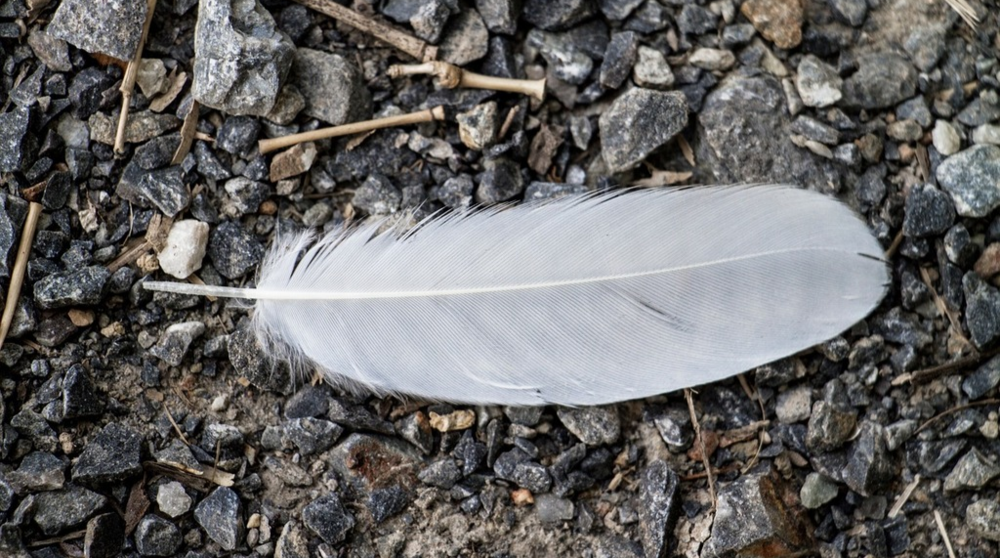
Beeld: Pixabay / Public Domain
In Europa komen jaarlijks naar schatting 3,6 miljoen ton veren vrij uit de pluimvee-industrie. Slechts ongeveer een kwart daarvan wordt opgevangen en krijgt een doel in de economie. Hetzij als veevoeder, meststof of je favoriete haarproduct. Daar hoeft het niet bij te blijven.
Na het slachten van pluimvee blijven veren achter als reststroom die onder meer wordt verbrand. Daarbij komt CO₂ vrij, een broeikasgas dat bijdraagt aan klimaatverandering. Ook gaat een bruikbare grondstof verloren. Enkele bedrijven benutten deze reststroom al. Zo verwerken producenten veren tot verenmeel, een eiwitrijk ingrediënt voor dierenvoeding. Ook meststoffen kunnen verenmeel bevatten: het levert stikstof die planten nodig hebben om te groeien. Maar is dat het meeste dat we kunnen halen uit dit evolutionaire wonder?
Sterk van nature, lastig te verwerken
Een veer bestaat voor bijna negentig procent uit keratine. Het is een familie van stevige eiwitten die onder meer in haar en nagels zitten, maar ook in wol, hoeven, horens en veren. Het is een bouwmateriaal waarmee dieren stevige, beschermende structuren maken. Keratine bestaat in verschillende vormen en maten: alfa-keratine in zoogdieren heeft eiwitketens die als spiraaltjes zijn gerangschikt. Veren en reptielenschubben bevatten eiwitten met een structuur van gevouwen platen, traditioneel bèta-keratine genoemd. Die opbouw draagt bij aan onder andere de buigzaamheid van wol en de stevigheid van een snavel.
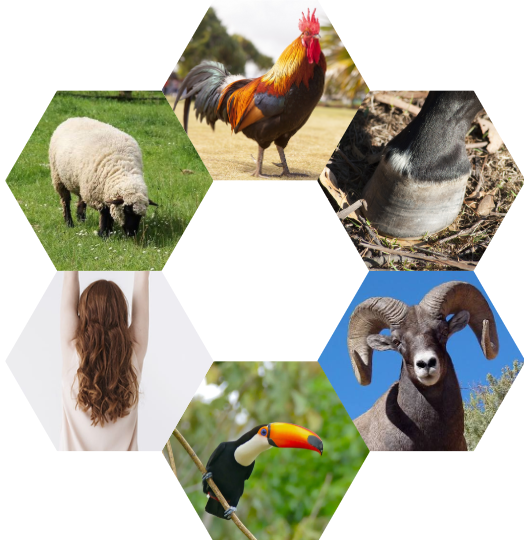
De veelvuldigheid van keratine staat al langer in het vizier van onderzoekers. De stevigheid die het in de natuur zo bruikbaar maakt, bemoeilijkt echter de verwerking. In een veer zitten de eiwitketens dicht op elkaar, met sterke verbindingen ertussen. Zwavelbruggen houden ze stevig bijeen. Er bestaat geen eenvoudige manier om de keratine in zijn geheel te zuiveren. Dus om de keratine te winnen en verwerkbaar te maken, moeten de verbindingen eerst geopend en afgebroken worden.
De stukken weer samenbrengen
Een toegankelijke manier om keratine te winnen is met behulp van hydrolyse. Hierbij worden de eiwitketens zelf in kortere stukken geknipt. Daarbij gaan de lange eiwitketens en de verbindingen die voor stevigheid zorgen verloren. Het resultaat is keratinehydrolysaat: een poeder dat gemakkelijk in water oplost. Daardoor kan het worden verwerkt in shampoos en andere haarproducten. Denk maar aan Dove, Schwarzkopf, of Syoss die allemaal een product op de markt hebben met keratine. Voor een haarproduct zijn die oplosbare fragmenten heel bruikbaar. Voor een stevig materiaal is dat iets anders.
De korte eiwitstukken hebben wel nog onderdelen die chemisch kunnen reageren, de zogenoemde functionele groepen. Daarop kunnen andere moleculen aangrijpen. Chemische verbinders, of crosslinkers, kunnen zo bruggen vormen tussen de fragmenten. Het idee is om ze daarmee opnieuw tot een samenhangend materiaal te verbinden. In deze studie onderzocht ik of dat lukt met commercieel verkrijgbaar keratinepoeder uit eendenveren.
Een bekende crosslinker binnen de chemie is glutaaraldehyde. Deze stof reageert gemakkelijk met eiwitten en kan zo verschillende ketens verbinden. Dat maakt haar doeltreffend, maar dezelfde reactiviteit maakt de stof ook giftig: ze kan levende cellen beschadigen. Als ongereageerde resten in een materiaal achterblijven, kunnen die bij gebruik of afvalverwerking schadelijk zijn voor mens en natuur.
Een wegwerpmaatschappij waarin we grondstoffen verbruiken en het afvalprobleem doorschuiven, heeft vandaag geen plaats meer. Wie een materiaal ontwikkelt, moet daarom ook zijn end of life mee ontwerpen: wat gebeurt ermee wanneer het zijn taak heeft vervuld? De grondstof, de toegevoegde stoffen en hun uiteindelijke bestemming horen bij dezelfde afweging. Daarom ging dit onderzoek op zoek naar een alternatief voor glutaaraldehyde.
Van vrucht naar blauw prototype 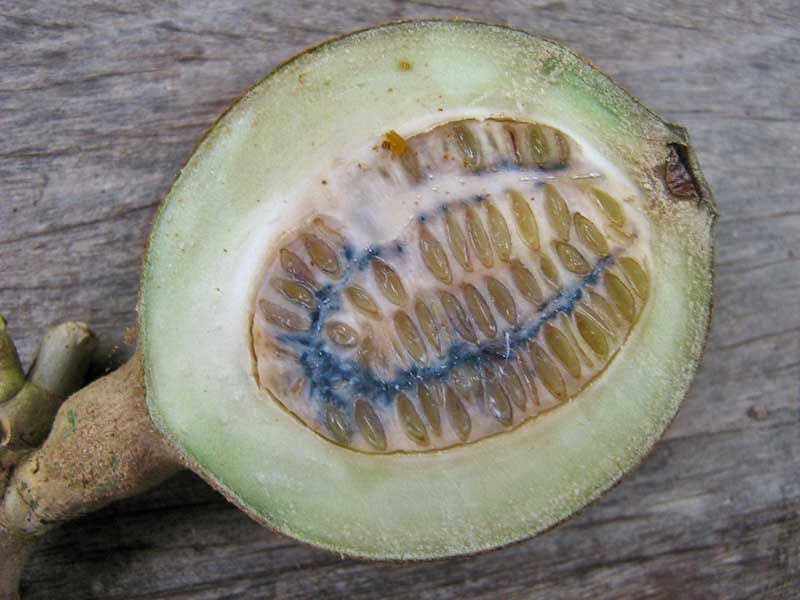
Een mogelijk alternatief komt uit fruit. Genipine kan worden gewonnen uit de vrucht van gardenia, een struik uit Azië. Dezelfde natuurlijke stof zit ook in de jaguavrucht uit Midden- en Zuid-Amerika. Sommige inheemse gemeenschappen in Zuid-Amerika gebruiken het vruchtensap voor tijdelijke donkerblauwe tatoeages, als uitdrukking van hun identiteit en tradities. Genipine gebruikt dezelfde aanknopingspunten in keratine als glutaaraldehyde om de eiwitfragmenten met elkaar te verbinden. Tegelijk geldt ze als een veel minder giftig alternatief. Die combinatie maakte genipine een veelbelovende kandidaat voor dit onderzoek. Haar reactie met keratine geeft het mengsel bovendien een opvallende blauwe kleur.
Dit onderzoek vergeleek beide verbindingsmiddelen en testte verschillende hoeveelheden genipine. Beide stoffen konden het keratinepoeder tot een vast materiaal verbinden. Bij genipine ontstond een donkerblauw prototype. Het onderzoek liet ook zien dat de samenstelling ertoe doet. Door de hoeveelheid genipine te verhogen, werd het geteste materiaal sterker. Het bleef bovendien buigzamer dan de versie met glutaaraldehyde. Dat maakt het blauwe prototype interessant als vertrekpunt.
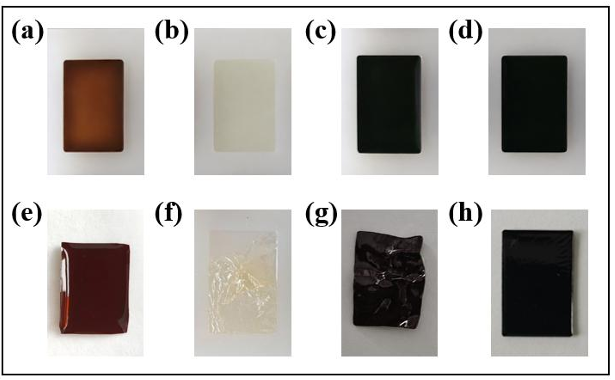
Keratinefilms voor (a-d) en na verwijdering (e-h) uit de siliconen mal. (a, e) glutaaraldehyde; (b, f) zonder crosslinker; (c, g) lage concentratie genipine; (d, h) hogere concentratie genipine. Beeld: eigen werk.
Een eerste stap naar nieuwe materialen
De verdere ontwikkeling kan verschillende richtingen uitgaan: van dunne folies tot stevigere onderdelen die hun vorm moeten behouden. Elke toepassing vraagt andere eigenschappen en een andere uitwerking. Voorlopig blijft vocht nog een hindernis: het materiaal lost op in water. Dat maakt duidelijk hoe belangrijk de beoogde levensduur is. Een zakje dat voedsel maandenlang tegen vocht moet beschermen, mag niet oplossen. Bij een materiaal dat zijn taak slechts kort hoeft te vervullen, kan gevoeligheid voor water juist deel uitmaken van het ontwerp. Hoe lang een materiaal moet meegaan, hangt samen met waarvoor het wordt gemaakt.
Het donkerblauwe prototype kun je vastnemen en bewerken. Dankzij genipine zijn de keratinefragmenten die ooit samen een veer vormden opnieuw verbonden tot een materiaal. Daar kan verder onderzoek op voortbouwen: de eiwitten die een vogel hielpen vliegen, kunnen zo de bouwstenen worden van de toekomst. En misschien is dat wel de tweede waarde van een veer.
Bibliografie
Ahmed, R., Ul Ain Hira, N., Wang, M., Iqbal, S., Yi, J., & Hemar, Y. (2024). Genipin, a natural blue colourant precursor: Source, extraction, properties, and applications. Food Chemistry, 434, 137498. https://doi.org/10.1016/j.foodchem.2023.137498
Alpsdake. (2011, November 5). Gardenia jasminoides fruit.jpg [Photograph]. Wikimedia Commons. https://commons.wikimedia.org/wiki/File:Gardenia_jasminoides_fruit.jpg

Assis, R. C. D., Monteiro, G. R., Valentim, A. B., Maia, C. S. C., Felipe, S. M. D. S., Freitas Rabelo, C. A., Ceccatto, V. M., & Alves, C. R. (2023). Biological properties of bioactive compounds from the fruit and leaves of the genipap tree (Genipa americana L.): A systematic review. Food Bioscience, 53, 102514. https://doi.org/10.1016/j.fbio.2023.102514
Azeredo, H. M., & Waldron, K. W. (2016). Crosslinking in polysaccharide and protein films and coatings for food contact – A review. Trends in Food Science & Technology, 52, 109–122. https://doi.org/10.1016/j.tifs.2016.04.008
Banasaz, S., & Ferraro, V. (2024). Keratin from Animal By-Products: Structure, Characterization, Extraction and Application-A Review. Polymers, 16(14), 1999. https://doi.org/10.3390/polym16141999
Barth, A. (2007). Infrared spectroscopy of proteins. Biochimica et Biophysica Acta (BBA) - Bioenergetics, 1767(9), 1073-1101. https://doi.org/10.1016/j.bbabio.2007.06.004
Bigi, A., Cojazzi, G., Panzavolta, S., Rubini, K., & Roveri, N. (2001). Mechanical and thermal properties of gelatin films at different degrees of glutaraldehyde crosslinking. Biomaterials, 22(8), 763–768. https://doi.org/10.1016/s0142-9612(00)00236-2
Bigi, A., Cojazzi, G., Panzavolta, S., Roveri, N., & Rubini, K. (2002). Stabilisation of gelatin films by crosslinking with genipin. Biomaterials, 23(24), 4827–4832. https://doi.org/10.1016/s0142-9612(02)00235-1
Borrelle, S. B., Ringma, J., Law, K. L., Monnahan, C. C., Lebreton, L., McGivern, A., Murphy, E., Jambeck, J., Leonard, G. H., Hilleary, M. A., Eriksen, M., Possingham, H. P., De Frond, H., Gerber, L. R., Polidoro, B., Tahir, A., Bernard, M., Mallos, N., Barnes, M., & Rochman, C. M. (2020). Predicted growth in plastic waste exceeds efforts to mitigate plastic pollution. Science, 369(6510), 1515–1518. https://doi.org/10.1126/science.aba3656
Bryś, M., Urbańska, K., & Olas, B. (2022). Novel Findings regarding the Bioactivity of the Natural Blue Pigment Genipin in Human Diseases. International Journal of Molecular Sciences, 23(2), 902. https://doi.org/10.3390/ijms23020902
Chen, X., Wu, S., Yi, M., Ge, J., Yin, G., & Li, X. (2018). Preparation and Physicochemical Properties of Blend Films of Feather Keratin and Poly(vinyl alcohol) Compatibilized by Tris(hydroxymethyl)aminomethane. Polymers, 10(10), 1054. https://doi.org/10.3390/polym10101054
Chilakamarry, C. R., Mahmood, S., Saffe, S. N. B. M., Arifin, M. A. B., Gupta, A., Sikkandar, M. Y., Begum, S. S., & Narasaiah, B. (2021). Extraction and application of keratin from natural resources: A review. 3 Biotech, 11(5), 220. https://doi.org/10.1007/s13205-021-02734-7
Circular economy. (2026, april 22). https://www.eea.europa.eu/en/topics/in-depth/circular-economy
Coates, J. (2006). Interpretation of Infrared Spectra, A Practical Approach. In Encyclopedia of Analytical Chemistry. John Wiley & Sons, Ltd. https://doi.org/10.1002/9780470027318.a5606
Creton, C. (2017). 50th Anniversary Perspective: Networks and Gels: Soft but Dynamic and Tough. Macromolecules, 50(21), 8297–8316. https://doi.org/10.1021/acs.macromol.7b01698
Emadian, S. M., Onay, T. T., & Demirel, B. (2017). Biodegradation of bioplastics in natural environments. Waste Management, 59, 526-536. https://doi.org/10.1016/j.wasman.2016.10.006
Eslahi, N., Dadashian, F., & Nejad, N. H. (2013). An investigation on keratin extraction from wool and feather waste by enzymatic hydrolysis. Preparative Biochemistry & Biotechnology, 43(7), 624-648. https://doi.org/10.1080/10826068.2013.763826
Farris, S., Song, J., & Huang, Q. (2010). Alternative Reaction Mechanism for the Cross-Linking of Gelatin with Glutaraldehyde. Journal of Agricultural and Food Chemistry, 58(2), 998-1003. https://doi.org/10.1021/jf9031603
Feroz, S., Muhammad, N., Ratnayake, J., & Dias, G. (2020). Keratin—Based materials for biomedical applications. Bioactive Materials, 5(3), 496-509. https://doi.org/10.1016/j.bioactmat.2020.04.007
Hackenhaar, C. R., Rosa, C. F., Flores, E. E. E., Santagapita, P. R., Klein, M. P., & Hertz, P. F. (2022). Development of a biocomposite based on alginate/gelatin crosslinked with genipin for β-galactosidase immobilization: Performance and characteristics. Carbohydrate Polymers, 291, 119483. https://doi.org/10.1016/j.carbpol.2022.119483
Holkar, C. R., Jain, S. S., Jadhav, A. J., & Pinjari, D. V. (2018). Valorization of keratin based waste. Process Safety and Environmental Protection, Biowaste for Energy Recovery and Environmental Remediation, 115, 85-98. https://doi.org/10.1016/j.psep.2017.08.045
Houssini, K., Li, J., & Tan, Q. (2025). Complexities of the global plastics supply chain revealed in a trade-linked material flow analysis. Communications Earth & Environment, 6(1), 257. https://doi.org/10.1038/s43247-025-02169-5
Iahnke, A. O. E. S., Stoll, L., Bellé, A. S., Hertz, P. F., Rios, A. D. O., Rahier, H., & Flôres, S. H. (2020). Gelatin capsule residue‐based films crosslinked with the natural agent genipin. Packaging Technology and Science, 33(1), 15-26. https://doi.org/10.1002/pts.2481
Kamarudin, N. B., Sharma, S., Gupta, A., Kee, C. G., Chik, S. M. S. B. T., & Gupta, R. (2017). Statistical investigation of extraction parameters of keratin from chicken feather using Design-Expert. 3 Biotech, 7(2), 127. https://doi.org/10.1007/s13205-017-0767-9
Karali, N., Khanna, N., & Shah, N. (2024). Climate Impact of Primary Plastic Production. https://escholarship.org/uc/item/12s624vf
Kirchherr, J., Yang, N.-H. N., Schulze-Spüntrup, F., Heerink, M. J., & Hartley, K. (2023). Conceptualizing the Circular Economy (Revisited): An Analysis of 221 Definitions. Resources, Conservation and Recycling, 194, 107001. https://doi.org/10.1016/j.resconrec.2023.107001
Lamp, A., Kaltschmitt, M., & Dethloff, J. (2022). Options to Improve the Mechanical Properties of Protein-Based Materials. Molecules, 27(2), 446. https://doi.org/10.3390/molecules27020446
Lazarus, B. S., Chadha, C., Velasco-Hogan, A., Barbosa, J. D. V., Jasiuk, I., & Meyers, M. A. (2021). Engineering with keratin: A functional material and a source of bioinspiration. iScience, 24(8), 102798. https://doi.org/10.1016/j.isci.2021.102798
Maudens, Y., Debruyn, G., Loccufier, E., Daelemans, L., Savino, E., Tonetti, C., Vineis, C., Varesano, A., Shawkey, M. D., D’Alba, L., & De Clerck, K. (2025). Modular design of biomimetic electrospun keratin composites for tunable gaseous sorption inspired by reptile eggshells. Materials Today Bio, 33, 102032. https://doi.org/10.1016/j.mtbio.2025.102032
Mi, F., Shyu, S., & Peng, C. (2005). Characterization of ring‐opening polymerization of genipin and pH‐dependent cross‐linking reactions between chitosan and genipin. Journal of Polymer Science Part A: Polymer Chemistry, 43(10), 1985-2000. https://doi.org/10.1002/pola.20669
Migneault, I., Dartiguenave, C., Bertrand, M. J., & Waldron, K. C. (2004). Glutaraldehyde: Behaviour in Aqueous Solution, Reaction with Proteins, and Application to Enzyme Crosslinking. BioTechniques, 37(5), 790–802. https://doi.org/10.2144/04375rv01
Mitchell, F. &. (2021). Analysis of feather waste sources & management. https://doi.org/10.5281/zenodo.10492859
Mokrejs, P., Svoboda, P., Hrncirik, J., Janacova, D., & Vasek, V. (2010). Processing poultry feathers into keratin hydrolysate through alkaline-enzymatic hydrolysis. Waste Management & Research The Journal For A Sustainable Circular Economy, 29(3), 260–267. https://doi.org/10.1177/0734242x10370378
Moktip, T., Salaipeth, L., Cope, A. E., Taherzadeh, M. J., Watanabe, T., & Phitsuwan, P. (2025). Current Understanding of Feather Keratin and Keratinase and Their Applications in Biotechnology. Biochemistry Research International, 2025, 6619273. https://doi.org/10.1155/bri/6619273
Movasaghi, Z., Rehman, S., & Ur Rehman, Dr. I. (2008). Fourier Transform Infrared (FTIR) Spectroscopy of Biological Tissues. Applied Spectroscopy Reviews, 43(2), 134-179. https://doi.org/10.1080/05704920701829043
Náthia-Neves, G., Vardanega, R., & Meireles, M. A. A. (2019). Extraction of natural blue colourant from Genipa americana L. using green technologies: Techno-economic evaluation. Food and Bioproducts Processing, 114, 132-143. https://doi.org/10.1016/j.fbp.2018.12.004
Neri-Numa, I. A., Pessôa, M. G., Arruda, H. S., Pereira, G. A., Paulino, B. N., Angolini, C. F. F., Ruiz, A. L. T. G., & Pastore, G. M. (2020). Genipap (Genipa americana L.) fruit extract as a source of antioxidant and antiproliferative iridoids. Food Research International, 134, 109252. https://doi.org/10.1016/j.foodres.2020.109252
Nuutinen, E.-M., Virtanen, T., Lantto, R., Vähä-Nissi, M., & Jääskeläinen, A.-S. (2021). Ductile keratin films from deep eutectic solvent-fractionated feathers. RSC Advances, 11, 27512-27522. https://doi.org/10.1039/D1RA05123G
Nuutinen, E.-M., Willberg-Keyriläinen, P., Virtanen, T., Mija, A., Kuutti, L., Lantto, R., & Jääskeläinen, A.-S. (2019). Green process to regenerate keratin from feathers with an aqueous deep eutectic solvent. RSC Advances, 9(34), 19720-19728. https://doi.org/10.1039/C9RA03305J
Pääkkönen, I., Rissanen, T., Ora, A., & Anugwom, I. (2025). Valorization of Waste Wool to Keratin with a Green Solvent Based on a Deep Eutectic Mixture of Choline Chloride and Lactic Acid. Waste and Biomass Valorization, 16(3), 1045-1055. https://doi.org/10.1007/s12649-024-02733-8
Pizzolitto, C., Cok, M., Asaro, F., Scognamiglio, F., Marsich, E., Lopez, F., Donati, I., & Sacco, P. (2020). On the Mechanism of Genipin Binding to Primary Amines in Lactose-Modified Chitosan at Neutral pH. International Journal of Molecular Sciences, 21(18), 6831. https://doi.org/10.3390/ijms21186831
Polesca, C., Passos, H., Nakasu, P. Y. S., Coutinho, J. A. P., Freire, M. G., & Hallett, J. P. (2024). Ionic-liquid-processed keratin-based biocomposite films with cellulose and chitin for sustainable dye removal. RSC Sustainability, 2(8), 2239-2248. https://doi.org/10.1039/D4SU00179F
Poole, A. J., & Church, J. S. (2015). The effects of physical and chemical treatments on Na2S produced feather keratin films. International Journal of Biological Macromolecules, 73, 99-108. https://doi.org/10.1016/j.ijbiomac.2014.11.003
Poole, A. J., Lyons, R. E., & Church, J. S. (2011). Dissolving Feather Keratin Using Sodium Sulfide for Bio-Polymer Applications. Journal of Polymers and the Environment, 19(4), 995-1004. https://doi.org/10.1007/s10924-011-0365-6
Rajawasam, C. W. H., Dodo, O. J., Weerasinghe, M. A. S. N., Raji, I. O., Wanasinghe, S. V., Konkolewicz, D., & De Alwis Watuthanthrige, N. (2023). Educational series: characterizing crosslinked polymer networks. Polymer Chemistry, 15(4), 219–247. https://doi.org/10.1039/d3py00914a
Ramakrishnan, N., Sharma, S., Gupta, A., & Alashwal, B. Y. (2018). Keratin based bioplastic film from chicken feathers and its characterization. International Journal Of Biological Macromolecules, 111, 352–358. https://doi.org/10.1016/j.ijbiomac.2018.01.037
Ramos-de-la-Peña, A. M., Renard, C. M. G. C., Montañez, J., De La Luz Reyes-Vega, M., & Contreras-Esquivel, J. C. (2016). A review through recovery, purification and identification of genipin. Phytochemistry Reviews, 15(1), 37-49. https://doi.org/10.1007/s11101-014-9383-z
Rao, Z., Dong, Y., Liu, J., Zheng, X., Pei, Y., & Tang, K. (2022). Genipin-crosslinked gelatin-based composite hydrogels reinforced with amino-functionalized microfibrillated cellulose. International Journal of Biological Macromolecules, 222, 3155-3167. https://doi.org/10.1016/j.ijbiomac.2022.10.088
Rosenboom, J.-G., Langer, R., & Traverso, G. (2022). Bioplastics for a circular economy. Nature Reviews Materials, 7(2), 117-137. https://doi.org/10.1038/s41578-021-00407-8
Shalayel, I., Vallee, Y., & Zebda, A. (2023). Study of Genipin Behaviour in Neutral and Acidic Aqueous Solutions at Elevated Temperatures. ChemistrySelect, 8(14). https://doi.org/10.1002/slct.202204705
Sharma, C., Timorshina, S., Osmolovskiy, A., Misri, J., & Singh, R. (2022). Chicken Feather Waste Valorization Into Nutritive Protein Hydrolysate: Role of Novel Thermostable Keratinase From Bacillus pacificus RSA27. Frontiers in Microbiology, 13. https://doi.org/10.3389/fmicb.2022.882902
Shavandi, A., Silva, T. H., Bekhit, A. A., Bekhit, A. A., Bekhit, A. E. A., & Bekhit, A. E. A. (2017). Keratin: dissolution, extraction and biomedical application. Biomaterials Science, 5(9), 1699–1735. https://doi.org/10.1039/c7bm00411g
Sinkiewicz, I., Śliwińska, A., Staroszczyk, H., & Kołodziejska, I. (2017). Alternative Methods of Preparation of Soluble Keratin from Chicken Feathers. Waste and Biomass Valorization, 8(4), 1043-1048. https://doi.org/10.1007/s12649-016-9678-y
Sigma-Aldrich. (n.d.-a). Bovine Collagen Type I: From bovine flexor tendon, powder, suitable for cell culture, scaffold-formable (non-hydrogel) [Product page, Product No. 5162]. Retrieved May 21, 2026, from Sigma-Aldrich.
Sigma-Aldrich. (n.d.-b). Chitin from shrimp shells: Practical grade, powder [Product page, Product No. C7170]. Retrieved May 21, 2026, from Sigma-Aldrich.
Speit, G., Neuss, S., Schütz, P., Fröhler-Keller, M., & Schmid, O. (2008). The genotoxic potential of glutaraldehyde in mammalian cells in vitro in comparison with formaldehyde. Mutation Research/Genetic Toxicology and Environmental Mutagenesis, 649(1), 146-154. https://doi.org/10.1016/j.mrgentox.2007.08.010
Subramanian, K., & Vediappan, V. (2015). Hydrogels: Classification, Synthesis, Characterization, and Applications (pp. 3879-3892). https://doi.org/10.1081/E-EBPP-120049894
Tacias-Pascacio, V. G., García-Parra, E., Vela-Gutiérrez, G., Virgen-Ortiz, J. J., Berenguer-Murcia, Á., Alcántara, A. R., & Fernandez-Lafuente, R. (2019). Genipin as An Emergent Tool in the Design of Biocatalysts: Mechanism of Reaction and Applications. Catalysts, 9(12), 1035. https://doi.org/10.3390/catal9121035
Tesfaye, T., Sithole, B., & Ramjugernath, D. (2017). Valorisation of chicken feathers: A review on recycling and recovery route—current status and future prospects. Clean Technologies and Environmental Policy, 19, 1-16. https://doi.org/10.1007/s10098-017-1443-9
Trade Winds Fruit. (n.d.). Genipa americana – Genip seeds [Photograph]. https://www.tradewindsfruit.com/genipa-americana-genip-seeds
Wahba, M. I. (2023). Glutaraldehyde-pea protein grafted polysaccharide matrices for functioning as covalent immobilizers. Scientific Reports, 13(1), 9105. https://doi.org/10.1038/s41598-023-36045-z
Wahba, M. I. (2024). A comprehensive review on genipin: An efficient natural cross-linker for biopolymers. Polymer Bulletin, 81(16), 14251-14305. https://doi.org/10.1007/s00289-024-05406-7
Wang, B., Yang, W., McKittrick, J., & Meyers, M. A. (2016). Keratin: Structure, mechanical properties, occurrence in biological organisms, and efforts at bioinspiration. Progress in Materials Science, 76, 229-318. https://doi.org/10.1016/j.pmatsci.2015.06.001
Wu, S., Chen, X., Yi, M., Ge, J., Yin, G., & Li, X. (2018). Improving the Water Resistance and Mechanical Properties of Feather Keratin/Polyvinyl Alcohol/Tris(Hydroxymethyl)Aminomethane Blend Films by Cross-Linking with Transglutaminase, CaCl2, and Genipin. Materials, 11(11), 2203. https://doi.org/10.3390/ma11112203
Yang, Y., Ding, Y., & Zhang, T. (2018). Biotransformation of Geniposide into Genipin by Immobilized Trichoderma reesei and Conformational Study of Genipin. BioMed Research International, 2018, 1-10. https://doi.org/10.1155/2018/2079195
Zhang, Y., Luo, H., Xue, C., Ji, D., Wen, Y., Li, Z., Li, Y., & Li, Y. (2024). Sustainably sourced, water-soluble biofilms based on keratin constructed through two crosslinking modes: Turning waste into useful materials. Journal of Environmental Chemical Engineering, 12(2), 111978. https://doi.org/10.1016/j.jece.2024.111978