Vissen zwemmen met het hoofd tegen de muur
Slechts 6 procent. Ja, van de vissen die ik met zenders volgde op hun reis doorheen de Schelde slaagde amper 6 procent erin om die reis te voltooien. De boosdoeners? Sluizen en stuwen. Ze regelen het waterpeil, maar kunnen ook een echte muur vormen voor migrerende vissen zoals de rivierprik. Die laatste maakt lange tochten tussen zee en rivier om zich voort te planten, maar heeft het moeilijk door al die obstakels. Toch ontdekte ik hoe we kunnen helpen: via vispassages, een soort wegomlegging voor vissen, en door de stroming rond hindernissen aan te passen.
Een klein prikje kan geen kwaad
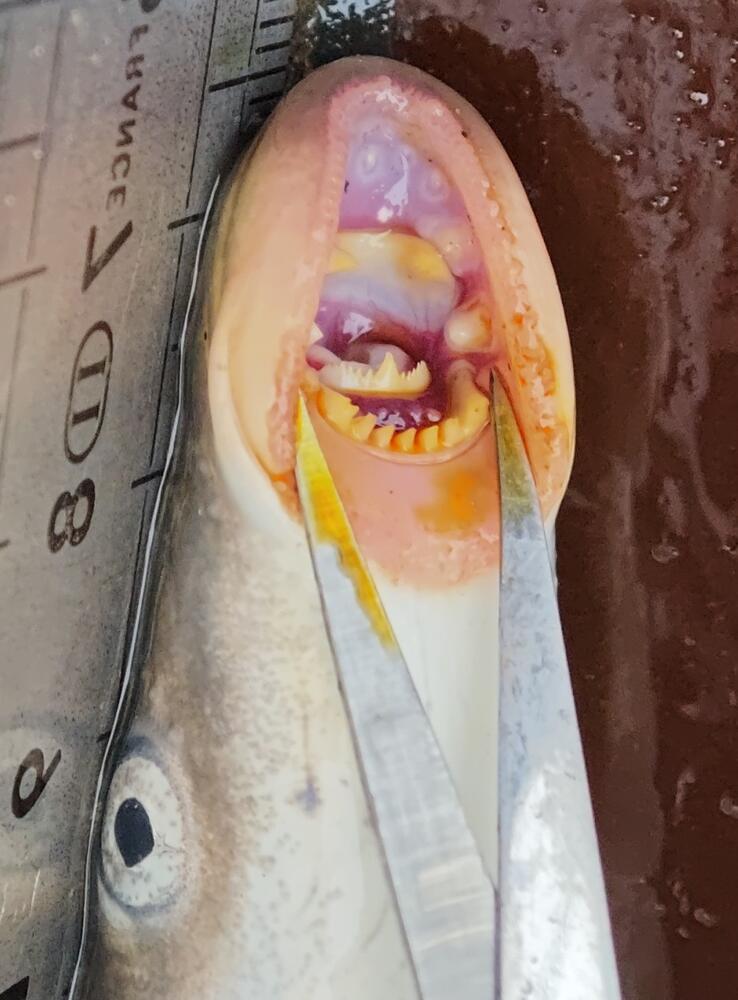
Het eigenaardige beest dat ik tijdens mijn masterproef volgde, heet de Europese rivierprik. Die ziet er niet bepaald uit als een klassieke vis. Geen kaken of schubben, wel een ronde zuigmond met rijen kleine, scherpe tandjes. Die gebruikt hij om zich vast te zuigen aan andere vissen, en om bloed en weefsel op te eten. Hij zou zo uit een horrorfilm kunnen komen.
Toch is de rivierprik een waardevolle en beschermde inheemse soort. Bovendien bestaat deze vreemde snuiter al ontzettend lang: fossielen van zijn voorouders zijn tot 360 miljoen jaar oud, waardoor hij tot de oudste lijn van gewervelde dieren behoort.
De rivierprik groeit als jong dier op in de rivier, maar trekt na enkele jaren naar zee. Daar groeit hij een tot twee jaar verder. Wanneer de prik volwassen is, stopt hij met eten en begint hij aan zijn laatste reis. Stroomopwaarts, terug de rivier op, op zoek naar een geschikte plek om zich voort te planten. En daarna? Dan sterft hij. Geen plezierreisje dus.
"The parallels with vampires are striking." - Jeremy Wade
Een route vol hindernissen
De rivierprik is trouwens niet de enige die zo’n tocht aflegt. Ook veel andere vissen, zoals de bekendere zalm, beginnen hun leven in de rivier en zwemmen naar de zee om op te groeien. Pas jaren later keren ze terug om zich voort te planten. Die heen-en-weertochten zijn indrukwekkend, maar worden steeds moeilijker. Onze rivieren zijn door de eeuwen heen veranderd in een aaneenschakeling van sluizen, stuwen en andere constructies. Ze beschermen ons tegen overstromingen en maken scheepvaart mogelijk. Maar voor migrerende vissen vormen ze een bijna ondoordringbare muur.
Het probleem is groot. Europa telt minstens 1,2 miljoen van zulke barrières in rivieren, en nog maar 10 procent van de rivieren stroomt volledig vrij. Voor migrerende vissen blijft dat niet zonder gevolgen: sinds 1970 zijn hun aantallen in Europa met 93 procent afgenomen. En dat is niet alleen slecht nieuws voor de vissen zelf. Veel migrerende vissen waren ooit belangrijk voor de visvangst, toen ze nog veelvuldig voorkwamen. Bovendien brengen ze voedingsstoffen uit de zee naar rivieren, wat essentieel is voor ander leven in en rond de rivier.
Vissen naar zenders
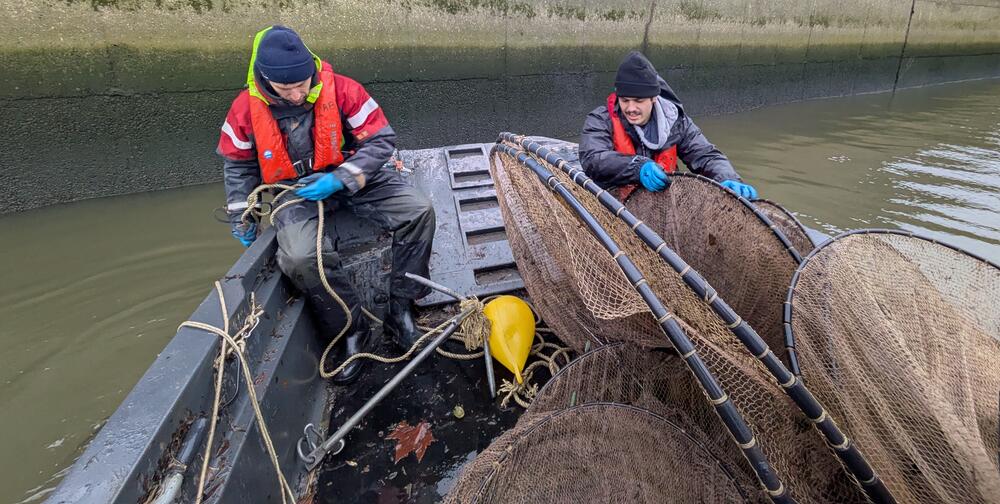
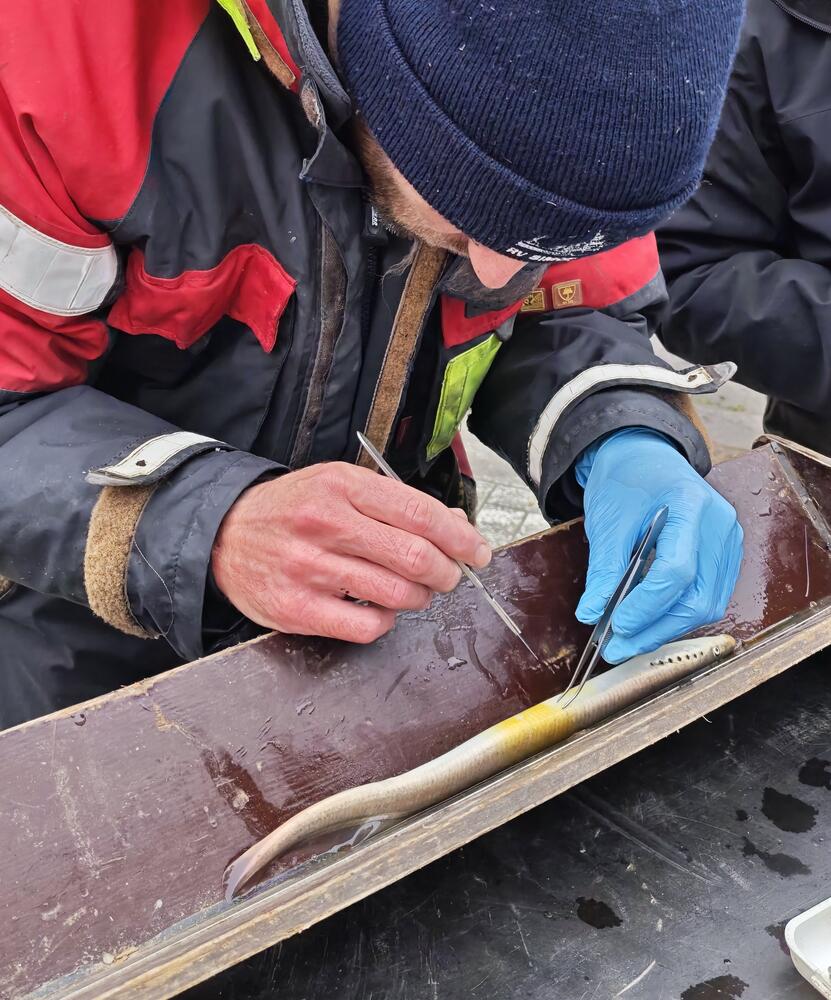
Om migrerende vissen in de Schelde een handje te helpen, wilde ik onderzoeken waar het probleem precies ligt. Daarom volgde ik samen met collega’s van het Instituut voor Natuur- en Bosonderzoek (INBO) vijftig rivierprikken tijdens hun reis door de Schelde. We vingen de vissen net stroomafwaarts van de eerste hindernissen, in Merelbeke. Na verdoving kregen ze via een kleine operatie een zendertje in hun buik. Die zender stuurde een uniek geluidssignaal uit dat kon worden opgevangen door onze detectiestations, verspreid over de Schelde. Zo konden we de reis van elke rivierprik volgen en vooral nagaan wat er gebeurde wanneer ze een obstakel tegenkwamen.
Een moeizame tocht
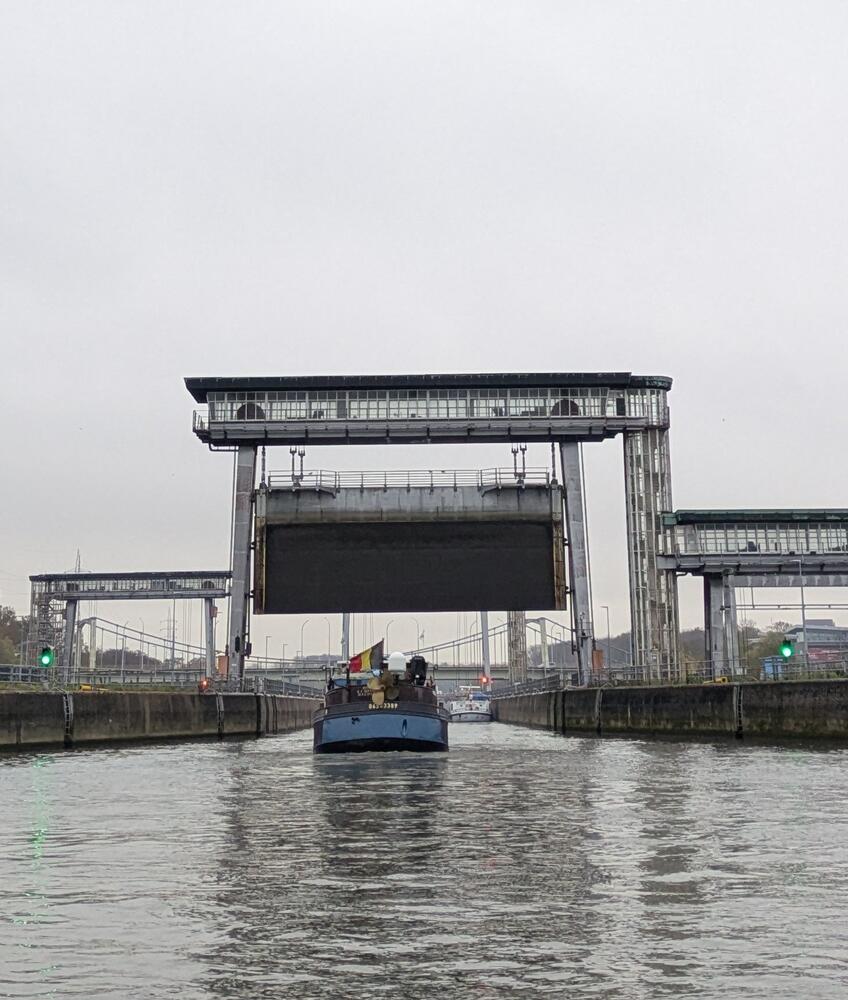
De tocht van de rivierprikken verliep allesbehalve vlot. Ter hoogte van de barrières reisden ze honderden keren trager dan normaal. Ze zwommen soms dagen tot weken wild heen en weer, voortdurend op zoek naar een doorgang. Van de vijftig prikken die we volgden, slaagde ongeveer de helft erin om de eerste hindernis in Merelbeke te passeren. Bij de volgende, in Asper, lukte dat nog maar voor drie vissen. Uiteindelijk raakten dus slechts drie van de vijftig gezenderde prikken voorbij de eerste twee knelpunten: amper 6 procent.
Wat er met de meeste andere prikken gebeurde, konden we niet met zekerheid achterhalen. Na weken zoeken stierven ze waarschijnlijk van uitputting, ergens verscholen in de rivier. Toch gaf niet elke rivierprik die vastliep de tocht op. Bij zes vissen zagen we iets opvallends: ze keerden tientallen kilometers terug stroomafwaarts om vervolgens een andere rivier in te slaan. Een omweg dus, alsof ze zelf op zoek gingen naar een nieuwe route! Die beesten wisten duidelijk niet van opgeven, al bleek ook dat maar voor een klein aantal een oplossing.
De deur op een kier
 Verder stroomopwaarts stonden nog twee grote barrières te wachten, in Oudenaarde en Kerkhove. In tegenstelling tot de eerste twee waren die voorzien van een vispassage: een soort wegomlegging voor vissen. Slechts drie rivierprikken bereikten deze passages, maar alle drie gebruikten ze de doorgang om verder stroomopwaarts te zwemmen! Veelbelovend, al zijn drie vissen uiteraard te weinig om daar harde conclusies uit te trekken.
Onze resultaten tonen vooral waar het grootste probleem zit: bij de eerste hindernissen, nog vóór de vissen de bestaande vispassages kunnen bereiken. Daarom onderzocht ik ook onder welke omstandigheden rivierprikken die eerste knelpunten het makkelijkst konden passeren. Een wiskundig model wees uit dat een sterkere waterstroom en hoge waterstanden hielpen, en dat de prikken ook makkelijker verder raakten wanneer een stuw tijdelijk werd geopend.
Daar ligt dus een kans. Door op de juiste plaatsen vispassages aan te leggen en sluizen en stuwen op het juiste moment te openen, kunnen we rivierprikken en andere migrerende vissen misschien opnieuw meer ruimte geven om hun reis voort te zetten. Mijn onderzoek toont alvast waar de grootste knelpunten liggen en onder welke omstandigheden de vissen meer kans maken om er voorbij te raken.
Net zoals veel vissen reist de rivierprik al miljoenen jaren tussen zee en rivier. Wij hebben die route pas in de voorbije eeuwen op veel plaatsen onderbroken met obstakels. Door slim om te gaan met die obstakels, kunnen we de deur misschien weer op een kier zetten.
Bibliografie
Abecasis, D., Steckenreuter, A., Reubens, J., Aarestrup, K., Alós, J., Badalamenti, F., Bajona, L., Boylan, P., Deneudt, K., Greenberg, L., Breve, N., Hernandez, F., Humphries, N., Meyer, C., Sims, D., Thorstad, E., Walker, A., Whoriskey, F., and Afonso, P. (2018). A review of acoustic telemetry in Europe and the need for a regional aquatic telemetry network. Animal Biotelemetry, 6:12.
Abersons, K., Raibarte, P., Elferts, D., and Dimante-Deimantovica, I. (2025). Weak reproductive response of European river lamprey to a newly built fishway—a case study from Latvia. River Research and Applications, 42(1):284–292.
Agostinho, A., Pelicice, F., and Gomes, L. (2008). Dams and the fish fauna of the Neotropical region: Impacts and management related to diversity and fisheries. Brazilian journal of biology, 68:1119–1132.
Akaike, H. (1974). A new look at the statistical model identification. IEEE Transactions on Automatic Control, 19(6):716–723.
Almeida, P., Quintella, B., and Dias, N. (2002). Movement of radio-tagged anadromous sea lamprey during the spawning migration in the River Mondego (Portugal). Hydrobiologia, 483(1–3):1–8.
Almeida, P. R., Arakawa, H., Aronsuu, K., Baker, C., Blair, S.-R., Beaulaton, L., Belo, A. F., Kitson, J., Kucheryavyy, A., Kynard, B., Lucas, M. C., Moser, M., Potaka, B., Romakkaniemi, A., Staponkus, R., Tamarapa, S., Yanai, S., Yang, G., Zhang, T., and Zhuang, P. (2021). Lamprey fisheries: History, trends and management. Journal of Great Lakes Research, 47:S159–S185. Supplement on Sea Lamprey International Symposium III (SLIS III).
Aronsuu, K., Marjomäki, T., Tuohino, J., Wennman, K., R., V., and Ojutkangas, E. (2015). Migratory behaviour and holding habitats of adult river lampreys (Lampetra fluviatilis) in two Finnish rivers. Boreal Environment Research, 20:120–144.
Aronsuu, K., Vikström, R., Marjomäki, T. J., Wennman, K., Pakkala, J., Mäenpää, E., Tuohino, J., Sarell, J., and Ojutkangas, E. (2019). Rehabilitation of two northern river lamprey (Lampetra fluviatilis) populations impacted by various anthropogenic pressures: Lessons learnt in the past three decades. Jyväskylän yliopiston bio- ja ympäristötieteiden laitoksen tiedonantoja (2/2019), University of Jyväskylä.
Ashley, M., Murillas, A., Muench, A., Marta-Pedroso, C., Rodwell, L., Rees, S., Rendle, E., Bašić, T., Copp, G. H., Díaz, E., Nachón, D. J., Lambert, P., and Lassalle, G. (2023). An evidence base of ecosystems services provided by diadromous fish in the European Atlantic Area. Ecosystem Services, 64:101559.
Badger, J. J., Johnson, D. S., Baird, R. W., Bradford, A. L., Kratofil, M. A., Mahaffy, S. D., and Oleson, E. M. (2024). Incorporating telemetry information into capture recapture analyses improves precision and accuracy of abundance estimates given spatiotemporally biased recapture effort. Methods in Ecology and Evolution, 15(10):1847–1858.
Baer, J., Hartmann, F., and Brinker, A. (2018). Abiotic triggers for sea and river lamprey spawning migration and juvenile outmigration in the River Rhine, Germany. Ecology of Freshwater Fish, 27(4):988–998.
Baetens, J., Van Nieuland, S., Pauwels, I., De Baets, B., Mouton, A., and Goethals, P. (2013). An individual-based model for the migration of pike (Esox lucius) in the river Yser, Belgium. Ecological Modelling, 258:40–52.
Belletti, B., Garcia de Leaniz, C., Jones, J., Bizzi, S., Börger, L., Segura, G., Castelletti, A., Bund, W., Aarestrup, K., Barry, J., Belka, K., Berkhuysen, A., Birnie-Gauvin, K., Bussettini, M., Carolli, M., Consuegra, S., Dopico, E., Feierfeil, T., Fernández, S., and Zalewski, M. (2020). More than one million barriers fragment Europe's rivers. Nature, 588:436–441.
Berec, L. (2002). Techniques of spatially explicit individual-based models: construction, simulation, and mean-field analysis. Ecological Modelling, 150(1):55–81.
Binder, T. R., McLaughlin, R. L., and McDonald, D. G. (2010). Relative importance of water temperature, water level, and lunar cycle to migratory activity in spawning phase sea lampreys in Lake Ontario. Transactions of the American Fisheries Society, 139(3):700–712.
Birnie-Gauvin, K., Larsen, M. H., Nielsen, J., and Aarestrup, K. (2017). 30 years of data reveal dramatic increase in abundance of brown trout following the removal of a small hydrodam. Journal of Environmental Management, 204:467–471.
Boeker, C. and Geist, J. (2016). Lampreys as ecosystem engineers: Burrows of Eudontomyzon sp. and their impact on physical, chemical, and microbial properties in freshwater substrates. Hydrobiologia, 777:171–181.
Bolker, B. M., Brooks, M. E., Clark, C. J., Geange, S. W., Poulsen, J. R., Stevens, M. H. H., and White, J.-S. S. (2009). Generalized linear mixed models: a practical guide for ecology and evolution. Trends in Ecology & Evolution, 24(3):127–135.
Bolland, J. D., Murphy, L. A., Stanford, R. J., Angelopoulos, N. V., Baker, N. J., Wright, R. M., Reeds, J. D., and Cowx, I. G. (2019). Direct and indirect impacts of pumping station operation on downstream migration of critically endangered European eel. Fisheries Management and Ecology, 26(1):76–85.
Breine, J., Stevens, M., Simoens, I., and Van den Bergh, E. (2008). A reference list of fish species for a heavily modified estuary and its tributaries: the River Schelde. Rapporten van het Instituut voor Natuur- en Bosonderzoek 2008 (INBO.R.2008.4), Instituut voor Natuur- en Bosonderzoek, Brussels, Belgium.
Breslow, N. (1972). Discussion on professor Cox's paper. Journal of the Royal Statistical Society: Series B (Methodological), 34(2):202–220.
Brooks, M. E., Kristensen, K., van Benthem, K. J., Magnusson, A., Berg, C. W., Nielsen, A., Skaug, H. J., Maechler, M., and Bolker, B. M. (2017). glmmTMB balances speed and flexibility among packages for zero-inflated generalized linear mixed modeling. The R Journal, 9(2):378–400.
Brownscombe, J., Lédée, E., Raby, G., Struthers, D., Gutowsky, L., Nguyen, V., Young, N., Stokesbury, M., Holbrook, C., Brenden, T., Vandergoot, C., Murchie, K., Whoriskey, K., Mills Flemming, J., Kessel, S., Krueger, C., and Cooke, S. (2019). Conducting and interpreting fish telemetry studies: considerations for researchers and resource managers. Reviews in Fish Biology and Fisheries, 29:369–400.
Brownscombe, J. W., Griffin, L. P., Brooks, J. L., Danylchuk, A. J., Cooke, S. J., and Midwood, J. D. (2022). Applications of telemetry to fish habitat science and management. Canadian Journal of Fisheries and Aquatic Sciences, 79(8):1347–1359.
Brownscombe, J. W., Griffin, L. P., Chapman, J. M., Morley, D., Acosta, A., Crossin, G. T., Iverson, S. J., Adams, A. J., Cooke, S. J., and Danylchuk, A. J. (2020). A practical method to account for variation in detection range in acoustic telemetry arrays to accurately quantify the spatial ecology of aquatic animals. Methods in Ecology and Evolution, 11(1):82–94.
Bruneel, S., Goossens, J., Reubens, J., Pauwels, I., Moens, T., Goethals, P., and Verhelst, P. (2023). Turning the tide- understanding estuarine detection range variability via structural equation models. Animal Biotelemetry, 11:38.
Bubb, D. H., Birnie-Gauvin, K., Tummers, J. S., Aarestrup, K., Jepsen, N., and Lucas, M. C. (2021). Short-term effects of low-head barrier removals on fish communities and habitats. Frontiers in Ecology and Evolution, 9:697106.
Buysse, D., Coeck, J., and Maes, J. (2008). Potential re-establishment of diadromous fish species in the River Scheldt (Belgium). Hydrobiologia, 602(1):155–159.
Buysse, D., Martens, S., Baeyens, R., and Coeck, J. (2004). Onderzoek naar de migratie van vissen tussen Boven-Zeeschelde en Bovenschelde. Rapporten van het Instituut voor Natuurbehoud (IN.R.2004.02), Instituut voor Natuurbehoud, Brussels, Belgium.
Buysse, D., Mouton, A., Stevens, M., Van den Neucker, T., and Coeck, J. (2014). Mortality of European eel after downstream migration through two types of pumping stations. Fisheries Management and Ecology, 21(1):13–21.
Carpenter, S. R., Stanley, E. H., and Vander Zanden, M. J. (2011). State of the world's freshwater ecosystems: Physical, chemical, and biological changes. Annual Review of Environment and Resources, 36(Volume 36, 2011):75–99.
Castro-Santos, T. and Haro, A. (2003). Quantifying migratory delay: a new application of survival analysis methods. Canadian Journal of Fisheries and Aquatic Sciences, 60(8):986–996.
Castro-Santos, T., Shi, X., and Haro, A. (2017). Migratory behavior of adult sea lamprey and cumulative passage performance through four fishways. Canadian Journal of Fisheries and Aquatic Sciences, 74(5):790–800.
Chan, J. C. F., Lam, B. Y. K., Dudgeon, D., and Liew, J. H. (2025). Global consequences of dam-induced river fragmentation on diadromous migrants: a systematic review and meta-analysis. Biological Reviews, 100(5):2020–2037.
Clemens, B. J., Binder, T. R., Docker, M. F., Moser, M. L., and Sower, S. A. (2010). Similarities, differences, and unknowns in biology and management of three parasitic lampreys of North America. Fisheries, 35(12):580–594.
Close, D. A., Fitzpatrick, M. S., and Li, H. W. (2002). The ecological and cultural importance of a species at risk of extinction, Pacific lamprey. Fisheries, 27(7):19–25.
Cooke, S., Hinch, S., Lucas, M., and Lutcavage, M. (2012). Biotelemetry and biologging. In Zale, A., Parrish, D., and Sutton, T., editors, Fisheries Techniques 3rd ed., pages 819–881. American Fisheries Society, Bethesda, Maryland.
Cornell, S. J., Suprunenko, Y. F., Finkelshtein, D., Somervuo, P., and Ovaskainen, O. (2019). A unified framework for analysis of individual-based models in ecology and beyond. Nature Communications, 10(1).
Cox, D. R. (1972). Regression models and life-tables. Journal of the Royal Statistical Society: Series B (Methodological), 34(2):187–202.
DamRemoval Europe (2025). Home- dam removal europe. https://damremoval.eu/. Accessed 22 October 2025.
Davies, P., Britton, J. R., Nunn, A. D., Dodd, J. R., Bainger, C., Velterop, R., and Bolland, J. D. (2021). Cumulative impacts of habitat fragmentation and the environmental factors affecting upstream migration in the threatened sea lamprey, Petromyzon marinus. Aquatic Conservation: Marine and Freshwater Ecosystems, 31(9):2560–2574.
Davies, P., Britton, J. R., Nunn, A. D., Dodd, J. R., Bainger, C., Velterop, R., and Bolland, J. D. (2022). Individual movement variation in upstream-migrating sea lamprey Petromyzon marinus in a highly fragmented river. Freshwater Biology, 67(4):643–656.
Dawson, H., Quintella, B., Almeida, P., Treble, A., and Jolley, J. (2015). The ecology of larval and metamorphosing lampreys. In Docker, M. F., editor, Lampreys: Biology, Conservation and Control: Volume 1, pages 75–137. Springer Netherlands, Dordrecht.
Dean, E. M., Infante, D. M., Yu, H., Cooper, A., Wang, L., and Ross, J. (2023). Cumulative effects of dams on migratory fishes across the conterminous United States: Regional patterns in fish responses to river network fragmentation. River Research and Applications, 39(9):1736–1748.
DeAngelis, D. L. and Grimm, V. (2014). Individual-based models in ecology after four decades. F1000Prime Reports, 6(39).
Deinet, S., Scott-Gatty, K., Rotton, H., Twardek, W. M., Marconi, V., McRae, L., Baumgartner, L. J., Brink, K., Claussen, J. E., Cooke, S. J., Darwall, W., Eriksson, B. K., Garcia de Leaniz, C., Hogan, Z., Royte, J., Silva, L. G. M., Thieme, M. L., Tickner, D., Waldman, J., Wanningen, H., and Weyl, O. L. F. (2020). The Living Planet Index (LPI) for migratory freshwater fish - Technical Report. World Fish Migration Foundation, The Netherlands.
Dietrich, J., Rickard, A., Sethi, S. A., Cuppett, S., and Sullivan, P. (2025). Aquatic habitat response to small dam removal demonstrates recovery in three years. Ecosphere, 16(6):e70323.
Dormann, C. F., Elith, J., Bacher, S., Buchmann, C., Carl, G., Carré, G., Marquéz, J. R. G., Gruber, B., Lafourcade, B., Leitão, P. J., Münkemüller, T., McClean, C., Osborne, P. E., Reineking, B., Schröder, B., Skidmore, A. K., Zurell, D., and Lautenbach, S. (2013). Collinearity: a review of methods to deal with it and a simulation study evaluating their performance. Ecography, 36(1):27–46.
Drouineau, H., Carter, C., Rambonilaza, T., Beaufaron, G., Bouleau, G., Gassiat, A., Lambert, P., Floch, S., Tétard, S., and De Oliveira, E. (2018). River continuity restoration and diadromous fishes: Much more than an ecological issue. Environmental Management, 61:671–686.
Dubuis, R. and De Cesare, G. (2023). The clogging of riverbeds: A review of the physical processes. Earth-Science Reviews, 239:104374.
Dudgeon, D., Arthington, A. H., Gessner, M. O., Kawabata, Z.-I., Knowler, D. J., Lévêque, C., Naiman, R. J., Prieur-Richard, A.-H., Soto, D., Stiassny, M. L. J., and Sullivan, C. A. (2006). Freshwater biodiversity: importance, threats, status and conservation challenges. Biological Reviews, 81(2):163–182.
Dunkle, M. R., Lampman, R. T., Jackson, A. D., and Caudill, C. C. (2020). Factors affecting the fate of Pacific lamprey carcasses and resource transport to riparian and stream macrohabitats. Freshwater Biology, 65(8):1429–1439.
Ecopedia (n.d.). Rivierprik (Lampetra fluviatilis). https://www.ecopedia.be/dieren/rivierprik. Accessed 22 May 2026.
Fine, J., Vrieze, L., and Sorensen, P. (2004). Evidence that Petromyzontid lampreys employ a common migratory pheromone that is partially comprised of bile acids. Journal of chemical ecology, 30:2091–2110.
Ford, M. (2024). Lampetra fluviatilis — the IUCN red list of threatened species. https://www.iucnredlist.org/species/11206/135088436. Accessed 15 September 2025.
Foulds, W. L. and Lucas, M. C. (2013). Extreme inefficiency of two conventional, technical fishways used by European river lamprey (Lampetra fluviatilis). Ecological Engineering, 58:423–433.
Garcia de Leaniz, C. and O'Hanley, J. R. (2022). Operational methods for prioritizing the removal of river barriers: Synthesis and guidance. Science of The Total Environment, 848:157471.
Gaudron, S. M. and Lucas, M. C. (2006). First evidence of attraction of adult river lamprey in the migratory phase to larval odour. Journal of Fish Biology, 68(2):640–644.
Gauld, N., Campbell, R., and Lucas, M. (2013). Reduced flow impacts salmonid smolt emigration in a river with low-head weirs. Science of The Total Environment, 458–460:435–443.
Gess, R., Coates, M., and Rubidge, B. (2006). A lamprey from the Devonian period of South Africa. Nature, 443:981–984.
Gowans, A. R. D., Armstrong, J. D., Priede, I. G., and Mckelvey, S. (2003). Movements of Atlantic salmon migrating upstream through a fish-pass complex in Scotland. Ecology of Freshwater Fish, 12(3):177–189.
Griffin, K. R., Holbrook, C. M., Zielinski, D. P., Cahill, C. L., and Wagner, C. M. (2025). Not all who meander are lost: migrating sea lamprey follow river thalwegs to facilitate safe and efficient passage upstream. Journal of Experimental Biology, 228(4):JEB249539.
Griffioen, A., Winter, H., and van Hal, R. (2017). Prognose visstand in en rond het Haringvliet na invoering van het Kierbesluit in 2018. Wageningen Marine Research rapport C081/17, Wageningen Marine Research, Netherlands.
Grill, G., Lehner, B., Thieme, M., Geenen, B., Tickner, D., Antonelli, F., Babu, S., Borrelli, P., Cheng, L., Crochetiere, H., Ehalt Macedo, H., Filgueiras, R., Goichot, M., Higgins, J., Hogan, Z., Lip, B., McClain, M., Meng, J., Mulligan, M., and Zarfl, C. (2019). Mapping the world's free-flowing rivers. Nature, 569:215–221.
Grimm, V. and Railsback, S. (2005). Individual-based modeling and ecology. Princeton University Press.
Grimm, V., Railsback, S. F., Vincenot, C. E., Berger, U., Gallagher, C., DeAngelis, D. L., Edmonds, B., Ge, J., Giske, J., Groeneveld, J., Johnston, A. S., Milles, A., Nabe-Nielsen, J., Polhill, J. G., Radchuk, V., Rohwäder, M.-S., Stillman, R. A., Thiele, J. C., and Ayllón, D. (2020). The ODD protocol for describing agent-based and other simulation models: A second update to improve clarity, replication, and structural realism. Journal of Artificial Societies and Social Simulation, 23(2):7.
Hanel, L., Andreska, J., and Dyldin, Y. (2022). Lampreys in human life, their cultural and folklore importance. Humanities and Social Sciences, 10(5):290–305.
Hauer, C., Leitner, P., Unfer, G., Pulg, U., Habersack, H., and Graf, W. (2018). The role of sediment and sediment dynamics in the aquatic environment. In Schmutz, S. and Sendzimir, J., editors, Riverine Ecosystem Management: Science for Governing Towards a Sustainable Future, pages 151–169. Springer, Cham.
Hockersmith, E. and Beeman, J. W. (2012). A history of telemetry in fishery research. In Adams, N. S., Beeman, J. W., and Eiler, J. H., editors, Telemetry techniques: A user guide for fisheries research, pages 7–19. American Fisheries Society, Bethesda, Maryland.
Hogg, R., Coghlan Jr., S. M., and Zydlewski, J. (2013). Anadromous sea lampreys recolonize a Maine coastal river tributary after dam removal. Transactions of the American Fisheries Society, 142(5):1381–1394.
Hogg, R. S., Coghlan Jr, S. M., Zydlewski, J., and Simon, K. S. (2014). Anadromous sea lampreys (Petromyzon marinus) are ecosystem engineers in a spawning tributary. Freshwater Biology, 59(6):1294–1307.
Hohensinner, S., Hauer, C., and Muhar, S. (2018). River morphology, channelization, and habitat restoration. In Schmutz, S. and Sendzimir, J., editors, Riverine Ecosystem Management: Science for Governing Towards a Sustainable Future, pages 41–65. Springer, Cham.
Hubbard, S., Babak, P., Sigurdsson, S. T., and Magnússon, K. G. (2004). A model of the formation of fish schools and migrations of fish. Ecological Modelling, 174(4):359–374.
Hussey, N. E., Kessel, S. T., Aarestrup, K., Cooke, S. J., Cowley, P. D., Fisk, A. T., Harcourt, R. G., Holland, K. N., Iverson, S. J., Kocik, J. F., Flemming, J. E. M., and Whoriskey, F. G. (2015). Aquatic animal telemetry: A panoramic window into the underwater world. Science, 348(6240):1255642.
Huysecom, S., Mouton, A., Buysse, D., Gelaude, E., Baeyens, R., Jacobs, Y., Stevens, M., Van den Neucker, T., Robberechts, K., Pauwels, I., and Coeck, J. (2012). Evaluatie van de visnevengeulen bij de stuwen van Asper en Oudenaarde in de Bovenschelde. Rapporten van het Instituut voor Natuur- en Bosonderzoek 2012 (INBO.R.2012.66), Instituut voor Natuur- en Bosonderzoek, Brussels, Belgium.
Jager, H. I. and DeAngelis, D. L. (2018). The confluences of ideas leading to, and the flow of ideas emerging from, individual-based modeling of riverine fishes. Ecological Modelling, 384:341–352.
Jang, M.-H. and Lucas, M. C. (2005). Reproductive ecology of the river lamprey. Journal of Fish Biology, 66(2):499–512.
Johnson, E. L., Caudill, C. C., Keefer, M. L., Clabough, T. S., Peery, C. A., Jepson, M. A., and Moser, M. L. (2012). Movement of radio-tagged adult Pacific lampreys during a large-scale fishway velocity experiment. Transactions of the American Fisheries Society, 141(3):571–579.
Johnson, N., Buchinger, T., and Li, W. (2015). Reproductive ecology of lampreys. In Docker, M. F., editor, Lampreys: Biology, Conservation and Control: Volume 1, pages 265–303. Springer Netherlands, Dordrecht.
Jubb, W., Noble, R., Dodd, J., Nunn, A., Lothian, A., Albright, A., Bubb, D., Lucas, M., and Bolland, J. (2023a). Acoustic telemetry informs conditional capture probability of an anadromous fish. Fisheries Research, 264:106737.
Jubb, W., Noble, R., Dodd, J., Nunn, A., Lothian, A., Albright, A., Bubb, D., Lucas, M., and Bolland, J. (2023b). Understanding the impact of barriers to onward migration; a novel approach using translocated fish. Journal of Environmental Management, 335:117488.
Kainua, K. and Valtonen, T. (1980). Distribution and abundance of European river lamprey (Lampetra fluviatilis) larvae in three rivers running into Bothnian Bay, Finland. Canadian Journal of Fisheries and Aquatic Sciences, 37(11):1960–1966.
Katopodis, C. and Williams, J. G. (2012). The development of fish passage research in a historical context. Ecological Engineering, 48:8–18. Ecohydraulic Approaches for Restoring Habitat Connectivity and Suitability.
Keefer, M. L., Caudill, C. C., Peery, C., and Moser, M. L. (2013). Context-dependent diel behavior of upstream-migrating anadromous fishes. Environmental Biology of Fishes, 96(6):691–700.
Keefer, M. L., Moser, M. L., Boggs, C. T., Daigle, W. R., and Peery, C. A. (2009a). Effects of body size and river environment on the upstream migration of adult Pacific lampreys. North American Journal of Fisheries Management, 29(5):1214–1224.
Keefer, M. L., Moser, M. L., Boggs, C. T., Daigle, W. R., and Peery, C. A. (2009b). Variability in migration timing of adult Pacific lamprey (Lampetra tridentata) in the Columbia River, U.S.A. Environmental Biology of Fishes, 85(3):253–264.
Kelly, F. and King, J. (2001). A review of the ecology and distribution of three lamprey species, Lampetra fluviatilis (L.), Lampetra planeri (Bloch) and Petromyzon marinus (L.): A context for conservation and biodiversity considerations in Ireland. Biology and Environment, 101:165–185.
Kemp, P. S. and O'Hanley, J. R. (2010). Procedures for evaluating and prioritising the removal of fish passage barriers: a synthesis. Fisheries Management and Ecology, 17(4):297–322.
Kemp, P. S., Russon, I. J., Vowles, A. S., and Lucas, M. C. (2010). The influence of discharge and temperature on the ability of upstream migrant adult river lamprey (Lampetra fluviatilis) to pass experimental overshot and undershot weirs. River Research and Applications, 27(4):488–498.
Kerby, J. L., Riley, S. P., Kats, L. B., and Wilson, P. (2005). Barriers and flow as limiting factors in the spread of an invasive crayfish (Procambarus clarkii) in southern California streams. Biological Conservation, 126(3):402–409.
Kerr, J., Tummers, J., Benson, T., Lucas, M., and Kemp, P. (2023). Modelling fine scale route choice of upstream migrating fish as they approach an instream structure. Ecological Modelling, 478:110210.
Kerr, J. R., Zielinski, D. P., Goodwin, R. A., Holbrook, C. M., and McLaughlin, R. L. (2025). Upriver migrating sea lamprey exhibit similar responses to hydrodynamic features as other up and downriver-moving species. Frontiers in Freshwater Science, 3:1528481.
Kessel, S., Cooke, S., Heupel, M., Hussey, N., Simpfendorfer, C., Vagle, S., and Fisk, A. (2014). A review of detection range testing in aquatic passive acoustic telemetry studies. Rev Fish Biol Fisheries, 24:199–218.
Kleinbaum, D. G. and Klein, M. (2005). Survival Analysis: A Self-Learning Text. Springer, New York.
Kukuła, K. and Bylak, A. (2022). Barrier removal and dynamics of intermittent stream habitat regulate persistence and structure of fish community. Scientific Reports, 12:1512.
Lasne, E., Sabatié, M.-R., and Evanno, G. (2010). Communal spawning of brook and river lampreys (Lampetra planeri and L. fluviatilis) is common in the Oir River (France). Ecology of Freshwater Fish, 19(3):323–325.
Limburg, K. E. and Waldman, J. R. (2009). Dramatic declines in North Atlantic diadromous fishes. BioScience, 59(11):955–965.
Lin, D. Y. (2007). On the Breslow estimator. Lifetime Data Analysis, 13(4):471–480.
Loki Austanfell (2011). Ammocoetes larva of Eastern brook lamprey (Lethenteron cf. mitsukurii). Wikimedia Commons. Available at https://commons.wikimedia.org/wiki/File:Ammocoetes-l_reissneri-01.jpg (Accessed 22 May 2026). Licensed under CC BY-SA 3.0.

Lothian, A., Bolland, J., Albright, A., Jubb, W., Bubb, D., Noble, R., Nunn, A., Dodd, J., Tummers, J., and Lucas, M. (2024). Factors influencing European river lamprey passage at a tidal river barrier. Hydrobiologia, 851:4803–4820.
Lucas, M. and Baras, E. (2001). Migration of Freshwater Fishes. Blackwell Science, Oxford.
Lucas, M. C., Bubb, D. H., Jang, M.-H., Ha, K., and Masters, J. E. G. (2009). Availability of and access to critical habitats in regulated rivers: effects of low-head barriers on threatened lampreys. Freshwater Biology, 54(3):621–634.
Lucas, M. C., Hume, J. B., Almeida, P. R., Aronsuu, K., Habit, E., Silva, S., Wang, C. J., and Zampatti, B. (2021). Emerging conservation initiatives for lampreys: Research challenges and opportunities. Journal of Great Lakes Research, 47:S690–S703. Supplement on Sea Lamprey International Symposium III (SLIS III).
Lüdecke, D., Ben-Shachar, M. S., Patil, I., Waggoner, P., and Makowski, D. (2021). performance: An R package for assessment, comparison and testing of statistical models. Journal of Open Source Software, 6(60):3139.
Maes, J. and Ollevier, F. (2005). Impact van baggeractiviteiten in de Beneden Zeeschelde op de ecologie van de rivierprik. Studierapport in opdracht van de afdeling maritieme toegang, Katholieke Universiteit Leuven, Belgium.
Maitland, P. S. (2003). Ecology of the River, Brook and Sea Lamprey. Conserving Natura 2000 Rivers Ecology Series No. 5. English Nature, Peterborough.
Manzon, R., Youson, J., and Holmes, J. (2015). Lamprey metamorphosis. In Docker, M. F., editor, Lampreys: Biology, Conservation and Control: Volume 1, pages 139–214. Springer Netherlands, Dordrecht.
Masters, J. E., Jang, M.-H., Ha, K., Bird, P., Frear, P., and Lucas, M. (2006). The commercial exploitation of a protected anadromous species, the river lamprey (Lampetra fluviatilis (L.)), in the tidal River Ouse, north-east England. Aquatic Conservation: Marine and Freshwater Ecosystems, 16(1):77–92.
Mateus, C., Rodríguez-Muñoz, R., Quintella, B., Alves, M., and Almeida, P. (2012). Lampreys of the Iberian Peninsula: Distribution, population status and conservation. Endangered Species Research, 16(2):183–198.
Mawer, R., Pauwels, I. S., Bruneel, S. P., Goethals, P. L., Kopecki, I., Elings, J., Coeck, J., and Schneider, M. (2023). Individual based models for the simulation of fish movement near barriers: Current work and future directions. Journal of Environmental Management, 335:117538.
McDowall, R. M. (1997). The evolution of diadromy in fishes (revisited) and its place in phylogenetic analysis. Reviews in Fish Biology and Fisheries, 7(4):443–462.
Moore, D. F. (2016). Applied Survival Analysis Using R. Springer, Cham.
Moser, M. L., Almeida, P. R., Kemp, P. S., and Sorensen, P. W. (2015). Lamprey spawning migration. In Docker, M. F., editor, Lampreys: Biology, Conservation and Control: Volume 1, pages 215–263. Springer Netherlands, Dordrecht.
Moser, M. L., Almeida, P. R., King, J. J., and Pereira, E. (2021). Passage and freshwater habitat requirements of anadromous lampreys: Considerations for conservation and control. Journal of Great Lakes Research, 47:S147–S158. Supplement on Sea Lamprey International Symposium III (SLIS III).
Mouton, A., Stevens, M., Van den Neucker, T., Buysse, D., and Coeck, J. (2011). Adjusted barrier management to improve glass eel migration at an estuarine barrier. Marine Ecology Progress Series, 439:213–222.
Neeson, T. M., Ferris, M. C., Diebel, M. W., Doran, P. J., O'Hanley, J. R., and McIntyre, P. B. (2015). Enhancing ecosystem restoration efficiency through spatial and temporal coordination. Proceedings of the National Academy of Sciences, 112(19):6236–6241.
Neeson, T. M., Wiley, M. J., Adlerstein, S. A., and Riolo, R. L. (2011a). How river network structure and habitat availability shape the spatial dynamics of larval sea lampreys. Ecological Modelling, 226:62–70.
Neeson, T. M., Wiley, M. J., Adlerstein, S. A., and Riolo, R. L. (2011b). River network structure shapes interannual feedbacks between adult sea lamprey migration and larval habitation. Ecological Modelling, 222(17):3181–3192.
Nicolai, R., Gensen, M., Stolp, T., Thant, S., Michielsen, S., Messens, F., Van de Moortel, I., Boudewijn, T., van de Haterd, R., van der Jagt, H., de Jong, J., Middelveld, R. P., Van Echelpoel, W., and Bruneel, S. (2023). Analyserapport. T2021 rapportage Schelde-estuarium. Technical report, HKV / Antea Group / Universiteit Gent / Bureau Waardenburg, Nederland / België.
Nieland, J. L., Sheehan, T. F., and Saunders, R. (2015). Assessing demographic effects of dams on diadromous fish: a case study for Atlantic salmon in the Penobscot River, Maine. ICES Journal of Marine Science, 72(8):2423–2437.
Nilsson, C., Reidy, C. A., Dynesius, M., and Revenga, C. (2005). Fragmentation and flow regulation of the world's large river systems. Science, 308(5720):405–408.
Nislow, K. and Kynard, B. (2009). The role of anadromous sea lamprey in nutrient and material transport between marine and freshwater environments. American Fisheries Society Symposium, 69:485–494.
Nunn, A. D. and Cowx, I. G. (2012). Restoring river connectivity: Prioritizing passage improvements for diadromous fishes and lampreys. AMBIO, 41(4):402–409.
O'Hanley, J. R. and Tomberlin, D. (2005). Optimizing the removal of small fish passage barriers. Environmental Modeling & Assessment, 10(2):85–98.
Ojutkangas, E., Aronen, K., and Laukkanen, E. (1995). Distribution and abundance of river lamprey (Lampetra fluviatilis) ammocoetes in the regulated river Perhonjoki. Regulated Rivers: Research & Management, 10(2-4):239–245.
Parasiewicz, P., Belka, K., Łapińska, M., Ławniczak, K., Prus, P., Adamczyk, M., Buras, P., Szlakowski, J., Kaczkowski, Z., Krauze, K., O'Keeffe, J., Suska, K., Ligięza, J., Melcher, A., O'Hanley, J., Birnie-Gauvin, K., Aarestrup, K., Jones, P., Jones, J., and Wiśniewolski, W. (2023). Over 200,000 kilometers of free-flowing river habitat in Europe is altered due to impoundments. Nature Communications, 14:6289.
Pavlov, D., Zvezdin, A., Kostin, V., Tsimbalov, I., and Kucheryavyy, A. (2017). Temporal characteristics of downstream migration of smolts of the European river lamprey Lampetra fluviatilis in the Chernaya river. Biology Bulletin, 44:290–295.
Payne, N., Gillanders, B., Webber, D., and Semmens, J. (2010). Interpreting diel activity patterns from acoustic telemetry: The need for controls. Marine Ecology Progress Series, 419:295–301.
Pinheiro, J., Bates, D., and R Core Team (2026). nlme: Linear and Nonlinear Mixed Effects Models. R package version 3.1-169.
Piper, A. T., Rosewarne, P. J., Wright, R. M., and Kemp, P. S. (2018). The impact of an Archimedes screw hydropower turbine on fish migration in a lowland river. Ecological Engineering, 118:31–42.
Poff, N. L., Allan, J. D., Bain, M. B., Karr, J. R., Prestegaard, K. L., Richter, B. D., Sparks, R. E., and Stromberg, J. C. (1997). The natural flow regime. BioScience, 47(11):769–784.
Poff, N. L., Olden, J. D., Merritt, D. M., and Pepin, D. M. (2007). Homogenization of regional river dynamics by dams and global biodiversity implications. Proceedings of the National Academy of Sciences, 104(14):5732–5737.
Poff, N. L. and Zimmerman, J. K. H. (2010). Ecological responses to altered flow regimes: a literature review to inform the science and management of environmental flows. Freshwater Biology, 55(1):194–205.
Potter, I. C. and Huggins, R. J. (1973). Observations on the morphology, behaviour and salinity tolerance of downstream migrating river lampreys (Lampetra fluviatilis). Journal of Zoology, 169(3):365–379.
Quintella, B. R., Andrade, N. O., Espanhol, R., and Almeida, P. R. (2005). The use of PIT telemetry to study movements of ammocoetes and metamorphosing sea lampreys in river beds. Journal of Fish Biology, 66(1):97–106.
Railsback, S. F., Lamberson, R. H., Harvey, B. C., and Duffy, W. E. (1999). Movement rules for individual-based models of stream fish. Ecological Modelling, 123(2):73–89.
Reid, A. J., Carlson, A. K., Creed, I. F., Eliason, E. J., Gell, P. A., Johnson, P. T. J., Kidd, K. A., MacCormack, T. J., Olden, J. D., Ormerod, S. J., Smol, J. P., Taylor, W. W., Tockner, K., Vermaire, J. C., Dudgeon, D., and Cooke, S. J. (2019). Emerging threats and persistent conservation challenges for freshwater biodiversity. Biological Reviews, 94(3):849–873.
Reubens, J., Verhelst, P., van der Knaap, I., Wydooghe, B., Milotic, T., Deneudt, K., Hernandez, F., and Pauwels, I. (2019). The need for aquatic tracking networks: The permanent Belgian acoustic receiver network. Animal Biotelemetry, 7:2.
Russon, I. J. and Kemp, P. S. (2011). Experimental quantification of the swimming performance and behaviour of spawning run river lamprey Lampetra fluviatilis and European eel Anguilla anguilla. Journal of Fish Biology, 78(7):1965–1975.
Russon, I. J., Kemp, P. S., and Lucas, M. C. (2011). Gauging weirs impede the upstream migration of adult river lamprey Lampetra fluviatilis. Fisheries Management and Ecology, 18(3):201–210.
Sabater, S., Bregoli, F., Acuña, V., Barceló, D., Elosegi, A., Ginebreda, A., Marcé, R., Muñoz, I., Sabater-Liesa, L., and Ferreira, V. (2018). Effects of human-driven water stress on river ecosystems: A meta-analysis. Scientific Reports, 8(1).
Schmutz, S. and Moog, O. (2018). Dams: Ecological impacts and management. In Schmutz, S. and Sendzimir, J., editors, Riverine Ecosystem Management: Science for Governing Towards a Sustainable Future, pages 111–127. Springer, Cham.
Shirakawa, H., Yanai, S., and Goto, A. (2012). Lamprey larvae as ecosystem engineers: Physical and geochemical impact on the streambed by their burrowing behavior. Hydrobiologia, 701:312–322.
Silva, A. T., Lucas, M. C., Castro-Santos, T., Katopodis, C., Baumgartner, L. J., Thiem, J. D., Aarestrup, K., Pompeu, P. S., O'Brien, G. C., Braun, D. C., Burnett, N. J., Zhu, D. Z., Fjeldstad, H.-P., Forseth, T., Rajaratnam, N., Williams, J. G., and Cooke, S. J. (2018). The future of fish passage science, engineering, and practice. Fish and Fisheries, 19(2):340–362.
Silva, S., Lowry, M., Macaya-Solis, C., Byatt, B., and Lucas, M. C. (2017a). Can navigation locks be used to help migratory fishes with poor swimming performance pass tidal barrages? A test with lampreys. Ecological Engineering, 102:291–302.
Silva, S., Macaya-Solis, C., and Lucas, M. (2017b). Energetically efficient behaviour may be common in biology, but it is not universal: A test of selective tidal stream transport in a poor swimmer. Marine Ecology Progress Series, 584:161–174.
Sousa, R., Araújo, M. J., and Antunes, C. (2012). Habitat modifications by sea lampreys (Petromyzon marinus) during the spawning season: effects on sediments. Journal of Applied Ichthyology, 28(5):766–771.
Staponkus, R. and Kesminas, V. (2014). Confirmation of hybridisation between river lamprey L. fluviatilis and brook lamprey L. planeri from in situ experiments. Polish Journal of Natural Sciences, 29(1):49–54.
Stevens, M., Van den Neucker, T., Gelaude, E., Baeyens, R., Jacobs, Y., Mouton, A., Buysse, D., and Coeck, J. (2011). Onderzoek naar de trekvissoorten in het Schelde-estuarium. Voortplantings- en opgroeihabitat van rivierprik en fint. Rapporten van het Instituut voor Natuur- en Bosonderzoek 2011 (INBO.R.2011.14), Instituut voor Natuur- en Bosonderzoek, Brussels, Belgium.
Stevens, M., Van den Neucker, T., Mouton, A., Buysse, D., Martens, S., Baeyens, R., Jacobs, Y., Gelaude, E., and Coeck, J. (2009). Onderzoek naar de trekvissoorten in het stroomgebied van de Schelde. Rapporten van het Instituut voor Natuur- en Bosonderzoek 2009 (INBO.R.2009.9), Instituut voor Natuur- en Bosonderzoek, Brussels, Belgium.
Stillman, R. A., Railsback, S. F., Giske, J., Berger, U., and Grimm, V. (2015). Making predictions in a changing world: The benefits of individual-based ecology. BioScience, 65(2):140–150.
Strayer, D. L. and Dudgeon, D. (2010). Freshwater biodiversity conservation: recent progress and future challenges. Journal of the North American Benthological Society, 29(1):344–358.
Sutton, T. M. and Bowen, S. H. (1994). Significance of organic detritus in the diet of larval lampreys in the Great Lakes basin. Canadian Journal of Fisheries and Aquatic Sciences, 51(11):2380–2387.
Therneau, T. M. (2026). A Package for Survival Analysis in R. R package version 3.8-6.
Thieurmel, B. and Elmarhraoui, A. (2022). suncalc: Compute Sun Position, Sunlight Phases, Moon Position and Lunar Phase. R package version 0.5.1.
Van Hoey, S. (2025). wateRinfo: Download Time Series Data from Waterinfo.be. R package version 0.3.0.9065.
vanRijssel, J. C., Breukelaar, A. W., de Leeuw, J. J., van Puijenbroek, M. E. B., Schilder, K., Schrimpf, A., Vriese, F. T., and Winter, H. V. (2024). Reintroducing Atlantic salmon in the river Rhine for decades: Why did it not result in the return of a viable population? River Research and Applications, 40(7):1164–1182.
Van Thuyne, G., Coeck, J., and Verreycken, H. (2016). Advies over de soortbeschermingsprogramma's voor beekprik, kleine modderkruiper en rivierdonderpad. Adviezen van het Instituut voor Natuur- en Bosonderzoek (INBO.A.3477), Instituut voor Natuur- en Bosonderzoek, Brussels, Belgium.
van Treeck, R., Radinger, J., Smialek, N., Pander, J., Geist, J., Mueller, M., and Wolter, C. (2022). Comparative assessment of hydropower risks for fishes using the novel European fish hazard index. Sustainable Energy Technologies and Assessments, 51:101906.
Vercruysse, J., Visser, K., Goormans, T., Depreiter, D., Claeys, S., Vereecken, H., and Buysse, D. (2024). Vispassage kerkhove: Validatiemeting en optimalisatie ontwerpmethodiek bekkenvormige vispassage. Versie 4.0 WL Rapporten 22_030_1, Waterbouwkundig Laboratorium, Antwerpen.
Vergeynst, J., Pauwels, I., Baeyens, R., Coeck, J., Nopens, I., De Mulder, T., and Mouton, A. (2019). The impact of intermediate-head navigation locks on downstream fish passage. River Research and Applications, 35(3):224–235.
Verhelst, P., Brys, R., Cooke, S., Pauwels, I., Rohtla, M., and Reubens, J. (2023). Enhancing our understanding of fish movement ecology through interdisciplinary and cross-boundary research. Reviews in Fish Biology and Fisheries, 33:111–135.
Verhelst, P., Buysse, D., Reubens, J., Pauwels, I., Aelterman, B., Van Hoey, S., Goethals, P., Coeck, J., Moens, T., and Mouton, A. (2018). Downstream migration of European eel (Anguilla anguilla L.) in an anthropogenically regulated freshwater system: Implications for management. Fisheries Research, 199:252–262.
Verhelst, P., Reubens, J., Buysse, D., Goethals, P., Van Wichelen, J., and Moens, T. (2021). Toward a roadmap for diadromous fish conservation : the Big Five considerations. Frontiers in Ecology and the Environment, 19(7):396–403.
Verhelst, P., Righton, D., Aarestrup, K., Almeida, P. R., Bašić, T., Bolland, J. D., Carter, L., Coeck, J., Costa, J. L., Dainys, J., Davidsen, J. G., Domingos, I., Dorow, M., Feunteun, E., Frankowski, J., Griffioen, A. B., Monteiro, R. M., Moore, A., Oldoni, D., Piper, A. T., Quintella, B. R., Reeds, J., Trancart, T., Verschelde, P., Winter, H. V., and Reubens, J. (2025). The seaward migration of European eel at a continental scale: A Europe-wide biotelemetry meta-analysis. Fish and Fisheries, 26(4):651–668.
Verreycken, H., Belpaire, C., Van Thuyne, G., Breine, J., Buysse, D., Coeck, J., Mouton, A., Stevens, M., Van den Neucker, T., De Bruyn, L., and Maes, D. (2014). IUCN red list of freshwater fishes and lampreys in Flanders (north Belgium). Fisheries Management and Ecology, 2014(21):122–132.
Verweij, P. J. M. and Van Houwelingen, H. C. (1994). Penalized likelihood in Cox regression. Statistics in Medicine, 13(23-24):2427–2436.
Visser, K. P., Buysse, D., Goormans, T., Vanderkimpen, P., and Viaene, P. (2024). Vertical slot vispassage op de Schelde te Merelbeke: Hydraulisch ontwerp. Versie 4.0 WL Rapporten 18_144_1, Waterbouwkundig Laboratorium, Antwerpen.
Vittinghoff, E. and McCulloch, C. E. (2007). Relaxing the rule of ten events per variable in logistic and Cox regression. American Journal of Epidemiology, 165(6):710–718.
Vrieze, L. A., Bergstedt, R. A., and Sorensen, P. W. (2011). Olfactory-mediated stream-finding behavior of migratory adult sea lamprey (Petromyzon marinus). Canadian Journal of Fisheries and Aquatic Sciences, 68(3):523–533.
Vrieze, L. A., Bjerselius, R., and Sorensen, P. W. (2010). Importance of the olfactory sense to migratory sea lampreys Petromyzon marinus seeking riverine spawning habitat. Journal of Fish Biology, 76(4):949–964.
Vörösmarty, C., McIntyre, P., Gessner, M., Dudgeon, D., Proussevitch, A., Green, P., Glidden, S., Bunn, S., Sullivan, C., Reidy Liermann, C., and Davies, P. (2010). Global threats to human water security and river biodiversity. Nature, 467:555–561.
Wagner, C. M., Twohey, M. B., and Fine, J. M. (2009). Conspecific cueing in the sea lamprey: do reproductive migrations consistently follow the most intense larval odour? Animal Behaviour, 78(3):593–599.
Walter, L. M., Dettmers, J. M., and Tyson, J. T. (2021). Considering aquatic connectivity trade-offs in Great Lakes barrier removal decisions. Journal of Great Lakes Research, 47:S430–S438. Supplement on Sea Lamprey International Symposium III (SLIS III).
Weaver, D., Coghlan Jr, S., Greig, H., Klemmer, A., Perkins, L., and Zydlewski, J. (2018). Subsidies from anadromous sea lamprey (Petromyzon marinus) carcasses function as a reciprocal nutrient exchange between marine and freshwaters. River Research and Applications, 34(7):824–833.
Whoriskey, K., Martins, E. G., Auger-Méthé, M., Gutowsky, L. F. G., Lennox, R. J., Cooke, S. J., Power, M., and Mills Flemming, J. (2019). Current and emerging statistical techniques for aquatic telemetry data: A guide to analysing spatially discrete animal detections. Methods in Ecology and Evolution, 10(7):935–948.
Willems, P., Baguis, P., Ntegeka, V., and Roulin, E. (2011). Climate change impact on hydrological extremes along rivers and urban drainage systems in Belgium "CCI HYDR" Final Report. Research programme science for a sustainable development, Belgian Science Policy, Brussels.
Wilson, K. and Veneranta, L. (2019). Data-limited diadromous species– review of european status. ICES Cooperative Research Report No. 348, International Council for the Exploration of the Sea.
Wright, G., Wright, R., and Kemp, P. (2015). Impact of tide gates on the migration of adult European eels, Anguilla anguilla. Estuaries and Coasts, 38:2031–2043.
Wünstel, A., Mellin, A., and Greven, H. (1996). Zur Fortpflanzungsbiologie des Flußneunauges, Lampetra fluviatilis (L.), in der Dhünn, NRW. Fischökologie, 10:11–46.
Xu, Y., Zhu, S.-W., and Li, Q.-W. (2016). Lamprey: a model for vertebrate evolutionary research. Zoological Research, 37:263–269.
Yimer, E. (2025). From drought deficits to climate resilience: Coupled surface groundwater modelling and nature-based solutions for drought assessment and mitigation. PhD thesis, Vrije Universiteit Brussel, Belgium.
Yokouchi, K., Itakura, H., Wakiya, R., Yoshinaga, T., Mochioka, N., Kimura, S., and Kaifu, K. (2022). Cumulative effects of low-height barriers on distributions of catadromous Japanese eels in Japan. Animal Conservation, 25(1):137–149.
York, J. R., Lee, E. M.-J., and McCauley, D. W. (2019). The lamprey as a model vertebrate in evolutionary developmental biology. In Docker, M. F., editor, Lampreys: Biology, Conservation and Control: Volume 2, pages 481–526. Springer Netherlands, Dordrecht.
Zuur, A. F., Ieno, E. N., Walker, N. J., Saveliev, A. A., and Smith, G. M. (2009). Mixed effects models and extensions in ecology with R. Springer-Verlag New York.
Zvezdin, A., Kucheryavyy, A., Kolotei, A., Polyakova, N., and Pavlov, D. (2023). European river lamprey Lampetra fluviatilis (Petromyzontidae) of the Pskov lakeland: Current state of isolated populations. Journal of Ichthyology, 63:1080–1091.
Zvezdin, A., Pavlov, D., Kucheryavyy, A., and Tsimbalov, I. (2017). Experimental study of the European river lamprey, Lampetra fluviatilis (L.), migratory behavior in the period of initial dispersion of juveniles. Inland Water Biology, 10:209–218.
Zydlewski, J., Coghlan, S., Dillingham, C., Figueroa-Muñoz, G., Merriam, C., Smith, S., Smith, R., Stich, D., Vogel, S., Wilson, K., and Zydlewski, G. (2023). Seven dam challenges for migratory fish: insights from the Penobscot River. Frontiers in Ecology and Evolution, 11:1253657.